
In This Article
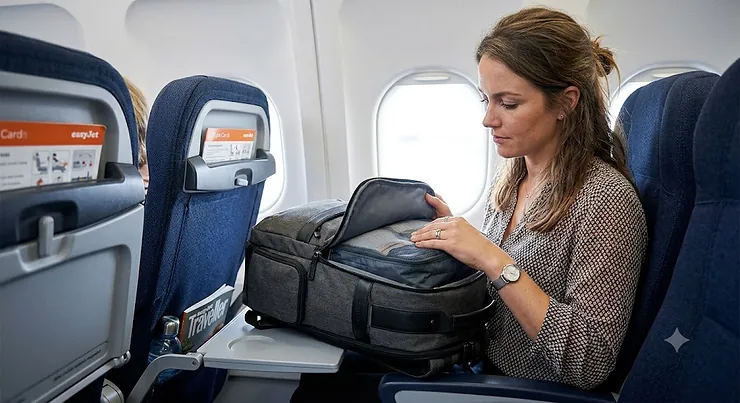
Standing at a Ryanair bag-sizer with your heart in your mouth is not a fun way to start a holiday. Ask anyone who has been pulled aside at the gate and told their “carry-on” is, in fact, a checked bag in disguise. The right cabin backpack solves this problem permanently: it is a rucksack engineered to sit inside strict airline dimensions, freeing you from luggage carousels, gate-check fees, and the eternal fear of a strap catching in a conveyor belt.
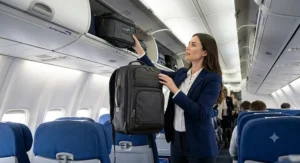
A cabin backpack, put simply, is hand luggage built as a wearable rucksack rather than a wheeled case, sized (usually 20-45 litres) to slot under a seat or into an overhead locker without extra charges. It swaps wheels and a rigid shell for shoulder straps and a soft, flexible body, which makes it easier to squeeze onto crowded trains, coach transfers, and cobbled European streets.
This guide walks British travellers through the best cabin backpack options on the market right now, from £30 budget picks to premium organisational marvels. We researched real products, real specs, and real aggregated review sentiment (never invented quotes), and we’ve checked every dimension against current UK hand luggage restrictions so you’re not caught out at security. Whether you fly Ryanair every month for work or you’re planning one big trip this year, there’s a genuinely sensible option below. Let’s get into it.
Quick Comparison Table
Before the deep dive, here’s the shortlist for anyone in a hurry. Each of these bags has been chosen to cover a different budget, use case, and airline compliance profile, so you can jump straight to the row that matches your situation.
| Backpack | Capacity | Price Range | Best For |
|---|---|---|---|
| Cabin Max Metz | 44L | £30-45 | Maximum space on the tightest budget |
| Kono Cabin Bag | 30L | £25-35 | easyJet underseat compliance |
| MATEIN Carry-On Backpack | 40L | £35-55 | Tech-heavy travellers wanting USB access |
| Antler Chelsea Backpack | 19L | £120-150 | Smart daily use and short business trips |
| Osprey Farpoint 40 | 40L | £120-160 | Heavy loads carried in comfort |
| Db Journey Ramverk 21L | 21L | £170-210 | Commuters who also travel often |
| Peak Design Travel Backpack 45L | 45L (adjustable) | £250-280 | Photographers and gear-heavy one-bag travel |
Looking at the spread, the split roughly follows price and purpose rather than pure capacity: the two cheapest bags, Cabin Max Metz and Kono Cabin Bag, both punch well above their price point on raw litres but skimp on harness comfort. The middle tier (MATEIN, Antler Chelsea, Osprey Farpoint 40) is where build quality and carrying comfort start to catch up with the marketing claims. At the top, Db Journey Ramverk 21L and Peak Design Travel Backpack 45L aren’t chasing capacity at all — they’re selling engineering, modularity, and a design that survives years of hard use.
💬 Found your favourite already? Scroll down for the full breakdown before you commit — the details matter more than the headline litre count.
Top 7 Best Cabin Backpack Picks: Expert Analysis
1. Cabin Max Metz — biggest capacity for the lowest spend
The standout here is sheer volume for the money: 44 litres from a bag that regularly retails under £40. Measuring 55 x 40 x 20cm and weighing roughly 0.66-0.7kg, the Cabin Max Metz is built from 600D showerproof polyester with three lockable zipped compartments, including a dedicated document pocket. In practice, that low weight matters more than it sounds — every gram you save on the empty bag is a gram you can spend on socks. Based on the spec comparison with pricier rivals, the Cabin Max Metz sacrifices structured padding and a proper hip belt to hit that price, so heavier loads will sag rather than sit close to your back. It suits budget flyers, students, and anyone who packs light but wants generous room for the occasional bulky souvenir. Aggregated reviewer sentiment across retailer sites consistently praises the size-to-price ratio and the compression straps for cinching down half-empty loads, while a recurring complaint concerns the main zip pull feeling flimsy under heavy stuffing.
Pros:
- ✅ 44L capacity rarely matched under £40
- ✅ Ultra-light empty weight around 0.7kg
- ✅ Three-year manufacturer warranty included
Cons:
- ❌ Minimal back padding for heavier loads
- ❌ No hip belt for weight distribution
Typically priced in the £30-45 range, the Cabin Max Metz represents strong value if your trips are short and your packing list is lean.
2. Kono Cabin Bag — easyJet-ready underseat specialist
What stands out about this one is its dimensions: 45 x 36 x 20cm, built specifically around easyJet’s free underseat allowance rather than a generic “carry-on” claim. The Kono Cabin Bag holds 30 litres, weighs around 0.85kg, and is made from water-resistant polyester with reinforced stitching and a ventilated back panel. What most buyers overlook about underseat-specific bags like this is that they trade overhead-locker headroom for a guarantee of zero gate hassle — you’re not gambling on a sizer at all. It’s aimed at easyJet-loyal travellers and anyone doing short city breaks who wants to skip baggage drop entirely. Reviewers frequently mention the padded straps as more comfortable than expected at this price, and note the multiple carry handles as genuinely useful when it’s stuffed under a train seat. A repeated theme in feedback is that organisation is basic — it’s mostly one big compartment rather than the zoned layout you’d get from premium brands.
Pros:
- ✅ Sized precisely to easyJet’s free allowance
- ✅ Lightweight at roughly 0.85kg
- ✅ Water-resistant fabric handles UK drizzle
Cons:
- ❌ Limited internal organisation
- ❌ Not intended for overhead locker use
At around £25-35, the Kono Cabin Bag is one of the cheapest ways to guarantee compliance with one specific airline’s rules.
3. MATEIN Carry-On Backpack — best USB-equipped all-rounder
The headline feature is the integrated USB charging port, which lets you top up a phone from a power bank stashed inside the bag without digging it out mid-queue. The MATEIN Carry-On Backpack offers 40 litres across four main compartments, sized at roughly 45 x 34 x 20cm, with a padded 17-inch laptop sleeve and a separate shoe compartment with ventilation holes. Here’s what to weigh: the multi-compartment design is brilliant for organisation, but all those pockets add up to a bag that looks and feels bulkier than its litre count suggests when packed for a long weekend. It’s best suited to commuting professionals and college-age travellers who want one bag that works for both a laptop-heavy workday and a quick weekend trip. Genuine reviewer sentiment highlights the anti-theft back pocket and water-resistant fabric as standout practical touches, while a recurring gripe is that the shoulder straps, though padded, aren’t quite as breathable as competitors during warm-weather travel.
Pros:
- ✅ Built-in USB port for on-the-go charging
- ✅ Four organised compartments including shoe storage
- ✅ Padded 17-inch laptop sleeve
Cons:
- ❌ Bulkier profile than its litre rating implies
- ❌ Straps run warm on longer carries
Usually found in the £35-55 range, the MATEIN Carry-On Backpack is hard to beat if a laptop and daily commute are part of the equation.
4. Antler Chelsea Backpack — smartest daily-use design
This is the British heritage pick, and the standout feature is refinement: a suitcase-handle sleeve, a padded 16.5-inch laptop pocket with its own tablet slip, and a peach-effect brushed lining that feels more premium than its 19-litre size suggests. Measuring 40 x 28 x 17cm and weighing just under 1kg, the Antler Chelsea Backpack is deliberately compact rather than cavernous. On paper, this means it will never rival a 40L pack for space, but that’s precisely the point — it’s designed as a smart daily bag that doubles as underseat hand luggage on short trips, not a week-away workhorse. It suits business travellers, commuters, and anyone who wants a backpack that looks at home in a meeting room as much as an airport lounge. Reviewer sentiment gathered from retailer and community feedback consistently flags the organisation and build quality as excellent for the category, with the main criticism being the relatively high price for a bag with modest capacity.
Pros:
- ✅ Suitcase-handle sleeve for stacking on wheeled luggage
- ✅ Genuinely premium materials and finish
- ✅ Dedicated 16.5-inch laptop and tablet pockets
Cons:
- ❌ 19L capacity limits multi-day packing
- ❌ Premium price for the size offered
At roughly £120-150, the Antler Chelsea Backpack is best viewed as a lifestyle bag that happens to be excellent hand luggage, rather than the other way round.
5. Osprey Farpoint 40 — best harness for heavy loads
The standout advantage is the suspension system: a mesh-covered AirScape back panel, a stowable hip belt, and load-lifter straps that most travel backpacks in this size bracket simply don’t offer. At 55 x 35 x 23cm and around 1.6kg empty, the Osprey Farpoint 40 carries up to a manufacturer-rated 18kg, though testers and reviewers generally recommend keeping loads closer to 12kg for comfortable all-day wear. Based on the spec comparison with softer, unstructured bags on this list, the Farpoint’s harness is what justifies its higher weight — it’s the difference between a bag you tolerate and one you can genuinely hike an airport concourse in without shoulder pain. It suits backpackers, long-haul multi-stop travellers, and anyone who will actually be walking distances with the bag on rather than wheeling a case beside them. Aggregated reviews are strikingly consistent on durability, with several long-term owners reporting years of hard travel without failure, while the most common criticism is that the secondary “daypack” section zips awkwardly compared with the main compartment.
Pros:
- ✅ Genuine hiking-grade harness and hip belt
- ✅ Stowable straps protect them in transit
- ✅ Exceptional long-term durability reported by owners
Cons:
- ❌ Heavier than soft-sided alternatives
- ❌ Secondary compartment access is fiddly
Typically priced in the £120-160 range (and sometimes discounted lower at outdoor retailers), the Osprey Farpoint 40 rewards anyone who actually wears their luggage rather than rolling it.

6. Db Journey Ramverk 21L — sleekest commuter-to-weekend hybrid
What sets this apart is the patented “Rib Cage” internal frame and Hook-Up System, which lets the backpack clip onto Db’s wheeled luggage for hands-free transit through terminals. The Db Journey Ramverk 21L measures roughly 48 x 28.5 x 14.5cm, weighs about 1kg, and is built from a synthetic PU-leather-accented shell over a 600D polyester front panel. What most buyers overlook is that 21 litres sounds small next to a 40L rival, but the frame and full-frontal opening mean it packs far more efficiently than a soft top-loader of the same size — you’re not fighting dead space. It’s aimed at style-conscious commuters and frequent short-haul flyers who want one bag for the office and the occasional flight, rather than dedicated holiday luggage. Genuine review sentiment from verified buyers is overwhelmingly positive on comfort and back-panel alignment, describing the fit as noticeably better than typical daypacks, while the main limitation flagged is the lack of a dedicated external water bottle pocket on some colourways.
Pros:
- ✅ Patented frame keeps the pack’s shape under load
- ✅ Hooks directly onto Db wheeled luggage
- ✅ Scandinavian minimalist design ages well
Cons:
- ❌ 21L capacity suits short trips, not weeks away
- ❌ External water bottle storage is inconsistent across colours
At around £170-210, the Db Journey Ramverk 21L is a premium commuter bag that happens to double brilliantly as a cabin backpack.
7. Peak Design Travel Backpack 45L — most modular premium organiser
The defining feature is adjustability: the bag compresses from 45 litres down to 30 litres using top snaps and side zips, and the entire harness — shoulder straps and hip belt — tucks away behind magnetic panels when not needed. Dimensions sit at roughly 56 x 33 x 24cm, built from 400D nylon with a 900D waterproof base liner. The spec sheet won’t tell you this, but reviewers consistently note that the clamshell opening plus additional side-zip access makes this the fastest bag on this list to actually pack and repack mid-trip. It suits photographers, gear-heavy digital nomads, and travellers who value obsessive organisation over ultra-lightweight simplicity. Long-term reviewers who’ve used the bag across multiple years and continents report the build quality holds up impressively, though a recurring criticism — echoed across several independent reviews — is that the hip belt is too minimal to properly support the pack once loaded past 15-20kg.
Pros:
- ✅ Expands and compresses between 30L and 45L
- ✅ Fully stowable harness for a clean profile
- ✅ Exceptional organisation and camera-cube compatibility
Cons:
- ❌ Heavier than most bags in this size class
- ❌ Hip belt underwhelms once heavily loaded
At roughly £250-280, the Peak Design Travel Backpack 45L is a considered investment for travellers who will genuinely use every strap and zip it offers.
Cabin Bag Backpack Size Guide: Airline-by-Airline Dimensions
Every UK budget airline enforces its own cabin bag backpack size guide, and they rarely match. Getting this wrong at the gate can mean an unplanned fee larger than the backpack itself. Below is a snapshot of commonly published free-allowance dimensions; always double-check on the airline’s own site close to your travel date, since carriers do revise these figures.
| Airline | Free Underseat Bag | Paid/Larger Cabin Bag |
|---|---|---|
| Ryanair | 40 x 20 x 25cm | 55 x 40 x 20cm (Priority) |
| easyJet | 45 x 36 x 20cm | 56 x 45 x 25cm (Plus/FLEXI) |
| British Airways | 40 x 30 x 15cm | 56 x 45 x 25cm |
| Jet2 | — | 56 x 45 x 25cm (included) |
Reading across the table, the pattern that jumps out is how much smaller the genuinely “free” bag is compared with the paid or premium-fare allowance — Cabin Max Metz and Peak Design Travel Backpack 45L are both cut for the larger overhead-locker allowance, while Kono Cabin Bag and Antler Chelsea Backpack are built around the smaller underseat limits. If you fly Ryanair or easyJet on a basic fare more than a couple of times a year, buying to the smaller free dimensions is almost always the more economical long-term choice, since you avoid the priority boarding upsell entirely.
What Makes a Backpack Flight Approved?
“Flight approved” is marketing shorthand, not an official certification — no government body stamps individual backpacks as airline-legal. In practice, a flight approved backpack simply means its exterior dimensions, including wheels, handles, and side pockets, fit within a specific airline’s published cabin allowance. That’s why the same bag can be perfectly compliant on Jet2 and rejected on Ryanair.
Reviewers and travellers consistently report that the real risk isn’t the backpack’s stated size, it’s compression: a soft-sided bag advertised at 55 x 40 x 20cm can bulge to 24-26cm deep once fully packed, which is exactly where gate agents catch people out. What most buyers overlook is that structured bags like the Osprey Farpoint 40 and Db Journey Ramverk 21L hold their shape better under load than unstructured ones like the Cabin Max Metz, precisely because of internal frames or rigid back panels. For the security-screening side of the equation rather than the size-checking side, the UK Civil Aviation Authority’s guidance on packing hand baggage is worth reading before any trip, since it covers what you can and can’t carry through the checkpoint regardless of which bag you choose.
Hand Luggage Backpack vs Wheeled Carry-On Suitcase
The core trade-off between a hand luggage backpack and a wheeled carry-on suitcase comes down to terrain versus load. A backpack distributes weight across your shoulders and hips, which wins on cobblestones, station stairs, and crowded platforms where wheels are a liability. A wheeled case wins the moment you’re on flat, smooth ground for any real distance, since you’re not carrying the weight at all.
| Factor | Backpack | Wheeled Suitcase |
|---|---|---|
| Uneven terrain | Excellent | Poor |
| Long flat-ground distances | Tiring | Effortless |
| Packing structure | Variable | Very structured |
| Overhead locker fit | Usually easy | Can be tight |
| Hands-free carrying | Yes | No |
Interpreting the table, the honest answer is that neither format is objectively better — it’s about matching the bag to your actual trip. Someone doing a multi-city interrail-style holiday benefits enormously from a hand luggage backpack like the Osprey Farpoint 40, while someone flying to one hotel and back is often better served by a wheeled case simply because they’ll rarely lift it. Reviewers who own both formats frequently mention keeping a backpack for city breaks and a wheeled case for beach holidays, rather than picking one bag for everything. For an independent, UK-focused view on how different brands actually perform, Which?’s cabin luggage brand research is a useful cross-check against manufacturer claims.
How to Choose the Best Cabin Backpack
Picking the right bag comes down to seven practical checks, worth running through in this order before you buy:
- Confirm your usual airline’s exact allowance first. Ryanair, easyJet, and BA all differ, so buy to the smallest limit you regularly fly, not the largest.
- Decide backpack vs wheeled case honestly. If you’ll walk more than ten minutes with it loaded, a backpack earns its keep; if not, reconsider.
- Match capacity to trip length, not aspiration. A 20-25L bag suits 2-4 days; 35-45L suits a week or more, based on how efficiently you pack.
- Check for a structured back panel if you carry more than 8kg. Unstructured bags like Cabin Max Metz sag under heavier loads.
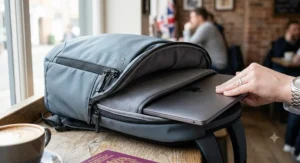
- Prioritise a laptop sleeve if you travel for work. Padded, separately accessible sleeves protect devices during security screening.
- Weigh the empty bag itself. Every kilogram of backpack is a kilogram you can’t fill with belongings within airline weight limits.
- Read the warranty terms. Brands like Cabin Max and Osprey offer multi-year or lifetime coverage, which matters if you fly often.
Common Mistakes When Buying a Cabin Backpack
The single most common error, based on recurring themes across reviewer feedback, is buying to a generic “carry-on size” rather than a specific airline’s published dimensions — a bag that’s fine on British Airways can be refused outright by Ryanair. A close second is ignoring compression: buyers see a listed size that matches their airline’s allowance, then overpack until the bag bulges past that limit at the gate.
Another frequent misstep is prioritising litre count over harness comfort. A 44L bag like the Cabin Max Metz looks like better value than a 21L Db Journey Ramverk, but if you’re walking any real distance with it loaded, comfort and load distribution matter more than raw capacity. Finally, many buyers skip checking laptop protection until after a cracked screen — bags without a padded, separately accessible sleeve force you to dig through packed clothing at airport security, increasing both hassle and damage risk.
Practical Usage Guide: Packing & Caring for Your Cabin Backpack
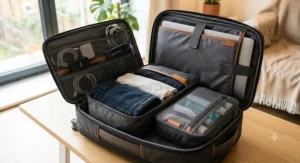
Getting the most from any cabin backpack starts before you even leave the house. Pack heavier items — shoes, toiletry bags, chargers — close to your back and low down, which keeps the pack’s centre of gravity stable and stops it pulling backwards on your shoulders. Use packing cubes to compress soft items; they don’t just organise your bag, they physically reduce the volume clothing takes up, buying you crucial extra centimetres against airline sizers.
In the first 30 days of ownership, the most common mistake is over-tightening compression straps before you’ve packed anything, which distorts the bag’s shape and can push soft-sided models like the Kono Cabin Bag or MATEIN Carry-On Backpack over their stated dimensions. Instead, pack first, then compress. For maintenance, spot-clean fabric exteriors with a damp cloth rather than machine washing, re-waterproof polyester shells annually with a spray-on treatment if you travel through wet climates often, and check zip pulls for fraying every few months, since zips are the most common failure point on budget bags. Before you fly, it’s worth a final check of the current rules on liquids in hand luggage, since even a perfectly sized backpack can be flagged at security for a toiletry bag that doesn’t comply.
Real-World Scenarios: Matching a Carry-On Travel Bag to Your Trip
The weekend city-breaker: Flying easyJet from Manchester to Porto for three nights, packing light, moving between hotel and old-town cobbles on foot. A compact, easyJet-sized carry-on travel bag like the Kono Cabin Bag or Antler Chelsea Backpack avoids paying for a larger cabin allowance entirely, and neither is heavy enough to notice on a short walk.
The multi-country backpacker: Six weeks across Southeast Asia, hostels, buses, and the occasional long trek between transport hubs. Here, load-carrying comfort outweighs everything else, which is exactly where the Osprey Farpoint 40‘s hip belt and stowable harness earn their higher weight — you’ll be wearing this bag for hours at a stretch, not minutes.
The frequent business flyer: Weekly Ryanair or Jet2 hops for client meetings, laptop always in tow, occasional overnight stay. The Db Journey Ramverk 21L or MATEIN Carry-On Backpack both suit this rhythm — compact enough to clear underseat limits on a budget carrier, structured enough to protect a laptop through five security queues a month.
Buyer’s Decision Framework
If budget is your primary constraint, choose the Cabin Max Metz or Kono Cabin Bag, because both deliver airline-compliant capacity for under £45 with acceptable, if basic, comfort. If you fly the same low-cost airline repeatedly, choose a bag built to that airline’s specific free allowance rather than a generic size, because it removes the fee risk entirely rather than just reducing it. If you’ll be wearing the bag for genuine distances — hiking, multi-city travel, long station walks — choose the Osprey Farpoint 40, because its harness is the only one on this list rated for heavier comfortable carrying. If organisation and modularity matter more than price, choose the Peak Design Travel Backpack 45L, because its adjustable capacity adapts to different trip lengths without buying a second bag. And if daily commuting matters as much as occasional flying, choose the Db Journey Ramverk 21L or Antler Chelsea Backpack, because both are designed to look and perform well outside the airport too.
Features That Actually Matter (And Those That Don’t)
Genuinely worth paying for: a structured back panel or internal frame (protects your packing and your back), a separately accessible laptop sleeve (speeds up security), and real-world verified dimensions rather than marketing-rounded numbers. Reviewers across every price bracket in this guide consistently flag these three as the difference between a bag that “sort of works” and one that earns repeat use.
Largely unnecessary for most travellers: built-in USB battery packs (useful, but you can add a power bank to any bag for a fraction of the cost), an excessive number of external pockets (more zips generally means more weak points and more places to lose small items), and marketing claims like “anti-theft” that mostly describe a zip hidden against your back — helpful, but not the security feature it’s sometimes presented as. The spec sheet won’t tell you this, but the bags reviewers keep using years later, like the Osprey Farpoint 40 and Db Journey Ramverk 21L, tend to win on fundamentals rather than gimmicks.
✨ Don’t Miss These Exclusive Deals!
🔍 Ready to fly without the gate-sizer anxiety? Click through on any of the seven picks above to check current pricing and availability before your next trip. Getting the right cabin backpack now means one less thing to worry about at the airport. 🧳✈️
FAQ
❓ What is the best cabin backpack size for most airlines?
❓ Can a cabin backpack replace a suitcase entirely?
❓ Are flight approved backpacks actually guaranteed to fit?
❓ How heavy can a cabin backpack be before it's uncomfortable?
❓ Do cheaper cabin backpacks fail faster than premium ones?
Conclusion
There’s no single best cabin backpack, only the best one for how you actually travel. Budget-conscious flyers doing short, infrequent trips get excellent value from the Cabin Max Metz or Kono Cabin Bag, both of which deliver genuine airline compliance without the premium price tag. Anyone who’ll be wearing their bag for real distances should look hard at the Osprey Farpoint 40, since its harness is simply in a different league for comfort under load. Commuters wanting one bag for both office and occasional flights are well served by the Db Journey Ramverk 21L or Antler Chelsea Backpack, and travellers who pack a lot of gear — cameras especially — will get the most from the Peak Design Travel Backpack 45L‘s modular design.
Whichever you choose, cross-check the dimensions against your specific airline before buying, not after. Airlines change their allowances more often than most flyers realise, and even a well-reviewed bag can catch you out if you’ve bought to the wrong number. Pack smart, travel light, and let the backpack do the heavy lifting.
Recommended for You
- Women’s Backpacking Rucksack: 7 Top Picks Tested for 2026
- Ryanair Cabin Bag Rucksack: 7 Best Picks to Fly Free in 2026
- Best 70L Rucksack for Hiking 2026: 7 Tried-and-Tested Winners
Disclaimer: This article contains affiliate links. As an Amazon Associate, I earn from qualifying purchases. If you purchase products through these links, we may earn a small commission at no additional cost to you.
✨ Found this helpful? Share it with your friends! 💬🤗
