
In This Article
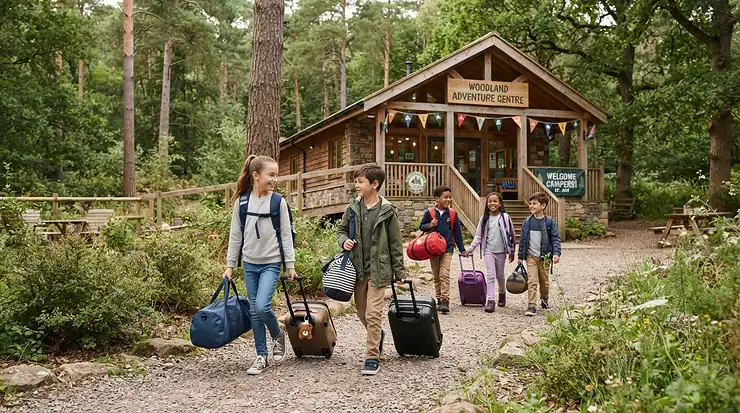
The letter comes home on a Tuesday, crumpled at the bottom of a book bag. It ends with the line every parent dreads: please pack everything in one holdall or small suitcase that your child can carry themselves. Suddenly you’re staring at a kit list, a cupboard of wrong-sized bags and a nine-year-old who has never lugged anything heavier than a PE kit.
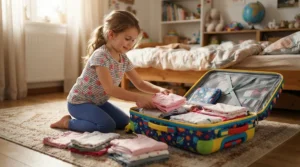
Choosing kids luggage for school trips is fiddlier than it looks. The bag has to survive a coach hold, a muddy field, a bunk-room floor and a child who treats zips like a contact sport. It must be light enough for small shoulders. It must also be obvious enough that it doesn’t vanish among forty near-identical black holdalls. Get it right and the week runs smoothly. Get it wrong and you’ll hear about it, loudly, in a car park at 3.30pm on Friday.
This guide compares seven real options, from budget trolleys to premium hardshells, and explains what each spec means in practice. You’ll also find a school trip packing list, advice on name labels for luggage and tips on group travel identification, all pitched at UK schools. One caveat: the DfE’s health and safety guidance on educational visits outlines how schools plan and run trips, so your school’s own kit list is always the final word on bag type and size.
What is kids luggage for school trips?
Kids luggage for school trips is any child-sized bag, such as a holdall, small wheeled suitcase or convertible trolley-backpack. It holds a few days of clothes and kit for a residential visit, and a pupil can carry or wheel it unaided. The best versions are light, clearly labelled, quick to repack and tough enough for coaches and mud.
Quick Comparison: Kids Luggage for School Trips at a Glance
| Product | Type | Capacity | Price range | Best For |
|---|---|---|---|---|
| Aerolite MiniMAX | Trolley plus backpack | 30L | Around £25–£35 | First residentials, Years 3–6 |
| LittleLife Wheeled Duffle | Wheeled soft duffle | Overnight-sized (check listing) | Check current price (budget bracket) | One-night stays, younger pupils |
| Highlander Storm Kitbag | Tarpaulin holdall/rucksack | 30L–45L | Roughly £35–£55 | Tents, mud, outdoor centres |
| Little Herschel Classic Duffle | Soft duffle, no wheels | 24L | Check current price (mid-range) | One to two nights, kids who carry it themselves |
| Boppi Tiny Trekker | Soft wheeled case | About 17–23L (varies by listing) | Around £50 (roughly £45–£55) | Ages 4–7, short stays |
| Samsonite Disney Ultimate 2.0 | Hardshell wheeled case | Varies by size | Check current price (mid to upper-mid) | Paved sites, ferry or flight trips |
| Stokke JetKids BedBox | Ride-on hardshell | 20L | Roughly £130–£170 | Youngest travellers, overseas trips |
Looking at the table, the Aerolite MiniMAX delivers the most capacity per pound, while the Highlander Storm Kitbag is the one to beat if the kit list mentions tents or fields. The Stokke JetKids BedBox costs several times more than anything else here and holds the least, so it only makes sense for very young travellers. Prices move constantly, so check current listings before you decide.
💬 Just one click — help others make better buying decisions too!😊
Top 7 Kids Luggage for School Trips: Expert Analysis
1. Aerolite MiniMAX — best all-round convertible case
The clever bit is that it’s two bags in one. Wheel it along a corridor, then flip out the straps and carry it like a rucksack when the path turns to gravel.
Mumsnet’s testers list it at 45 x 35 x 20cm, 30 litres and roughly 1.4kg empty. That weight matters more than the litres, because a child who can lift their own bag isn’t asking a teacher to haul it off the coach. Thirty litres comfortably swallows two or three nights of clothes plus a wash bag and towel. The retractable handle also suits shorter arms.
Based on the spec comparison, this is the safest first purchase for Years 3 to 6. The catch is that 30 litres invites overpacking, and a stuffed bag cancels out the lightweight advantage. Reviewers also note the styling skews older, so very small children may find it a touch serious.
On reviews, Mumsnet’s editors ranked it their best overall kids’ suitcase, and one user there says their children love theirs. Mother & Baby highlights its airline approvals and kid-friendly handle. Feedback specific to school trips is thin, so treat this as general-use sentiment.
Pros:
- ✅ Wheels for corridors, straps for rough ground
- ✅ Light at roughly 1.4kg empty
- ✅ Generous 30L for the money
Cons:
- ❌ Styling feels a bit grown-up for tiny travellers
- ❌ Big capacity tempts children to overpack
Around £30 (roughly £25–£35) makes this the best value here, whatever the trip.
2. LittleLife Wheeled Duffle — rolls smoothly even when fully loaded
A wheeled duffle sits between a suitcase and a holdall: it rolls like the former but squashes like the latter.
LittleLife’s own description says the bag is designed to roll smoothly even when loaded, so children can manage their luggage themselves. A separate retailer describes the animal-themed range as sized for overnights. Brand copy rarely quotes litres, so check the listing’s dimensions against your school’s bag limit. Soft sides help in a crowded coach hold, where rigid cases fight for space.
On paper, this suits Years 1 to 4 on a one-night stay at a hostel-style site with flat paths. The animal designs also make the bag easy to spot, which counts in a group. Wheels are a liability on mud, though, and “overnight-sized” means it won’t stretch to a four-night trip. If the kit list mentions tents, look at the Highlander Storm Kitbag instead.
I couldn’t verify a meaningful volume of customer reviews to summarise, and one retailer listed a design as out of stock. Treat this as a spec-led pick and check availability.
Pros:
- ✅ Designed to roll smoothly even when full
- ✅ Soft sides squash into coach holds
- ✅ Playful animal designs kids happily claim
Cons:
- ❌ Small wheels struggle on muddy tracks
- ❌ Too compact for multi-night residentials
Check the current price, which should sit in the budget-to-mid bracket. It’s a sensible buy if your child’s trip is a single night.
3. Highlander Storm Kitbag — tarpaulin-tough, carries as holdall or rucksack
Built for the outdoors rather than the airport, this is the bag that shrugs off puddles.
It comes in 30, 45, 65, 90 and 120-litre versions, and retailers quote about 0.9kg for the 30L and 1.2kg for the 45L. Dimensions differ by listing, so check before buying. The heavy-duty tarpaulin is water-resistant, and removable padded straps convert it to a rucksack. The 30L is plenty for a Year 5 on two nights. The 45L suits Years 6 and 7 on four nights. Anything bigger becomes a bag a child physically can’t lift.
Tents, farm stays and outdoor centres are where this shines. Several kit lists steer parents towards soft holdalls for exactly those sites. The trade-off is no wheels, so every gram is carried on the child, which makes light packing essential.
Retailer pages show only a handful of reviews, mostly happy about toughness, which is too few to generalise. Most feedback comes from adult outdoor users rather than parents of ten-year-olds.
Pros:
- ✅ Water-resistant tarpaulin handles rain and puddles
- ✅ Converts to a rucksack with padded straps
- ✅ 30L size suits smaller children
Cons:
- ❌ No wheels, so all weight is carried
- ❌ Few child-specific reviews to lean on
Expect roughly £35–£55 depending on size. For muddy residentials it’s strong value.
4. Little Herschel Classic Duffle — light, simple, built to last years
Sometimes the best bag is the least complicated one.
PureWow lists a 24L capacity, 9.75 x 18.5 x 9.75 inches (about 25 x 47 x 25cm), recycled-bottle fabric and a limited lifetime warranty. There are no wheels. Twenty-four litres holds two nights if clothes are rolled tightly. It won’t cope with a week away, so this suits Years 3 to 6 on one or two nights.
The honest analysis is that this works for children who can carry their own bag. It squashes into awkward coach spaces and car boots, and it’s unlikely to be embarrassing at twelve. The warranty and sturdy build also mean it keeps working for sleepovers, swimming and weekends away. That makes the cost per use attractive.
One PureWow editor reports using the same duffle for nine years and calls the size right for kids to carry. That’s a single anecdote, and I couldn’t verify a large customer-review pool, so treat it as indicative.
Pros:
- ✅ Compact enough for children to carry unaided
- ✅ Recycled fabric with lifetime warranty
- ✅ Fits awkward coach and boot spaces
Cons:
- ❌ No wheels, so long walks fall to small arms
- ❌ 24L runs out fast beyond two nights
Pricing varies by colourway and retailer, so check the current price. Expect it in the mid-range bracket, and it pays back if reused for years.
5. Boppi Tiny Trekker — soft-shell character case for small hands
This is the one for children who still want the suitcase to look like a penguin.
Mumsnet lists 46 x 29.5 x 20cm, 23L and 2.1kg, while some retailers quote 17L, so check the specific variant. There are two adjustable handle heights, which matters because a child who has to stoop to pull a bag will abandon it. At 2.1kg empty it’s heavier than the Aerolite MiniMAX, which carries more.
Boppi’s range is pitched at toddlers and early primary, so I’d steer it towards ages four to seven on short stays. The capacity covers one or two nights with room for a teddy. Older children may find the cartoon designs babyish by Year 5.
Mumsnet credits the range with cute designs and durability. A parent quoted by Mother & Baby found it a perfect cabin fit for a six-year-old and easy to manoeuvre, and another reported four long-haul flights with theirs. Few reviews are school-trip-specific.
Pros:
- ✅ Handle height adjusts as children grow
- ✅ Fun designs encourage kids to own packing
- ✅ Durable according to parent reviewers
Cons:
- ❌ Small capacity, listed from about 17L to 23L
- ❌ Designs feel too young for older primary
Around £50 (roughly £45–£55) is fair value for younger children, but poor value if they’ll outgrow it quickly.
6. Samsonite Disney Ultimate 2.0 — hardshell protection with character appeal
A hard shell protects what’s inside, and a recognisable design is easy to spot in the coach hold.
Samsonite’s own buying guide suggests cabin-size cases of around 50–55cm for short trips and quotes 40–50cm as the ideal height for younger children. Specs vary by character and size. For a sense of scale, Grazia’s tested Disney hardshell measured 52 x 38 x 21cm, held 30L and weighed 2.1kg, with sturdy locks.
Those locks need care. At least one school kit list says children must not be able to lock their case, so check the policy before buying. Hardshells also protect fragile items well, but rigid cases don’t squash into a full hold. Another school warns that small suitcases get dragged through mud. This is best for trips on paved sites, or with a ferry or flight involved.
Grazia praises the solid design and good locks. I couldn’t verify a robust customer-review pool for this exact model, so check recent buyer feedback.
Pros:
- ✅ Rigid shell protects contents in coach holds
- ✅ Familiar brand with kid-sized options
- ✅ Distinctive designs help identification
Cons:
- ❌ Rigid shell won’t squash into packed holds
- ❌ Lock may breach your school’s rules
Check the current price, likely mid to upper-mid. It’s worth it only if the trip suits a wheeled hard case.
7. Stokke JetKids BedBox — ride-on suitcase that doubles as an in-flight bed
It’s the showpiece of the group, and it’s overspecified for most school trips.
Testix lists 20L, 3.3kg, 46 x 20 x 36cm and a polypropylene hard shell, and its tests found the wheels quiet at 58dB on tiles. Mumsnet notes it works as a ride-on and an in-flight bed, but isn’t approved on some airlines. At 3.3kg empty it’s the heaviest bag here and holds the least, so a small child will struggle to lift it.
Based on the spec comparison, it suits a Reception or Year 1 pupil on an overseas trip, or a family buying one bag for years of holidays. For a two-night residential, one of the lighter picks above is a better fit.
Mumsnet’s editor praises its multi-use cleverness, and Testix scored it 9.2/10. Testix also flags the weight, limited colours and scarcer replacement parts than Trunki.
Pros:
- ✅ Quiet wheels and a tough hard shell
- ✅ Doubles as a ride-on seat
- ✅ Strong test scores and durability
Cons:
- ❌ 3.3kg empty is heavy for small children
- ❌ Premium price for only 20L
Roughly £130–£170, depending on the retailer. Great for families who travel, poor value if the only job is a school residential.
✨ Ready to Choose?
🔍 Take your school trip prep to the next level with these carefully selected bags. Click any highlighted product name to check current pricing and availability. A well-chosen bag helps your child enjoy a stress-free, confident trip!
How to Choose Kids Luggage for School Trips
- Start with the kit list. Schools usually specify one small suitcase or medium holdall that the child can carry alone. That limit overrides any marketing claim.
- Match capacity to nights. Roughly 20–30 litres suits one to two nights, while four nights can stretch to about 45 litres. Bigger isn’t better, because children fill what they’re given.
- Check empty weight. Which?’s suitcase buying advice stresses checking how light a case is and weighing hard against soft shells. A heavy bag leaves less allowance for clothes.
- Pick the carry mode for the terrain. Wheels suit hard floors, while straps and soft sides suit tents and paths.
- Test zips, wheels and handles. If possible, try before buying. Cheap zips fail first.
- Plan identification. Choose a distinctive colour or design and leave space for labels.
- Check lock rules. Some schools forbid locks children can operate.
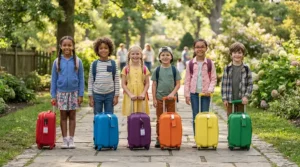
School Trip Suitcase vs Holdall vs Rucksack
| Option | Strengths | Weak spots | Best For |
|---|---|---|---|
| School trip suitcase (wheeled) | Rolls easily, protects contents | Drags in mud, rigid in holds | Hard floors, ferry trips: Samsonite Disney Ultimate 2.0, Boppi Tiny Trekker |
| Holdall | Squashes into holds, copes with mud | All weight is carried | Tents, outdoor centres: Highlander Storm Kitbag, Little Herschel Classic Duffle |
| Convertible or wheeled duffle | Flexible carry modes | Compromise on both | Mixed terrain: Aerolite MiniMAX, LittleLife Wheeled Duffle |
Reading across the rows, the holdall wins whenever terrain is unpredictable, and the school trip suitcase wins on hard floors. The convertible is the hedge for parents who don’t know the site. Schools back this up. One primary school’s kit list recommends holdalls because small suitcases get dragged and muddied, and Mumsnet parents say suitcases don’t work in tents. Another Mumsnet parent estimated that about 85% of children at their daughter’s hostel-based residential brought suitcases, so site type clearly matters.
Residential Trip Luggage: What Schools Actually Ask For
Across the kit lists schools publish online, the same instructions recur. Pack everything in one medium holdall or small suitcase. Make sure the child can carry it from the coach unaided. Label it clearly, and bring a separate small rucksack for day activities. Some schools add that bedding can go in its own bag, and one asks that children not be able to lock their case.
For residential trip luggage, the implication is straightforward: capacity isn’t the constraint, carrying ability is. One school also asks parents to involve children in packing so they can repack at the end. That works, because children who packed the bag themselves know where things are.
Weigh the destination, too. A purpose-built hostel with corridors and lifts favours wheels, whereas tents, farms and steep paths favour soft bags that can be carried. If the letter doesn’t specify, email the school and ask about the sleeping arrangements and distance from the coach drop-off.
Kids Overnight Bag for School: Sizes and Capacity
A kids overnight bag for school is a different animal from a week-away case. For one night, you need pyjamas, spare clothes, a wash bag and perhaps a towel. As a rough rule of thumb, rolled clothing for two nights plus toiletries fills about 20–25 litres. That’s why 24L bags like the Little Herschel Classic Duffle work for one or two nights but run out beyond that.
Height is a second check. Samsonite’s guidance puts the ideal child’s suitcase at 40–50cm tall. Beyond that, a case reaches a smaller child’s chest, which makes it awkward to wheel.
Weight matters more than any dimension. A kids overnight bag for school that weighs 3kg empty, like the Stokke JetKids BedBox, leaves little allowance for the contents. Lighter options such as the Aerolite MiniMAX or Highlander Storm Kitbag 30L keep the starting weight under about 1.5kg.
School Trip Packing List: What Actually Goes in the Bag
Every school’s list differs, but this school trip packing list reflects what published kit lists commonly ask for:
- 🧥 Waterproof coat, plus two or three spare sets of clothes
- 👖 Joggers or leggings rather than denim, which stays wet and cold
- 👟 Trainers, indoor shoes and thin pumps if there’s water play
- 🛁 Towel and wash bag, with roll-on or stick deodorant rather than aerosols
- 🛏️ Sleeping bag and pillowcase, only if the school asks
- 🔦 Torch, if listed
- 🎒 Small day rucksack and a packed lunch bag for day one
- 🏷️ A name on every single item
Several schools also ban electronic devices, sweets and sharp objects, so read the letter. And don’t over-buy: a few schools actively ask parents not to purchase new kit, since clothes will get muddy. Pack by day in freezer bags, with a spare bag for dirty clothes, so children can find things and repack without help.
Name Labels for Luggage: Making Sure Everything Comes Home
Name labels for luggage do two jobs: they identify the bag in the coach hold, and they identify its contents when it falls open on a dormitory floor. Use different labels for each.
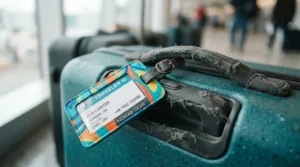
For the bag itself, use a firm luggage tag with a covered window, attached to a sturdy loop. For the contents, use iron-on or sew-in labels on clothes. Stick-on labels can peel off in damp conditions, so test one before trusting it. One school kit list insists every item of clothing be named, and with good reason: mud, water and swapped jumpers make unnamed clothing vanish.
What goes on the tag? Some schools ask for a name and address, which is fine if they request it. Otherwise, a first name, school and class is usually enough on the outside, with your phone number on a card inside. I’d avoid putting a full home address in plain view, purely as a sensible privacy precaution. Finally, photograph the bag and label before departure so you have a record if it goes missing.
Group Travel Identification: Spotting Your Bag in a Sea of Black Holdalls
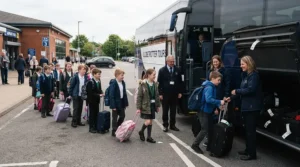
Group travel identification is the unglamorous problem that causes most bag mix-ups. Coach holds fill with dark rectangular bags, and children rarely recognise their own at a glance.
The fix is to make the bag unmistakable. A bright ribbon or strap, a distinctive colour or a character design like those on the Samsonite Disney Ultimate 2.0 or LittleLife Wheeled Duffle helps. A fully black Highlander Storm Kitbag or similar needs something added, such as a coloured strap tied through the handle.
It also helps if the whole class follows one system. Ask the teacher whether the school uses colour-coded tags per group or a numbered labelling method. Where teachers do headcounts of luggage, consistent tags speed everything up. Avoid dangling charms that can snap off, and photograph the bag in case it needs describing to a driver or teacher.
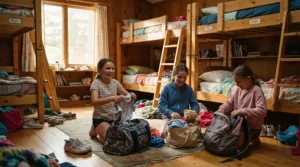
Practical Usage Guide: Setting Up Residential Trip Luggage
A few ten-minute jobs beforehand prevent most problems:
- Test-carry the loaded bag. Have your child carry it for ten minutes, including up a staircase. If they can’t, it’s too heavy.
- Do a practice pack. Pack by day in freezer bags with clothes rolled, then let the child repack unaided.
- Put heavy items low and close to the back for carried bags, and keep a spare bag for muddy items.
- Check zips and straps before the trip, not on the coach.
- Photograph the packed bag so you know what should come home.
In the first 30 days after the trip, empty the bag the same day, air it, wipe it down and dry it fully. The classic mistake is leaving damp clothes at the bottom, which causes mildew before the next trip. Store it lightly stuffed with paper so the shape holds.
Real-World Scenarios: Which Bag for Which Child?
Year 2, one night at a farm stay, budget around £30. The LittleLife Wheeled Duffle or Boppi Tiny Trekker suits a six-year-old on flat paths. Prioritise a handle they can reach and a bag small enough that they’ll carry it from the coach.
Year 5, two nights at a hostel. The Aerolite MiniMAX is the sensible pick. Wheels handle corridors, straps handle the walk from the drop-off point, and 30L covers two nights without room for excess.
Year 6, four nights in tents, wet weather forecast. Go for the Highlander Storm Kitbag in 30L or 45L. It’s water-resistant, carryable and tough. Skip wheels entirely.
If a child will reuse the bag for sleepovers and weekends, the Little Herschel Classic Duffle is worth the extra for its warranty. And if there’s an overseas flight, the Samsonite Disney Ultimate 2.0 or the Stokke JetKids BedBox make more sense for the youngest children.
Problem → Solution Guide
Problem: the bag is too heavy for the child. An NHS trust’s back care advice for children says school bags should weigh no more than about 10% of body weight. A 25kg child would therefore be limited to roughly 2.5kg. That guidance covers school bags, but the principle holds for rucksack-style carrying. Weigh the packed bag, and let wheels or hand-carrying take the strain.
Problem: everything came back wet. Pack a spare bag for dirty clothes, and bag clothes by day.
Problem: the bag got lost among identical ones. Add a bright tag and a label, as covered above.
Problem: the zip split mid-trip. Test zips beforehand and avoid overfilling.
Problem: your child can’t repack. Practise at home and use packing by day, so each set of clothes has its own bag.
Long-Term Cost & Maintenance: Price Range & Value Analysis
| Product | Price range | Cost-per-use logic | Best For |
|---|---|---|---|
| Aerolite MiniMAX | Around £25–£35 | Cheap enough to treat as multi-year | Budget buyers wanting flexibility |
| Highlander Storm Kitbag | Roughly £35–£55 | Tough build spreads cost across years | Outdoor-heavy families |
| Boppi Tiny Trekker | Around £45–£55 | Value falls once children outgrow it | Younger children |
| Stokke JetKids BedBox | Roughly £130–£170 | Only pays back with frequent travel | Frequent family travellers |
Think in cost per trip, not price tag. A bag of around £30 used on a Year 3, Year 5 and Year 6 residential, plus a few sleepovers, works out at a few pounds per use. The same logic means the Stokke JetKids BedBox only pays back if it’s used on many flights. Maintenance is cheap: air, wipe and store the bag properly. Prices shift often, so check current prices before buying.
Common Mistakes When Buying Kids Luggage for School Trips
- Buying too big. A large bag gets filled and then can’t be lifted.
- Ignoring empty weight. A 3kg case starts with a handicap.
- Choosing the wrong format for the site. Check whether it’s tents, hostel or hotel.
- Forgetting lock rules. Some schools ban locks children can operate.
- Buying new without asking. Some schools explicitly suggest second-hand or borrowed kit, and Mumsnet parents mention picking up nearly new holdalls cheaply.
- Skipping labels. An unlabelled bag is a lost bag.
FAQ
❓ What size is best for kids luggage for school trips?
❓ Is a holdall better than a school trip suitcase for residentials?
❓ How much should I spend on a kids overnight bag for school?
❓ What are the best name labels for luggage that won't peel off?
❓ How can I improve group travel identification for a class trip?
Conclusion
The right kids luggage for school trips isn’t the most expensive or the most characterful. It’s the bag your child can carry unaided, that suits the site and that survives the week. For most pupils, that means one of three: the Aerolite MiniMAX for flexible all-round use, the Highlander Storm Kitbag for tents and mud, or the Little Herschel Classic Duffle for short stays and long-term reuse. The LittleLife Wheeled Duffle and Boppi Tiny Trekker suit younger children, the Samsonite Disney Ultimate 2.0 suits hardshell fans on paved sites, and the Stokke JetKids BedBox is for the frequent-traveller family.
Whatever you choose, do the basics. Read the kit list, test-carry the bag, follow your school trip packing list, add proper name labels for luggage and plan some group travel identification. Those small steps prevent most of the problems parents dread.
✨ Ready to pick your bag?
🔍 Click any highlighted product name above to check current pricing and availability, and send your child off with luggage they’ll be proud to carry! 🎒
Recommended for You
- Ride-On Kids Suitcase: 7 Proven Picks For UK Families (2026)
- Kids Luggage Set For Holidays: 7 Best Picks For UK Families (2026)
- Best Kids Luggage: 7 Brilliant Picks For UK Families (2026)
Disclaimer: This article contains affiliate links. As an Amazon Associate, I earn from qualifying purchases. If you purchase products through these links, we may earn a small commission at no additional cost to you.
✨ Found this helpful? Share it with your friends! 💬🤗
