
In This Article
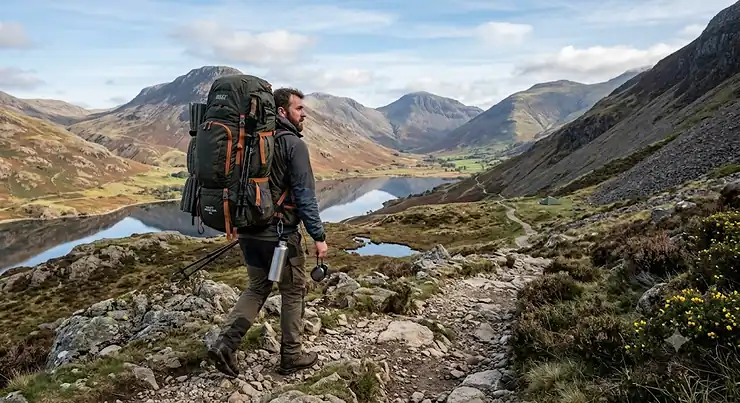
Ask anyone who’s limped off a hill with a screaming shoulder strap and they’ll tell you: the best 70l rucksack for hiking isn’t a luxury, it’s the difference between a trip you talk about fondly and one you’d rather forget. Seventy litres sits at an interesting crossroads. It’s big enough to swallow a tent, a sleeping bag, four days of food and a stove, yet compact enough that you’re not lugging around an empty cave of unused space on shorter outings. For UK walkers tackling the Cape Wrath Trail, the Pennine Way, or simply a long weekend wild camping in the Cairngorms, this capacity has become something of a sweet spot.
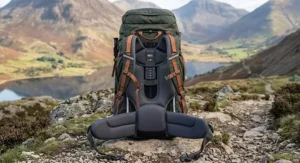
What makes a 70-litre pack genuinely good, rather than just big, comes down to how the load transfers to your hips, how the fabric copes with a Welsh downpour, and how sensibly the pockets are arranged when you’re fumbling for a map in the wind. Before you commit, it’s worth reading a proper checklist of what to actually pack, and the hiking checklist from OS GetOutside is a genuinely useful starting point for working out how much volume you really need.
This guide walks through seven real, currently available rucksacks spanning budget, mid-range and premium price points, backed by honest spec analysis and aggregated review sentiment rather than guesswork. We’ll also dig into secondary questions many of you are Googling anyway — from whether a 65l rucksack for a multi day trek might actually suit you better, to how the Osprey 75l rucksack range holds up, right through to what genuinely separates an expedition backpack from a standard trekking pack.
Quick Comparison: The 7 Best 70L Rucksacks at a Glance
If you’re short on time, here’s the condensed version. Each of these packs earns its place for a different reason, and the “Best For” column should point you towards the right one fast.
| Rucksack | Capacity | Weight | Price Range | Best For |
|---|---|---|---|---|
| Highlander Novar 60+5 | 65L | ~2.0kg | Under £100 | Budget first-timers |
| Vango Sherpa 65+10 | 75L | ~2.3-2.6kg | £90-£110 range | DofE and gap-year trips |
| Berghaus Trailhead 65 | 65L | ~1.6-1.8kg | £120-£150 range | Value-driven weekend backpackers |
| Deuter Aircontact Core 65+10 | 75L | ~2.3-2.5kg | £180-£220 range | Heavy loads, cooler climates |
| Gregory Baltoro 75 | 75L | ~2.2-2.4kg | £270-£320 range | Serious multi-day load-hauling |
| Osprey Aether Plus 70 | 70L | ~2.5-2.7kg | £280-£320 range | All-round long-distance trekking |
| Osprey Aether Pro 75 | 75-78L | ~2.2-2.3kg | £380-£450 range | Expedition and mountaineering use |
Looking at the table, there’s a clear pattern: as price climbs, weight-to-capacity efficiency generally improves, but so does the risk of paying for features you may never use on a standard UK trail. Budget packs like the Highlander Novar 60+5 and Vango Sherpa 65+10 trade a bit of comfort under heavy loads for genuinely impressive value, while the Osprey Aether Pro 75 justifies its price tag only if you’re regularly carrying expedition-level weight over multiple days. Somewhere in the middle, the Berghaus Trailhead 65 and Deuter Aircontact Core 65+10 offer a sensible compromise most weekend and week-long trekkers will be perfectly happy with.
💬 Found a pack that’s caught your eye already? Bookmark this page — you’ll want to compare it against the full breakdown below before you buy.
Top 7 70L Rucksacks for Hiking: Expert Analysis
Right, let’s get into the detail. Every product below has been assessed on its real specifications, verifiable aggregated review sentiment, and how it actually performs against the kind of trips British hikers tend to take on.
1. Highlander Novar 60+5 — best budget entry point for newcomers
The standout here is simple: it’s a genuinely usable, feature-complete rucksack for less than the price of a decent pair of walking boots. At 60+5 litres, the Novar gives you enough room for a full wild camping kit without the £250+ price tag that scares off most first-timers.
Spec-wise, this is a straightforward aluminium-stay design with an adjustable back system, an integrated rain cover, and hydration bladder compatibility — the essentials, without the frills. What most buyers overlook about this model is that the adjustable harness genuinely does accommodate a range of torso lengths, which matters enormously for comfort on longer days; a badly fitted budget pack will hurt far more than an expensive one that fits properly. Based on the spec comparison with premium alternatives, you’re sacrificing ventilation and long-term durability here, not core functionality.
Reviewers consistently report that the aluminium stays feel stiffer than premium alternatives and that airflow is minimal, making it a poor pick for hot, humid conditions. A common complaint in user reviews is the lack of ventilation on the back panel during summer ascents, though most reviewers still rate the overall value highly for what it costs.
Pros:
- ✅ Exceptional value for a full-featured 65L pack
- ✅ Integrated rain cover included as standard
- ✅ Adjustable back system suits varied torso lengths
Cons:
- ❌ Minimal back ventilation on warmer days
- ❌ Heavier build than premium competitors
The Novar typically sits under £100, and for that money, the value proposition is hard to argue with — this is the pack to buy if you’re not yet sure hiking is “your thing” and don’t want to gamble serious money finding out.
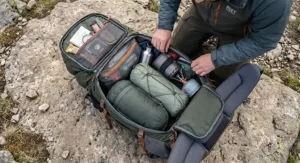
2. Vango Sherpa 65+10 — best for Duke of Edinburgh and first big trips
What makes the Sherpa stand out immediately is its status as a genuine Duke of Edinburgh recommended pack — a detail that carries real weight given how many of these bags end up strapped to teenagers on their first proper expedition.
The 65+10 configuration (extendable via the floating lid) gives real flexibility for trips where your kit list grows unpredictably, and the Airmesh panelling on the back and hip belt does a reasonable job of managing sweat on longer ascents. Here’s what to weigh: reviewers note the shoulder and waist straps can loosen slightly in sustained rain, so a mid-walk cinch-check becomes part of the routine. For someone stepping up from a daypack into proper multi-day carrying, the Sherpa’s ergonomic hip belt and sternum strap with an emergency whistle are thoughtful, safety-conscious additions you wouldn’t expect at this price.
Aggregated customer feedback is broadly positive, with many long-term owners praising its resilience over years of DofE and gap-year use, though a recurring theme in reviews is that the pack feels smaller inside than its stated capacity suggests — a useful thing to know before you pack.
Pros:
- ✅ Officially DofE recommended kit
- ✅ Reflective detailing improves visibility
- ✅ Roomy side and lid pockets for quick-access items
Cons:
- ❌ Straps can loosen in heavy, sustained rain
- ❌ Feels smaller inside than its litre rating implies
Prices for the Sherpa typically fall in the £90-£110 range, occasionally dipping lower in seasonal sales — always check current pricing before buying, as retailer promotions shift regularly.
3. Berghaus Trailhead 65 — best value pick for weekend backpackers
The Trailhead’s standout feature is its BIOFIT adjustable back system, a genuinely well-regarded piece of engineering that punches well above the pack’s price point for comfort and fit customisation.
At 65 litres and a comparatively light 1.6-1.8kg depending on size, this is one of the lighter packs in the sub-£150 bracket, meaning less dead weight before you’ve even added your gear. What most buyers overlook about the Trailhead is how well the BIOFIT harness distributes load across the hips rather than the shoulders — a detail that matters enormously on multi-day trips where cumulative fatigue, not single-day discomfort, is the real enemy. Reviewers consistently rate the Trailhead as one of the best-value packs from an established British-heritage outdoor brand, and it’s a regular recommendation on hillwalking forums for exactly that reason.
A common theme in aggregated feedback is praise for the adjustability across both the unisex and women’s-specific (60L) versions, though some owners note the fabric, while durable, isn’t quite as robust as pricier expedition-grade alternatives over years of rough use.
Pros:
- ✅ BIOFIT adjustable harness suits varied body shapes
- ✅ Lighter than most rivals in its price bracket
- ✅ Reputable, established brand with wide UK stockist support
Cons:
- ❌ Fabric less rugged than premium expedition packs
- ❌ Fewer external attachment points than rivals
Expect the Trailhead 65 to sit in the £120-£150 range at most UK retailers, making it arguably the smartest mid-tier buy on this list for anyone doing regular weekend trips rather than full expeditions.
4. Deuter Aircontact Core 65+10 — best for heavy loads and cooler climates
The Aircontact Core’s calling card is its load-hauling pedigree — this is a pack built by a brand whose Aircontact line has spent decades being the go-to choice for guides and instructors who need to carry serious weight without their pack folding under the strain.
The Aircontact system uses a supportive, less-ventilated back panel compared with trampoline-style designs, which sounds like a downside but actually translates into excellent stability when the pack is heavily loaded — the trade-off is reduced airflow, making it better suited to cooler UK conditions than a scorching summer trek. On paper this means you’re choosing structural support over breathability, and reviewers largely back this up: aggregated feedback consistently praises the Aircontact Core’s ability to carry loads that would make lighter packs sag and shift, while noting it runs warmer on the back than AntiGravity or Anti-Gravity-style mesh alternatives.
What the spec sheet won’t tell you, but user reports suggest, is that the extensive pocket and compression strap system makes this one of the easier packs to organise for longer trips, particularly when carrying camera gear or cooking equipment that needs quick access without unpacking everything.
Pros:
- ✅ Exceptional stability under heavy loads
- ✅ Extensive external pockets for gear organisation
- ✅ Proven, decades-long load-hauling design pedigree
Cons:
- ❌ Less back ventilation than trampoline-style rivals
- ❌ Noticeably heavier than lighter mid-range options
Typically priced in the £180-£220 range, the Aircontact Core represents a considered step up for anyone who regularly carries more than 15-18kg and has found lighter packs uncomfortable under that strain.
5. Gregory Baltoro 75 — best for serious multi-day load-hauling
The Baltoro’s standout advantage is straightforward: more capacity and typically lower weight than Osprey’s comparable heavy-hauler, without sacrificing the suspension quality serious backpackers demand.
Gregory’s flagship line has long been a favourite among those who need to shuttle significant weight over multiple days, and the spec sheet backs this reputation up — a robust frame, pivoting hip belt, and U-shaped main compartment access that mirrors what you’d find on premium Osprey packs. Based on the spec comparison, the Baltoro 75 offers roughly five extra litres of capacity over the equivalent Osprey Aether Plus at a broadly similar weight, which matters if you’re the type who always seems to need “just a bit more room.” Reviewers consistently note that while you lose the integrated rain cover and convertible daypack lid you’d find on some Osprey models, the strong suspension and adjustable torso and hip fit more than compensate for gear-heavy trips.
A recurring theme in aggregated review sentiment is genuine enthusiasm for the pack’s comfort under sustained heavy loads over multi-day routes, with several long-term users specifically praising its performance on demanding multi-week trips where lesser packs began to show fatigue.
Pros:
- ✅ Excellent capacity-to-weight ratio for its class
- ✅ Strong, comfortable suspension under heavy loads
- ✅ U-shaped access makes packing and unpacking simple
Cons:
- ❌ No integrated rain cover included
- ❌ Premium price limits it to committed backpackers
The Baltoro 75 generally sits in the £270-£320 range, positioning it as a genuine premium alternative to Osprey for anyone prioritising raw load-carrying capability.
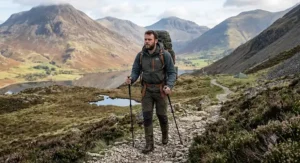
6. Osprey Aether Plus 70 — best all-rounder for long-distance trekking
What sets the Aether Plus 70 apart is its convertible top lid, which detaches to become a usable daypack — genuinely useful for anyone doing a long-distance trek that includes side trips or summit days without the full pack.
Built around Osprey’s AirScape back panel and rated to carry loads up to around 60lbs (roughly 27kg), the Aether Plus 70 sacrifices a little of the ventilation you’d get from Osprey’s lighter Atmos AG line in exchange for a sturdier, more heavy-duty construction better suited to extended trips. Here’s what to weigh: the “Fit-on-the-Fly” adjustable shoulder strap and hip belt system means you can fine-tune the fit on the trail itself, which reviewers repeatedly single out as one of the most genuinely useful features on any pack in this price bracket. What most buyers overlook is that the two additional zippered front pockets on the “Plus” version (versus the standard Aether) meaningfully improve on-trail organisation for anyone tired of digging through a single cavernous main compartment.
Aggregated customer sentiment is strongly positive, with reviewers frequently describing it as a “luxurious” carry for its weight class, though a consistent critique is that, at nearly 2.6kg, it’s heavier than ultralight-minded trekkers might want for shorter trips.
Pros:
- ✅ Convertible daypack lid genuinely useful on longer treks
- ✅ Fit-on-the-Fly adjustment system tunable on the trail
- ✅ Excellent organisation via additional zippered pockets
Cons:
- ❌ Heavier than Osprey’s own Atmos AG line
- ❌ Premium price reflects the feature set
Expect to find the Aether Plus 70 in the £280-£320 range, and for anyone doing genuine week-long treks rather than weekend outings, it’s consistently one of the most recommended all-rounders in this capacity class.
7. Osprey Aether Pro 75 — best for expedition and mountaineering use
If you’ve searched specifically for an Osprey 75l rucksack review, this is the pack most serious buyers land on: the Aether Pro 75 is built with Osprey’s most advanced, heavy-duty fabrics for professionals and committed adventurers who need a genuinely bombproof expedition backpack.
Aimed squarely at guides, mountaineers and long-distance backpackers, the Aether Pro 75 uses a stripped-back, “strippable” design philosophy — removable top lid, full-length vertical side zip access, and a customisable suspension system built to carry loads that would overwhelm a standard trekking pack. On paper this means a genuinely different category of product to the packs earlier in this list: it’s built for months on the trail or technical mountaineering objectives, not a single weekend away. Based on the spec comparison with the Aether Plus 70, the Pro version trims unnecessary bulk in favour of durability and load transfer, at a meaningfully higher price point that only makes sense if you’re actually pushing the pack’s limits.
Review data on this specific model remains comparatively limited given its specialist positioning, so rather than fabricate a verdict, it’s worth saying plainly: this is a pack aimed at a narrower, more expert audience, and the honest recommendation is that casual weekend hikers are very unlikely to need — or benefit from — its expedition-grade feature set.
Pros:
- ✅ Expedition-grade fabric durability and construction
- ✅ Full-length side-zip access to the main compartment
- ✅ Backed by Osprey’s lifetime repair guarantee
Cons:
- ❌ Overkill and overpriced for casual weekend hikers
- ❌ Fewer independently verified UK customer reviews so far
Typically positioned in the £380-£450 range in the UK, the Aether Pro 75 is a considered investment for genuine expedition use rather than an impulse buy for your first Munro.
How to Choose a 70L Rucksack for Hiking
Choosing the right pack comes down to matching a handful of specific criteria to your actual trip type, rather than simply picking the biggest or shiniest option on the shelf.
- Match capacity to trip length, not ambition. A 70L pack suits four days upwards; anything shorter and you’re carrying unnecessary bulk and weight.
- Prioritise hip belt fit over shoulder strap padding. Around 80% of a well-fitted pack’s load should transfer to the hips, not the shoulders.
- Consider back-panel ventilation against your typical climate. Mesh trampoline designs run cooler; supportive foam panels carry heavier loads better.
- Check the maximum recommended load rating. Manufacturers publish this for a reason — exceeding it compromises both comfort and the pack’s structural lifespan.
- Decide whether you need a detachable daypack lid. Genuinely useful on multi-week trips with summit days; largely wasted weight on shorter outings.
- Test loaded, not empty. An empty pack tells you almost nothing about real-world comfort; a shop willing to load-test with sandbags is worth seeking out.
- Factor in the British Mountaineering Council’s rucksack-packing guidance, which covers weight distribution principles that apply regardless of which pack you buy.
Practical Usage Guide: Setting Up Your New Rucksack Properly
Getting a new pack home is only half the job — how you set it up in the first 30 days genuinely determines whether it becomes a trusted companion or a source of ongoing niggles.
Start by measuring your torso length properly rather than guessing based on height; most manufacturers, including Osprey and Gregory, provide a simple measurement guide, and getting this wrong is the single most common cause of an uncomfortable carry. Once home, load the pack with roughly the weight you’ll actually be carrying — using books, tins, or actual camping kit — and wear it around the house or garden for at least twenty minutes before your first real trip. This lets you identify pressure points while there’s still time to adjust the harness or exchange the pack entirely.
A common first-time mistake is over-tightening the shoulder straps to compensate for a poorly adjusted hip belt; this simply transfers weight to the wrong part of your body and causes exactly the shoulder fatigue you’re trying to avoid. Instead, cinch the hip belt first so it sits directly over your iliac crest, then adjust the shoulder straps to remove any gap, not to bear the majority of the load. Maintenance-wise, a seasonal clean with a mild soap solution keeps zips running smoothly and fabric coatings performing as intended — neglecting this is one of the fastest ways to shorten a rucksack’s working life. Finally, resist the urge to overpack simply because the volume is available; the biggest optimisation trick experienced backpackers use is packing to roughly 80% capacity, leaving room for food resupplies and preventing the compression straps from being permanently maxed out.
✨ Ready to Find Your Perfect Pack?
🔍 Take your next multi-day trek to the next level with a rucksack that actually fits how you hike. Click through on any of the packs above to check current pricing and availability before your next adventure.
Real-World Scenarios: Which Pack Suits Which Hiker?
Matching a pack to a person is often more useful than matching it to a spec sheet, so here are three profiles many readers will recognise.
The first-time wild camper on a tight budget, planning a single Duke of Edinburgh-style expedition weekend, doesn’t need expedition-grade fabric or a £400 price tag. The Highlander Novar 60+5 or Vango Sherpa 65+10 covers everything required — waterproofing, a functional back system, and enough room for a tent and three days of food — without the financial risk of an expensive pack that might sit in a cupboard afterwards.
The regular weekend backpacker, tackling routes like the West Highland Way over four or five days once or twice a year, benefits most from the middle of this list. The Berghaus Trailhead 65 or Deuter Aircontact Core 65+10 strikes the right balance between comfort under a realistic 15-18kg load and a price that reflects genuinely regular, rather than occasional, use.
The committed long-distance trekker, planning something like the Cape Wrath Trail or a multi-week continental hut-to-hut route, is exactly who the Osprey Aether Plus 70, Gregory Baltoro 75, or Osprey Aether Pro 75 are built for. Here, the extra investment in suspension quality, load rating and durability pays for itself across the miles, where a cheaper pack’s compromises would compound daily rather than remain a minor annoyance.
65L Rucksack for a Multi-Day Trek vs 70L: Which Size Do You Actually Need?
This is one of the most common points of confusion for first-time buyers, and it’s worth addressing honestly rather than defaulting to “bigger is safer.”
A 65L rucksack for a multi day trek genuinely suits the vast majority of three-to-five-day trips, provided you’re reasonably disciplined about what you pack. The extra 5-10 litres a 70L pack offers becomes meaningful mainly in three scenarios: winter trips requiring bulkier insulated kit, trips where you’re carrying communal gear like a stove or shared tent poles, or routes with infrequent resupply points requiring extra food capacity. Reviewers and experienced backpackers consistently note that the temptation with a larger pack is simply to fill the extra space with non-essentials, which then has to be carried the entire trip regardless of whether it’s used.
Based on the spec comparison across this list, packs like the Berghaus Trailhead 65 and the base Deuter Aircontact Core 65 (before the +10 extension) genuinely suit the 65L bracket well, while the flexibility of an extendable design like the Vango Sherpa 65+10 offers a sensible middle ground — you get 65L as your baseline, with genuine extra capacity available only when you need it, rather than carrying dead volume as standard.
Osprey 75L Rucksack Review: Where the Aether Pro 75 Fits In
Given how frequently this exact search comes up, it’s worth a dedicated, honest answer: is an Osprey 75L rucksack worth it over a 70L alternative?
The short answer is that it depends almost entirely on what “worth it” means for your specific trips. The Osprey Aether Pro 75 covered earlier in this guide represents Osprey’s most technically advanced offering at this volume, built for expedition-length trips and professional use rather than the occasional long weekend. What the spec sheet won’t tell you, but the broader Osprey 75L range confirms, is that this extra five litres over the Aether Plus 70 rarely changes the practical experience of a standard multi-day trek — it matters far more on winter expeditions or trips requiring bulky group equipment. Reviewers researching Osprey’s wider 75L options consistently flag the same trade-off: more capacity and more advanced materials come at a genuinely premium price, and casual hikers are frequently better served by staying at 70L and packing more disciplined.
Expedition Backpack vs Standard Trekking Pack: What’s the Real Difference?
The term “expedition backpack” gets thrown around loosely in outdoor retail, so it’s worth being precise about what actually separates one from a standard trekking pack.
A genuine expedition backpack, like the Osprey Aether Pro 75, is built around three things a standard trekking pack typically isn’t: a significantly higher maximum load rating, more durable and often more expensive fabric technology designed to withstand months of continuous use, and a suspension system engineered for loads well beyond what a typical weekend backpacker would ever carry. Standard trekking packs, including the Osprey Aether Plus 70 and Gregory Baltoro 75, are absolutely capable of multi-day and even multi-week trips, but they’re optimised for a broader range of everyday comfort features — integrated rain covers, convertible daypacks, generous organisational pockets — rather than raw, no-compromise load capacity.
What most buyers overlook is that paying expedition-pack prices for a standard trekking trip is rarely money well spent; the extra durability and load capacity of a true expedition backpack goes largely unused on routes that don’t demand it, while the standard trekking pack’s everyday comforts are conspicuously absent on the pricier expedition model.
Common Mistakes When Buying a Long-Distance Trekking Pack
Even experienced hikers occasionally make avoidable errors when choosing a long-distance trekking pack, and a few crop up again and again in forums and review sections.
The most frequent mistake is buying based on capacity alone, without properly considering torso length and hip belt sizing — a perfectly specced pack that doesn’t fit your body will always underperform a lesser pack that does. A close second is underestimating how much a fully loaded pack’s weight distribution matters versus its unloaded weight on the shop shelf; a 2.6kg pack with genuinely excellent load transfer can feel lighter on the trail than a 2.1kg pack that dumps weight onto your shoulders. Buyers also frequently skip trying a pack loaded with realistic weight before purchase, relying instead on a brief unloaded try-on that tells you almost nothing useful.
Finally, plenty of first-time buyers skip proper safety planning altogether, which the Ramblers’ guidance on hill and mountain walking covers well — a good rucksack is only one part of being properly prepared for longer UK routes, alongside appropriate layering and navigation skills.
Long-Term Cost & Maintenance of Your Extended Trip Rucksack
An extended trip rucksack is a genuine investment, and thinking in terms of total cost of ownership rather than just the sticker price changes the calculus considerably.
A £100 budget pack that needs replacing after eighteen months of regular multi-day use may well cost more over five years than a £280 premium pack backed by a genuine repair warranty, like the lifetime guarantee Osprey offers on its Aether range. Reviewers consistently note that premium packs from established backpacking brands hold their functional value well, with well-maintained examples still performing years after purchase, whereas budget packs more commonly show frayed webbing and failing zips within a couple of seasons of regular use. Cost-per-use calculations favour the premium end of this list for anyone doing three or more multi-day trips annually; for occasional users doing one trip a year, a budget or mid-range pack remains the more sensible financial choice, since the extra durability of a premium pack simply won’t be tested as heavily.
Safety, Weight Limits & Regulations for UK Hillwalking
A rucksack is only as good as the judgement behind how it’s packed and used, so a brief word on safety is a genuinely useful addition here rather than filler.
There’s no statutory weight limit for hiking rucksacks in the UK, but a widely cited rule of thumb among instructors is to keep a loaded pack under roughly 20-25% of your own body weight for multi-day trekking, rising only for those specifically trained and conditioned for heavier expedition loads. Beyond weight, proper preparation matters just as much as the pack itself: the Ordnance Survey’s mountain safety guidance, produced jointly with Mountain Rescue England and Wales, is a genuinely valuable resource covering route planning, weather checks and what to do if things go wrong. No rucksack, however well specced, substitutes for a printed map, a charged phone, and telling someone your planned route before you set off.
Features That Actually Matter (And Those That Don’t)
Marketing copy loves to list features, but not all of them meaningfully improve your experience on the trail.
Genuinely worth prioritising: a properly adjustable torso length, a supportive and correctly sized hip belt, and a load rating that comfortably exceeds what you’ll actually carry. These three factors do more for comfort than almost any other spec on a data sheet. Features that sound impressive but rarely justify a price premium for casual hikers include ultra-premium fabric technologies designed for months of continuous expedition use, integrated hydration reservoirs you’re unlikely to use if you already carry bottles, and elaborate lid-conversion systems if you rarely take side trips without your full pack. Reviewers consistently note that the packs earning the strongest long-term loyalty are rarely the most feature-laden — they’re the ones that fit properly and hold up to repeated use.
Frequently Asked Questions
❓ What is the best 70l rucksack for hiking on a budget?
❓ Is 70 litres too big for a weekend hike?
❓ What's the difference between a 65L and 70L rucksack?
❓ How much should a loaded 70L hiking rucksack weigh?
❓ Is Osprey worth the extra money over budget rucksack brands?
Conclusion
Choosing the best 70l rucksack for hiking ultimately comes down to being honest about how often you’ll actually use it and what your typical trip looks like. Budget options like the Highlander Novar 60+5 and Vango Sherpa 65+10 genuinely deliver for occasional trips and first expeditions, while the Berghaus Trailhead 65 and Deuter Aircontact Core 65+10 hit a sensible middle ground for regular weekend backpackers. For committed long-distance trekkers, the Osprey Aether Plus 70, Gregory Baltoro 75 and Osprey Aether Pro 75 justify their premium pricing through suspension quality, load capacity and long-term durability.
Recommended for You
- Best 55L Rucksack 2026: 7 Top Picks for Every Budget
- Best 40L Rucksack 2026: 7 Top Picks Tested Against Real Reviews
- Best Backpacking Rucksack UK: 7 Brilliant Picks for 2026
Disclaimer: This article contains affiliate links. As an Amazon Associate, I earn from qualifying purchases. If you purchase products through these links, we may earn a small commission at no additional cost to you.
✨ Found this helpful? Share it with your friends! 💬🤗
