
In This Article
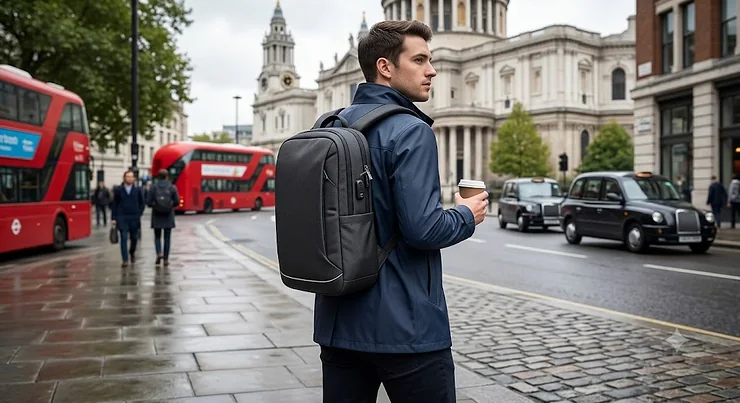
Here’s a stat that tends to sober people up on a crowded Tube platform: pickpocketing in busy UK cities is opportunistic, fast, and almost always about an unzipped pocket or a bag slung carelessly over one shoulder. An anti theft backpack is a rucksack built specifically to close those gaps — using lockable zips, cut-resistant panels, back-facing compartments and RFID-blocking lining to make you a far less appealing target than the person next to you. It won’t make you invincible. Nothing does. But it stacks the odds firmly back in your favour.
We’ve spent the last few weeks knee-deep in spec sheets, warranty pages and aggregated review threads from real owners — commuters, backpackers, digital nomads — to work out which anti theft backpack models genuinely earn their keep in 2026, and which ones are mostly marketing gloss over a normal rucksack. This isn’t a rewritten Amazon listing. It’s commentary, comparison and, hopefully, a bit of straight talking about what “theft-proof” actually means (spoiler: nothing is fully theft-proof, and any brand telling you otherwise is stretching the truth).
Whether you’re weighing up an anti theft travel backpack review before a European city break, trying to decide between a Pacsafe backpack vs Bobby backpack for your daily commute, or you’ve simply had a phone lifted from an open side pocket once too often, this guide walks through seven real products, three comparison tables, and enough practical detail to make a genuinely informed choice. As required under Amazon’s UK Associates Programme, this article contains affiliate links — full disclosure sits at the bottom of the page.
Quick Comparison Table
Before the deep dive, here’s the shortlist at a glance. Think of this as the cheat sheet you’d want if someone read you the article over a coffee and you only had ninety seconds.
| Backpack | Best For | Key Security Feature | Price Range |
|---|---|---|---|
| Pacsafe Metrosafe X 25L | Daily commuting & laptops | Lockable zips + RFID pocket | £120-£170 |
| Samsonite Securipak 2.0 | High-street style & tech | Back-only access panel | £90-£130 |
| XD Design Bobby Original | Budget hidden-pocket carry | Cut-resistant fabric | £70-£100 |
| Korin ClickPack Pro | Long-haul travel | TSA lock + steel cable | £100-£150 |
| Travelon Anti-Theft Classic | Tourist sightseeing | 5-point security system | £80-£110 |
| Pacsafe Venturesafe EXP35 | Backpacking trips | eXomesh slash guard | £150-£210 |
| Bange Smart Anti-Theft Backpack | Tight budgets | Combination lock | £30-£50 |
Looking across the table, the split is roughly what you’d expect: the two Pacsafe models bookend the range, with the Pacsafe Metrosafe X 25L covering everyday city use and the Pacsafe Venturesafe EXP35 built for weeks away from home rather than a nine-to-five commute. If you’re brand-new to anti theft gear and don’t want to commit serious money before you know whether you’ll actually use the features, the Bange Smart Anti-Theft Backpack and XD Design Bobby Original sit at a sensible entry point. Everything in between trades a bit of price for a specific strength — Samsonite for polish, Travelon for sheer number of security layers, Korin for genuine slash resistance.
💬 Found a favourite already? Scroll down for the full breakdown — or jump straight to checking current prices and availability!
Top 7 Anti Theft Backpacks: Expert Analysis
We’ve picked a genuine spread here — budget, mid-range and premium, commuter-focused and travel-focused — because “best anti theft backpack” means something different to a student on the bus than it does to a backpacker in Lisbon.
1. Pacsafe Metrosafe X 25L — best all-round security for daily commuting
The Metrosafe X 25L is Pacsafe’s answer to the question “what does a normal-looking backpack with proper security actually look like?” and honestly, it answers it well. Made from post-consumer recycled polyester equivalent to roughly 30 recycled bottles, it pairs an eco-conscious build with the brand’s signature lockable zip pulls, a hidden back-panel pocket for a passport or wallet, and RFID-blocking material sewn into the front organiser. On paper this means your day-to-day essentials sit against your spine rather than facing outward toward a crowd — the exact opposite of how most commuter bags are built. What most buyers overlook about this model is that the laptop sleeve is fleece-lined, which matters more than it sounds: fewer scuffs on a MacBook lid over eighteen months of daily Tube journeys adds up. It’s aimed squarely at commuters and city-based professionals who carry a laptop most days and want security that doesn’t scream “I’m carrying something expensive.” The bag is treated with a PFC-free water repellency finish and comes with a five-year Pacsafe warranty, which is unusually long for this category. Reviewers consistently report that the lockable zips genuinely deter casual bag-dipping on public transport, with several long-term owners noting the compartments still feel structurally sound after years of near-daily use, though a handful mention the water bottle pockets are on the small side.
Pros:
- ✅ Five-year warranty, longer than most rivals offer
- ✅ RFID-blocking front organiser protects cards and passport
- ✅ Made from recycled materials with PFC-free coating
Cons:
- ❌ Water bottle side pockets are noticeably shallow
- ❌ Heavier empty weight than slimmer commuter bags
Typically listed in the £120-£170 range depending on colourway, the Metrosafe X 25L earns its price through longevity and warranty backing rather than flashy extras — for anyone who wants to buy once and stop thinking about it, that’s good value.
2. Samsonite Securipak 2.0 — sleekest high-street pick with UK availability
Samsonite doesn’t usually get filed under “anti-theft specialist,” which is precisely why the Securipak 2.0 catches people off guard. The main compartment is only accessible from the rear panel, with a recessed zip seam that keeps the opening hidden flush against your back, and the RFID-protected pocket sits between the outer fabric and the internal lining rather than as a bolt-on accessory. Here’s what the spec sheet won’t spell out plainly: because Samsonite has decades of experience building actual travel luggage, the strap padding, back ventilation and overall carry comfort are a genuine step up from most single-purpose anti-theft brands, which often treat comfort as an afterthought. This is the pick for someone who wants security features but refuses to look like they’re wearing a tactical rucksack to the office. The collection is built largely from recycled PET plastic, which is a nice added detail if sustainability factors into your decision. Aggregated owner feedback tends to praise the discreet rear-access design specifically for crowded commuter routes, and the built-in USB charging port comes up repeatedly as a genuinely used feature rather than a marketing checkbox, though some reviewers note the narrow profile limits how much you can pack for anything beyond a single working day.
Pros:
- ✅ Rear-only access hides the opening from anyone facing you
- ✅ Comfortable, well-padded straps thanks to Samsonite’s luggage heritage
- ✅ USB pass-through port for charging on the move
Cons:
- ❌ Narrower main compartment than dedicated travel packs
- ❌ Premium-brand pricing versus lesser-known competitors
Expect to pay somewhere in the £90-£130 bracket at most UK retailers, which is fair for a bag that doubles as smart daily carry and genuine anti-theft kit without looking like either.
3. XD Design Bobby Original — best budget hidden-pocket pioneer
The Bobby Original is arguably the bag that popularised the entire anti theft backpack category after a hugely successful Kickstarter campaign back in 2016, and it’s still holding its own nearly a decade later. Built from durable 600D polyester with additional inner layers for anti-shock and anti-cut protection, the bag deliberately uses a rigid structure so it holds its shape rather than sagging or deflating over time. Based on the spec comparison against newer rivals, the Bobby’s genuine strength is its concealed, back-facing zip layout combined with a hidden strap pocket at chest height — small enough for a phone or a card wallet, positioned exactly where a pickpocket’s hand would never think to check. It’s worth being upfront here, echoing what one long-term reviewer noted: the cut-proof material and lockable zippers function as strong theft deterrents rather than an absolute guarantee, since a sufficiently determined thief with enough time will still find a way in. That’s true of every bag on this list, not just this one — deterrence, not invincibility, is the honest framing. This model suits students, city walkers and anyone commuting on foot through busy areas who wants proven, budget-friendly protection without a travel-specific feature set like a luggage strap. Reviewers who’ve owned the Bobby for years consistently mention that the fabric shows minimal wear even after heavy daily use, with the main criticism being that its rigid shape doesn’t compress well for packing inside a suitcase.
Pros:
- ✅ Rigid, cut-resistant build that has aged well since 2016
- ✅ Hidden shoulder-strap pocket for quick-access valuables
- ✅ Genuinely budget-friendly compared with most rivals here
Cons:
- ❌ Rigid shape won’t flatten for packing into luggage
- ❌ Smaller capacity than most travel-oriented alternatives
At around £70-£100, the Bobby Original remains one of the strongest value propositions in this guide — a well-proven design that isn’t chasing every new gimmick.
4. Korin ClickPack Pro — toughest slash-proof travel companion
If slash-proof backpack claims usually make you raise an eyebrow, the ClickPack Pro is the model that actually backs the claim with material science rather than marketing copy. Its panels use a blend of ultra-fine industrial polyester and glass fibre reinforcement that Korin states offers a stronger strength-to-weight ratio than Kevlar, specifically engineered so a blade can’t easily cut through without leaving the fabric intact. Layered on top of that is what the brand calls a quadruple security system: a built-in TSA-approved zip lock, a retractable stainless steel wire that lets you tether the bag to a railing, table leg or luggage rack, and YKK’s tamper-resistant zip fasteners. Here’s what most buyers overlook: the steel cable lock isn’t just an anti-theft gimmick, it solves a genuinely common travel problem — falling asleep on a night train or overnight coach with your bag unattended. This is squarely aimed at frequent international travellers and digital nomads who need to leave a bag momentarily unattended in hostels, cafés or transit hubs. Aggregated reviews consistently single out the TSA lock and coiled wire as functioning exactly as advertised rather than being decorative, with the trade-off being a slightly heavier carry than slimmer commuter bags and a design language that reads more “gear” than “everyday casual.”
Pros:
- ✅ Glass-fibre reinforced panels genuinely resist blade cuts
- ✅ Retractable steel cable secures the bag to fixed objects
- ✅ TSA-approved lock works through standard airport screening
Cons:
- ❌ Bulkier and heavier than commuter-first alternatives
- ❌ Styling leans more technical than smart-casual
Priced around £100-£150 depending on the retailer, this is the anti theft backpack to reach for if your main risk isn’t the commute — it’s an unattended bag in an unfamiliar hostel dorm.
5. Travelon Anti-Theft Classic — best 5-point security system for tourists
Travelon has been in the travel-gear business since 1978, and the Anti-Theft Classic reads like the accumulated lessons of decades spent watching how tourists actually get robbed. The bag layers locking zippers, slash-resistant mesh body panels, dual cut-resistant cables threaded through the padded straps, and RFID-blocking slots and drop pockets into a single patented system. What that means in practice: even if someone manages to slice through the outer fabric, they hit a mesh barrier rather than your belongings, and even if they get a strap free, the cut-resistant cabling inside makes a clean grab-and-run far harder to pull off. The design is built with a top-load main compartment holding a padded sleeve for up to a 13-inch tablet or laptop, alongside a front organiser with RFID card and passport slots. This is the pick for sightseeing-heavy trips — museum queues, market crowds, packed metro carriages — where the primary threat is a stranger’s hand rather than a laptop bag snatched off a train seat. Reviewers frequently describe feeling noticeably calmer in crowded tourist spots once they’ve switched to a Travelon bag, and the brand’s long track record shows up in consistently positive feedback about the RFID slots and locking compartments; occasional criticism centres on the relatively modest 11-litre capacity for anyone hoping to pack for more than a day out.
Pros:
- ✅ Five layered security features work together, not in isolation
- ✅ Slash-resistant mesh backs up the outer fabric
- ✅ RFID-blocking slots built into the front organiser
Cons:
- ❌ Modest capacity limits it to day-trip use
- ❌ Fewer laptop-specific padding options than commuter bags
Typically found in the £80-£110 range, the Anti-Theft Classic is arguably the most tourist-optimised bag on this list — built for exactly the situations where opportunistic theft is most common.
6. Pacsafe Venturesafe EXP35 — best for long-haul backpacking trips
Where the Metrosafe X is built for a commute, the Venturesafe EXP35 is built for weeks on the road, and the extra 35 litres of capacity shows it. This is Pacsafe’s expedition-leaning model, carrying the brand’s full anti-theft technology — lockable zips, slash-resistant panelling and RFID-blocking pockets — into a genuinely carry-on-friendly travel pack rather than a daypack. Based on the spec comparison with smaller Pacsafe models, the EXP35’s real advantage is capacity discipline: it’s sized to squeeze under most European budget-airline carry-on limits while still holding enough for a fortnight away, provided you pack sensibly. What most buyers overlook is that Pacsafe’s security tech doesn’t get diluted just because the bag is bigger — the same lockable pull mechanisms and cut-resistant construction found on the smaller Metrosafe range carry through here, just distributed across a larger shell. It’s aimed at backpackers, gap-year travellers and anyone doing multi-city trips where the bag spends long stretches in hostel lockers, coach holds or hotel storage rooms rather than on your back. Reviewers who’ve used Pacsafe’s larger packs on extended trips consistently note the peace of mind of being able to lock the bag to a bed frame overnight, with the main downside being that a 35-litre pack, however well organised, is still a lot of bag to carry through narrow city streets.
Pros:
- ✅ Carry-on-friendly sizing for budget airline restrictions
- ✅ Full Pacsafe lockable-zip and RFID tech at larger capacity
- ✅ Built for extended, multi-city travel rather than day use
Cons:
- ❌ Bulky for anyone wanting a slim everyday carry
- ❌ Premium end of this list’s price range
At roughly £150-£210, this sits at the top of the budget scale here, but for genuine multi-week travel it’s a considered investment rather than an impulse buy.
7. Bange Smart Anti-Theft Backpack — best budget combination-lock alternative
Rounding out the list at the affordable end, the Bange Smart Anti-Theft Backpack proves you don’t need premium pricing to get a meaningfully more secure bag than a standard rucksack. It benefits from a theft-proof combination lock and durable metal zippers, with three main compartments and plenty of hidden pockets for stashing valuables out of sight. Here’s the honest framing: a combination lock won’t stop a determined thief with a blade, but it does stop the far more common scenario — someone’s fingers casually unzipping a pocket on a crowded bus without you noticing. That’s exactly the threat this bag is built to counter, and for the price, it does it convincingly. This is a sensible pick for students, casual commuters, or anyone who wants a first step into anti theft gear without committing serious money before they know whether the features actually get used day-to-day. Aggregated feedback on budget combination-lock backpacks in this category generally centres on solid build quality for the price point, with the honest caveat that materials and zip hardware won’t match the premium brands above over several years of heavy daily use.
Pros:
- ✅ Combination lock adds a genuine deterrent at low cost
- ✅ Multiple hidden compartments for everyday valuables
- ✅ Among the most affordable options in this entire guide
Cons:
- ❌ Build quality won’t match premium brands long-term
- ❌ Fewer advanced features like RFID blocking or steel cabling
At around £30-£50, this is the backpack to recommend to anyone who’s simply testing the waters with anti theft gear for the first time.
Top 7 Anti Theft Backpacks: Specs at a Glance
| Backpack | Capacity | Laptop Fit | RFID Blocking | Rating Signal |
|---|---|---|---|---|
| Pacsafe Metrosafe X 25L | 25L | Up to 15″ | Yes | Strong long-term reviews |
| Samsonite Securipak 2.0 | ~16L | 15.6″ | Yes | Praised for comfort |
| XD Design Bobby Original | ~14L | Up to 15″ | No | Long track record since 2016 |
| Korin ClickPack Pro | 17L | 15.6″ | Yes (included pouch) | Strong on slash resistance |
| Travelon Anti-Theft Classic | 11L | Up to 13″ | Yes | Praised for crowd confidence |
| Pacsafe Venturesafe EXP35 | 35L | Up to 15″ | Yes | Trusted for multi-week travel |
| Bange Smart Anti-Theft Backpack | ~18L | Up to 15″ | No | Solid for the price point |
The clearest pattern in this table is that RFID blocking has become close to standard among mid-range and premium anti theft backpacks, while the two budget-leaning picks — XD Design Bobby Original and Bange Smart Anti-Theft Backpack — skip it to hit their price point. Laptop fit is fairly consistent across the range at 15 to 15.6 inches, so if you’re carrying a larger 17-inch machine, only the Pacsafe Metrosafe X 25L and Pacsafe Venturesafe EXP35 comfortably cover you. Capacity is really the deciding factor here: anything under 15 litres, like the Travelon Anti-Theft Classic, is a day-bag by design, not a travel pack.
✨ Don’t Miss These Exclusive Deals!
🔍 Take your anti theft backpack shortlist to the next level with these carefully selected picks. Click on any highlighted product to check current pricing and availability. These bags will help you carry your essentials with genuine peace of mind, wherever your day takes you!
Anti Theft Travel Backpack Review: What Real Commuters & Travellers Say
Reading through dozens of aggregated owner threads and long-term review pieces on anti theft travel backpack models, a few patterns show up again and again — and they’re worth more than any single glowing five-star review.
First, comfort complaints outnumber security complaints by a wide margin. When people are unhappy with an anti theft backpack, it’s rarely because the lock failed; it’s because the straps dug in on a long walk, or the bag ran hot against their back in summer. One long-term reviewer specifically noted that a rigid anti-theft build, while great for structure, doesn’t compress well for packing inside a suitcase — a trade-off worth weighing if you’re combining commuting and travel use in one bag.
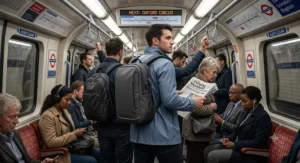
Second, real-world “success stories” tend to be quiet by nature — you don’t get a dramatic anecdote when a pickpocket sees a lockable zip pull and simply moves on to an easier target. One case discussed by reviewers described a business traveller moving between meetings and airports with a Pacsafe backpack, and the value being less about a dramatic averted incident and more about reduced worry passing through busy transport hubs and speeding through security checks. That’s the honest shape of anti-theft gear working as intended: less drama, more quiet confidence.
Third, genuinely verified case studies of slashed bags being defeated by anti-cut mesh are hard to find in public review data, which is worth being upfront about rather than papering over. What we can say with confidence, because it’s echoed across brand after brand, is that lockable zips and back-facing access panels are consistently reported as effective deterrents against the much more common threat: casual, opportunistic bag-dipping in crowds, on public transport, and in queues.
Practical Usage Guide: Setting Up Your Anti Theft Backpack for Maximum Protection
Buying the right bag is only half the job — how you set it up in the first thirty days determines whether those security features actually get used.
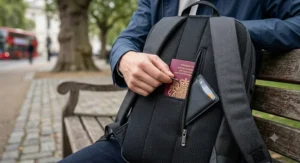
Week one: learn your compartments properly. Most anti theft backpacks put your most valuable items — passport, cards, phone — in a pocket against your back, deliberately awkward to reach while wearing the bag. That’s the point. Spend a few minutes working out which pocket is which before your first proper outing, rather than fumbling in public, which draws exactly the kind of attention you’re trying to avoid.
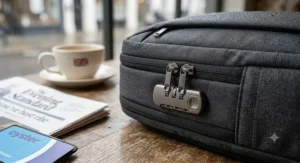
Set a locking habit, not just a locking feature. A lockable zip pull does nothing if it’s dangling open. Get into the habit of clipping it shut the moment you put the bag on, every single time, until it becomes automatic rather than a conscious decision.
Use the RFID pocket for what it’s actually for. Contactless cards and passports with embedded chips belong in the RFID-lined compartment; everyday items like keys or a phone case don’t need it and can go elsewhere, keeping that pocket easy to locate quickly.
Maintenance that actually matters: wipe down zip tracks every few months, since grit is the most common cause of a “faulty” lock — not a manufacturing fault. Check strap stitching and cable locks (on models like the Korin ClickPack Pro) for wear every six months if you’re a daily user, and avoid overloading slash-resistant mesh panels beyond their intended capacity, which can stress the seams over time.
A common first-30-days mistake: treating the bag’s security features as a substitute for basic awareness rather than a complement to it. The Metropolitan Police’s own guidance on avoiding pickpocketing is refreshingly simple — keep bags closed and secure at all times, and carry them in front of you or diagonally across your chest in crowded spaces — good advice regardless of how many locks your bag has.
Real-World Scenarios: Matching the Bag to the Trip
The daily commuter — Leeds to Manchester, five days a week. Someone standing on a packed platform twice a day, laptop bag in tow, cares most about discretion and durability rather than travel-specific features like a luggage strap. The Samsonite Securipak 2.0 or Pacsafe Metrosafe X 25L both fit this brief neatly — comfortable enough for daily wear, secure enough that a stranger’s hand near an unzipped pocket becomes a non-issue.
The gap-year backpacker — three months, twelve countries. Here, the bag spends as much time in hostel lockers and overnight coach holds as it does on someone’s back, so lockable cabling and genuine slash resistance matter more than day-to-day comfort. The Pacsafe Venturesafe EXP35 or Korin ClickPack Pro, both able to tether to a fixed object, are the sensible picks.
The budget-conscious student — first term at university, tight funds. Someone weighing up their first anti theft backpack, unsure whether they’ll actually need advanced features, is better served starting with the Bange Smart Anti-Theft Backpack or XD Design Bobby Original — genuine security improvements over a standard rucksack, without a premium price tag before they know their own habits.
Problem → Solution: Common Anti Theft Backpack Pain Points
Problem: “My bag gets uncomfortably hot on my back in summer.” Solution: look for models with mesh-backed panels and prioritise lighter builds like the Samsonite Securipak 2.0 over bulkier travel packs when comfort in warm weather is the priority.
Problem: “I keep forgetting to lock the zip pulls.” Solution: build the habit consciously for the first fortnight — clip it the moment the bag goes on your back — until it’s automatic. Models like the Pacsafe Metrosafe X 25L use a simple hook-and-loop mechanism specifically to make this second nature.
Problem: “I need to leave my bag unattended in a hostel.” Solution: this is precisely what a retractable steel cable is for. The Korin ClickPack Pro‘s tether lock lets you secure the bag to a bed frame or locker rail rather than simply hoping for the best.
Problem: “I’m worried about card skimming on the Tube.” Solution: worth some honest context here rather than panic — verified real-world RFID card fraud on cards still in their owner’s possession is vanishingly rare in the UK, according to industry fraud data. An RFID-blocking pocket, found on the Travelon Anti-Theft Classic and most Pacsafe models, is a reasonable extra layer, not an urgent necessity.
Problem: “My laptop corner keeps getting scuffed.” Solution: choose a fleece-lined, padded sleeve specifically — the Pacsafe Metrosafe X 25L and Korin ClickPack Pro both handle this well, whereas thinner budget bags often skip the padding entirely.
How to Choose an Anti Theft Backpack
Cutting straight to it: choosing the right anti theft backpack comes down to matching five criteria to your actual routine, not the flashiest spec sheet.
- Identify your primary threat. Crowded commute? Prioritise lockable zips and back-facing pockets. Unattended bags in hostels? Prioritise a steel cable lock.
- Match capacity to trip length. Day bags under 15L, like the Travelon Anti-Theft Classic, suit sightseeing; anything over 30L, like the Pacsafe Venturesafe EXP35, suits multi-week travel.
- Check laptop sleeve padding, not just size. A fleece lining protects better than a bare pocket, even at identical dimensions.
- Weigh RFID blocking honestly. It’s a genuine nice-to-have, not a critical fix for a common crime — treat it as a tiebreaker, not a deal-maker.
- Consider comfort over a full day, not five minutes in a shop. Padded, ventilated straps matter more the longer you wear the bag.
- Factor in warranty length. A five-year warranty, like Pacsafe’s, signals real confidence in build quality.
- Set a genuine budget band and stick to it. Between £30 and £210 in this guide alone, there’s a legitimate option at every price point — more money buys longevity and extra features, not a fundamentally different level of “safe.”
Pacsafe Backpack vs Bobby Backpack: Which Wins for Security?
This is one of the most searched comparisons in the category, and it deserves a straight answer rather than a diplomatic dodge. Both brands are genuine pioneers here — Pacsafe with over two decades in dedicated travel security gear, XD Design’s Bobby line with its Kickstarter-driven rise to prominence in 2016.
Feature for feature, Pacsafe generally edges ahead on breadth: RFID blocking is standard across most of its range, the five-year warranty is longer than Bobby’s coverage, and the eco-material sourcing is more consistently documented. The Bobby’s core strength, meanwhile, is its rigid structural design specifically engineered to hold its shape without deforming — a distinctive approach that keeps concealed pockets genuinely concealed rather than sagging open over time.
Where it actually matters for a buying decision: if you want a single do-everything bag with the broadest feature set and the strongest warranty backing, Pacsafe (specifically the Pacsafe Metrosafe X 25L in this guide) is the safer long-term investment. If your budget is tighter and you want a proven, structurally distinctive design with a genuinely loyal following since 2016, the XD Design Bobby Original remains an excellent, slightly cheaper alternative that isn’t meaningfully less secure for everyday commuting threats — it simply skips a couple of premium extras like RFID blocking.
Slash-Proof Backpack Technology: What the Spec Sheet Doesn’t Tell You
“Slash-proof” is one of the most overused phrases in this entire category, so it’s worth being precise about what it actually means. No fabric is genuinely blade-proof under sustained effort — what these bags offer is slash-resistant construction, engineered to significantly slow down or deter a quick opportunistic cut, which is the realistic threat model in a crowded street or on public transport.
The strongest example on this list is the Korin ClickPack Pro, which layers ultra-fine polyester with glass-fibre reinforcement, engineered for a higher strength-to-weight ratio than Kevlar specifically so a blade struggles to pass through cleanly. The Travelon Anti-Theft Classic takes a slightly different approach, using a slash-resistant mesh barrier layered inside the outer fabric rather than reinforcing the outer shell itself — meaning even a successful cut to the visible fabric doesn’t automatically expose the contents.
What most buyers overlook is that the strap material matters just as much as the body panel. A thief targeting a moving target — someone walking, cycling, or standing on a train — is more likely to grab and yank a strap than carefully slice a body panel. That’s why cut-resistant strap cabling, found on the Travelon Anti-Theft Classic and Korin ClickPack Pro, arguably does more practical work than body-panel slash resistance alone.
Hidden Zip Backpack Design: How It Actually Stops Thieves
A hidden zip backpack works on a simple principle: you can’t easily pick a lock — or a pocket — you can’t see. Positioning the main compartment access against the wearer’s back, as seen on the Samsonite Securipak 2.0 and Pacsafe range, removes the most obvious visual cue a pickpocket relies on: a visible, outward-facing zip pull swinging within reach.
Here’s what’s genuinely clever about the better implementations: on the Samsonite Securipak, the rear compartment’s zipper seam is recessed, sewn inwards to create a raised edge around the perimeter of the bag, so the seam can’t be seen from the back or sides even when the bag is being worn. That’s a level of detail that separates a genuinely engineered hidden-zip system from a bag that’s simply had its zip moved to the back panel as an afterthought.
The trade-off worth flagging honestly: back-access-only designs mean you can’t quickly grab something from your bag without taking it off first, which some commuters find mildly inconvenient during a rushed transfer between trains. For most people, that small friction is a fair exchange for the security benefit — but it’s worth testing the mechanism in a shop before committing, particularly if you’re someone who dips into your bag constantly throughout the day.
RFID Blocking Backpack: Is It Actually Worth Paying For?
Here’s the honest, slightly deflating truth about RFID blocking backpack technology: the crime it’s designed to prevent is far rarer in practice than marketing for these products often implies. Digital security researchers who’ve investigated the issue report there has never been a single confirmed real-world case in the UK of contactless card fraud carried out on a card that remained in its owner’s possession — the RFID skimming scenario the shielding is designed to stop. RFID skimming as a technique is technically possible using a reading device positioned close to a contactless card, but genuinely executing it in a crowded, moving environment is far harder than the concept suggests.
So should you dismiss it entirely? Not quite. Even security commentators who are sceptical of the marketing around RFID-blocking products acknowledge it can act as a reasonable extra layer, particularly for people regularly moving through subway platforms, busy tourist zones and airports where proximity to strangers is unavoidable. Realistically, treat RFID blocking as a low-cost, low-effort bonus rather than a headline reason to choose one bag over another — the Travelon Anti-Theft Classic, Pacsafe Metrosafe X 25L, Samsonite Securipak 2.0 and Korin ClickPack Pro all include it as standard, so on this list, you’re rarely choosing between having it and not having it.
Common Mistakes When Buying an Anti Theft Backpack
The single biggest mistake is buying based on marketing language like “100% theft-proof” rather than reading what the security features actually do — no bag stops a sufficiently determined, well-equipped thief, and any brand implying otherwise is overselling.
A close second: prioritising security features over fit and comfort, then abandoning the bag within a month because it’s uncomfortable on a full commute. The most secure bag in the world is worthless sitting in a cupboard.
Third, people frequently underestimate capacity needs, buying a compact day bag like the Travelon Anti-Theft Classic for what turns out to be a two-week trip, then struggling to fit everything in. Match capacity to the actual trip, not an idealised minimalist packing list.
Finally, many buyers pay a premium for RFID blocking as though it’s solving an urgent, common problem, when — as covered above — it’s a genuinely minor extra rather than the headline security feature it’s often marketed as.
Long-Term Cost & Maintenance
Thinking in cost-per-use rather than sticker price changes the calculation considerably. A Bange Smart Anti-Theft Backpack at roughly £30-£50 that needs replacing within eighteen months of heavy daily use works out costing more over three years than a Pacsafe Metrosafe X 25L at £120-£170 backed by a five-year warranty — assuming the Pacsafe genuinely lasts that long, which aggregated long-term owner feedback broadly supports.
| Backpack | Approx. Price | Warranty | Estimated Cost-Per-Year (3yr use) |
|---|---|---|---|
| Bange Smart Anti-Theft Backpack | £30-£50 | Limited/varies | £15-£25 (if replaced sooner) |
| XD Design Bobby Original | £70-£100 | Standard | £23-£33 |
| Samsonite Securipak 2.0 | £90-£130 | Limited worldwide | £30-£43 |
| Pacsafe Metrosafe X 25L | £120-£170 | Five years | £24-£34 (amortised over warranty) |
Interpreting the table: the Pacsafe Metrosafe X 25L‘s higher upfront price actually amortises to a similar or lower annual cost than the cheaper Samsonite Securipak 2.0, purely because of the five-year warranty backing it. Maintenance costs stay low across the board provided you clean zip tracks periodically and avoid overloading mesh panels — the real cost driver in this category is replacement frequency, not repairs.
Safety, Regulations & Data Protection Considerations
There’s no specific UK regulation governing anti theft backpacks themselves, but a couple of adjacent points are worth knowing. Under UK GDPR and general data protection good practice, keeping RFID-enabled contactless cards and passports shielded when not in use is a sensible, low-effort habit, even though — as covered above — the real-world fraud risk from skimming is minimal. For broader personal safety in crowded UK spaces, the Metropolitan Police recommend keeping bags closed and secured at all times and carrying them across the body rather than loosely over one shoulder — advice that applies regardless of which bag you own. If you’re travelling internationally, it’s worth checking the UK government’s official foreign travel advice for your specific destination before you go, since theft risk varies significantly by city and even by neighbourhood.
Frequently Asked Questions
❓ Is an anti theft backpack actually worth it?
❓ What is the difference between slash-proof and slash-resistant?
❓ Do I really need RFID blocking in a backpack?
❓ Can anti theft backpacks go through airport security normally?
❓ How much should I spend on my first anti theft backpack?
Conclusion
There’s no single “best” anti theft backpack — only the right one for how, where and how often you carry your belongings. If daily commuting with a laptop is the priority, the Pacsafe Metrosafe X 25L earns its price through breadth of features and warranty backing. If style and UK high-street availability matter more, the Samsonite Securipak 2.0 is a genuinely comfortable, well-engineered alternative. Budget-conscious buyers shouldn’t feel short-changed by the XD Design Bobby Original or Bange Smart Anti-Theft Backpack, both of which deliver real security improvements over a standard rucksack. And for genuine travel — hostels, overnight coaches, weeks on the move — the Korin ClickPack Pro, Travelon Anti-Theft Classic and Pacsafe Venturesafe EXP35 each solve slightly different pieces of that puzzle.
What every bag on this list shares is honesty of purpose: deterrence rather than guaranteed protection, sensible security layered onto a genuinely usable, comfortable rucksack. Combine any of them with the basic habits outlined above — closed zips, cross-body carrying, situational awareness — and you’re carrying substantially less risk than you were before.
✨ Ready to Choose Yours?
🔍 Compare your shortlist one more time, check current prices and availability, and pick the anti theft backpack that matches your actual routine — not just the flashiest spec sheet. Your future self, standing on a crowded platform with nothing missing from their bag, will thank you.
Recommended for You
- Travel Backpack With Laptop Compartment: 7 Brilliant Picks (2026)
- 7 Best Cabin Backpack Picks 2026: Ultimate Flight-Ready Guide
- Women’s Backpacking Rucksack: 7 Top Picks Tested for 2026
Disclaimer: This article contains affiliate links. As an Amazon Associate, I earn from qualifying purchases. If you purchase products through these links, we may earn a small commission at no additional cost to you.
✨ Found this helpful? Share it with your friends! 💬🤗
