
In This Article
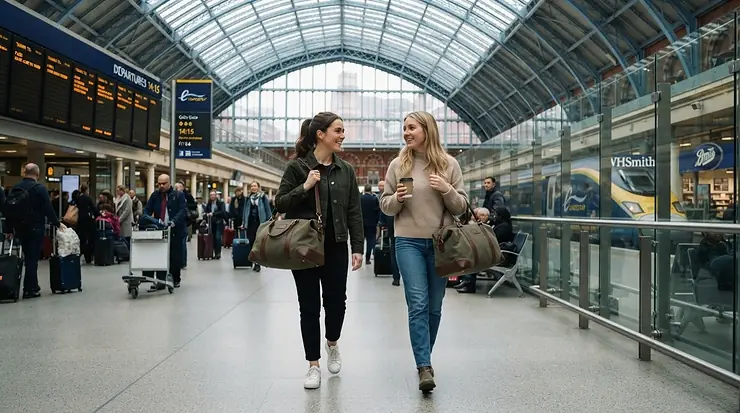
There’s a particular kind of dread reserved for the check-in desk queue, when the person two spots ahead of you is having their bag weighed, measured, and quietly rejected. You watch them repack a jumper into their coat pockets right there on the airport floor, and you promise yourself it will never be you. The good news is that avoiding that scene mostly comes down to one decision made weeks before you fly: choosing the right lightweight holdall for flights in the first place.

A lightweight holdall for flights isn’t just “a bag that’s a bit lighter than your old suitcase.” It’s a specific category of soft-sided luggage engineered to hit an airline’s exact underseat or cabin dimensions while weighing as little as possible itself, so more of your allowance goes on clothes and less on the bag’s own fabric and frame. Get the sizing wrong, though, and even a beautifully made holdall becomes an expensive lesson in gate-side maths.
Over the following sections we’ve dug into seven genuinely available holdalls, from bare-bones budget options through to a British heritage brand pick, and weighed up where each one earns its keep. We’ve also unpacked the confusing, airline-by-airline world of cabin baggage weight and airline allowance rules, because the bag is only half the story — knowing the rules is what actually gets you through the gate without a fee.
What Is a Lightweight Holdall for Flights?
A lightweight holdall for flights is a soft-sided, handle-and-strap travel bag, typically weighing under 1kg empty, designed to fit within an airline’s free or paid cabin bag dimensions (commonly around 40x20x25cm to 45x36x20cm). Unlike wheeled cases, it has no rigid frame or wheels, which is exactly what keeps the tare weight so low.
That absence of wheels and hard shell is the whole trick. A typical wheeled cabin case can weigh 2.5–3.5kg before you’ve packed a single sock, eating a huge chunk of a strict 10kg allowance. A soft holdall in the same footprint often weighs somewhere between 160g and 900g. On a Ryanair or Wizz Air fare with no free hold bag, that difference can genuinely be the gap between fitting your washbag in or leaving it at home. For a fuller picture of what you’re entitled to bring through security in the first place, the government’s official hand luggage guidance is worth a quick read before you shop.
Quick Comparison: Best Lightweight Holdalls for Flights at a Glance
| Holdall | Best For | Weight | Capacity | Price Range |
|---|---|---|---|---|
| Narwey Cabin Holdall | Absolute cheapest option | Under 0.3kg | ~20L | Under £15 |
| Aerolite Ryanair & Wizz Air Cabin Holdall | Multi-airline lightweight all-rounder | Around 0.4kg | 24L | Under £25 |
| Cabin Max Metz | Best-reviewed budget backpack-holdall | 500g | 20L | £25-£35 range |
| SPAHER Small Cabin Bag | Smallest strict-allowance flyers | Around 0.3kg | 14L | Under £20 |
| Cabin Max Manhattan Holdall | Genuine multi-airline flexibility | 0.9kg | 24L | Around £35 |
| 5 Cities Cabin Luggage and Holdall Set | Two-bag versatility | Varies by piece | 20L + larger case | £25-£35 range |
| Antler Chelsea Overnight Bag | Premium, laptop-ready holdall | 800g | 20L | Around £140 |
Looking at the spread above, there’s a clear split between the sub-£25 bags built purely to squeeze under a seat and the pricier picks that add real organisation, like a padded laptop sleeve or a compression system that adapts to more than one airline’s rules. The Narwey Cabin Holdall and SPAHER Small Cabin Bag win on raw weight-saving, but that minimalism means fewer pockets and less structure. If you fly under several different airlines’ rules across a year, paying more for the Cabin Max Manhattan Holdall‘s compression trick could save you buying a second bag entirely.
💬 Found a bag that fits your trip already? Have a browse of the full picks below and check current pricing before you commit — allowances change more often than you’d think.
Top 7 Lightweight Holdalls for Flights: Expert Analysis
1. Narwey Cabin Holdall — cheapest genuinely cabin-sized option
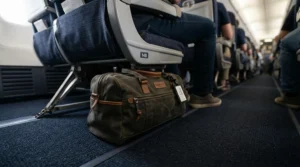
At well under £15, the Narwey Cabin Holdall is about as close as you’ll get to a “free” bag once you factor in what a checked or paid cabin bag would cost on a budget carrier instead. Its soft, unstructured sides are the whole point: they compress and flex to fit under almost any seat, rather than fighting the space the way a boxy structured bag can.
Based on the spec comparison with pricier rivals, what you’re sacrificing here is padding and internal organisation — this is a single main compartment with minimal extra pockets, not a bag built for careful packing systems. It suits people who roll their clothes and don’t need a dedicated laptop slot. Reviewers of similarly styled ultra-budget Ryanair-sized holdalls consistently describe them as “sturdy for the price” and appreciate that they genuinely fit under the seat without drama, though independent, large-scale review data specifically for this exact listing wasn’t verifiable at the time of research, so treat on-page ratings as a useful but not definitive guide.
Pros:
- ✅ Among the cheapest cabin-sized holdalls available
- ✅ Soft sides compress easily into tight underseat gaps
- ✅ Simple design with nothing to break or jam
Cons:
- ❌ Minimal padding or structure to protect contents
- ❌ Few dedicated organisation pockets
At under £15, this is close to disposable-luggage pricing, and for an occasional flyer who just needs something for one trip, that’s genuinely good value — just don’t expect it to survive years of weekly commuting to the airport.

2. Aerolite Ryanair & Wizz Air Maximum Cabin Holdall — best lightweight multi-airline fit
The Aerolite Ryanair & Wizz Air Maximum Cabin Holdall is built specifically around the dimensions those two carriers use for their largest free or low-cost underseat allowance, and the brand states it also meets most other major airlines’ requirements. At roughly 24 litres and a genuinely light empty weight, it’s designed to maximise what you can pack rather than what the bag itself weighs.
What most buyers overlook about this kind of purpose-built sizing is that it removes the guesswork entirely — you’re not measuring a general-purpose bag against a gate gauge and hoping, you’re buying something engineered to the exact millimetre brief. The included shoulder strap also matters more than it sounds: on longer terminal walks, a strap that distributes weight across your body beats an underarm carry every time.
Pros:
- ✅ Purpose-built to Ryanair and Wizz Air’s exact dimensions
- ✅ Genuinely light for its 24L capacity
- ✅ Comfortable shoulder strap included
Cons:
- ❌ Soft-sided construction offers limited protection for fragile items
- ❌ Basic internal layout compared with pricier organised holdalls
Given the price typically sits under £25, this is one of the strongest value picks here for anyone who mainly flies with the two airlines it’s named after.
3. Cabin Max Metz 20L Ryanair Cabin Bag — best-reviewed budget pick
The Cabin Max Metz stands out in this line-up simply because it has the review volume to back up its claims — thousands of ratings sitting around 4.5 out of 5 stars, which is a genuinely useful signal in a category full of near-identical unbranded bags. At 500g and 20 litres, it’s built to the 40x20x25cm dimension that fits Ryanair’s free personal item allowance.
The suitcase-style opening (rather than a single top zip) means you can lay it flat and pack it like a mini case, and the side compression straps let you squeeze in a surprising amount for a bag this size. Reviewers consistently note the padded straps make it comfortable even fully loaded, and the built-in tablet organiser section is the sort of small, practical touch that separates a considered design from a generic one. Aggregated feedback also flags the three-year warranty as reassuring for anyone nervous about budget luggage falling apart after a handful of trips.
Pros:
- ✅ Large, verified review base with strong average rating
- ✅ Suitcase-style opening for easier packing
- ✅ Padded straps and dedicated tablet pocket
Cons:
- ❌ 20L capacity is snug for more than an overnight stay
- ❌ Backpack styling won’t suit everyone’s preferred carry style
For anyone specifically flying Ryanair on a budget who wants social proof before buying, this is arguably the safest pick on the list.
4. SPAHER Small Cabin Bag 35x20x20cm — best for the strictest personal-item rules
Not every airline is as generous as Ryanair’s 40x20x25cm. Wizz Air, Vueling, TUI, and several others enforce a smaller personal-item box, and the SPAHER Small Cabin Bag is sized specifically to clear those tighter limits at 35x20x20cm and roughly 14 litres. At around 0.3kg, it’s one of the lightest bags in this guide by a clear margin.
Here’s what the spec sheet won’t tell you outright: a 14-litre bag isn’t for a week away, and it isn’t trying to be. This is a “just the essentials” bag — passport, charger, a paperback, a change of top — for people who are checking a larger case anyway and want a genuinely free personal item alongside it. The dedicated wet pocket inside is a smart inclusion for a toiletries bag or a damp swimming costume, something you don’t usually see at this size or price point.
Pros:
- ✅ Fits some of the tightest personal-item limits in the industry
- ✅ Extremely light at roughly 0.3kg
- ✅ Wet pocket for toiletries or damp items
Cons:
- ❌ 14L capacity suits day trips, not multi-day packing
- ❌ Limited structure means it can look under-filled if lightly packed
If your main holdall is going in the hold and you just need a free companion bag, this is a sensible, low-cost solution.
5. Cabin Max Manhattan Holdall — best for flying multiple airlines
Where the Cabin Max Manhattan Holdall earns its slightly higher price is flexibility. Its compression system adjusts the bag from 40x30x20cm down to 40x30x15cm, meaning the same physical bag can meet both the standard budget-airline underseat allowance and British Airways’ tighter personal-item box, without buying a second bag for each carrier.
On paper this means one holdall can realistically cover a Ryanair weekend and a British Airways business trip without a rethink, which is a genuinely rare bit of cross-compatibility in a market where most bags are built for one airline’s rules. At 0.9kg and 24 litres, it’s heavier than the ultra-budget options here, but the trade-off is a structured, padded shape that holds its form when half-empty, plus a tablet pocket, a rear passport slip, and a side bottle holder that the cheaper bags simply don’t offer.
Pros:
- ✅ Compresses to fit two different airlines’ size limits
- ✅ Structured padded design holds its shape
- ✅ Tablet pocket, passport slip, and bottle holder included
Cons:
- ❌ Heavier than the lightest bags in this guide
- ❌ Structured shape is bulkier to store flat when not travelling
Around £35, this sits in the sweet spot for anyone who genuinely can’t predict which airline they’ll be flying next.
6. 5 Cities Cabin Luggage and Holdall Set — best two-in-one value pick
The 5 Cities Cabin Luggage and Holdall Set pairs a larger cabin-sized case with a smaller 40x20x25cm holdall, aimed squarely at travellers who sometimes pay for priority boarding and sometimes don’t. The brand states the pairing is designed to fit Ryanair’s current free allowance alongside most other airlines’ restrictions, though as with any manufacturer claim, it’s worth double-checking against your specific ticket type before flying.
What most buyers overlook with set purchases like this is the built-in flexibility: on a trip where you’ve paid for priority, you take both pieces; on a strict no-frills fare, the smaller holdall alone still clears the free personal-item allowance. Reviewers of this style of dual-bag set commonly value being able to use just the holdall for a short trip and both pieces for a longer one, effectively buying two bags for close to the price of one premium single case.
Pros:
- ✅ Two bags covering both free and priority allowances
- ✅ Usable independently or together depending on the trip
- ✅ Cost-effective compared with buying two separate bags
Cons:
- ❌ Combined bulk if you only ever need one piece
- ❌ Manufacturer’s “fits most airlines” claim should be checked against your specific carrier
For frequent flyers whose ticket type varies trip to trip, this kind of set can genuinely remove the need to own multiple bags.
7. Antler Chelsea Overnight Bag — best premium, laptop-ready holdall
The Antler Chelsea Overnight Bag is the outlier here on price, and it earns that position through details the budget bags simply don’t attempt. At 800g and 20 litres, it’s made from durable, water-resistant nylon, with a padded internal sleeve fitting laptops up to 13 inches — a genuinely useful feature for anyone using a holdall as both flight luggage and a work bag.
What the spec sheet won’t tell you, but the design choices suggest, is that this is a bag built to be used weekly rather than for the odd holiday. Antler has been designing British luggage since 1914, and that heritage shows in small structural choices: a rear sleeve that slides over a wheeled case’s handle, a detachable shoulder strap tucked into its own pocket rather than left dangling, and multiple internal slip pockets for a business trip’s worth of small items. Based on the spec comparison with the rest of this list, it’s not the lightest bag by weight, but it’s the most finished as a piece of everyday design.
Pros:
- ✅ Padded laptop sleeve fits up to 13-inch devices
- ✅ Durable, water-resistant nylon construction
- ✅ Trolley sleeve and detachable strap for genuine versatility
Cons:
- ❌ Around £140 puts it well above the budget and mid-range picks
- ❌ At 800g it’s not the lightest despite the premium price
If you fly regularly for work and want one bag that looks the part in a boardroom and still slides under a seat, this justifies its price in a way the cheaper bags can’t match.
Full Spec Comparison: Price Ranges, Weight & Best For
| Holdall | Dimensions | Best For |
|---|---|---|
| Narwey Cabin Holdall | ~40x30x20cm | One-off trips on the tightest budget |
| Aerolite Ryanair & Wizz Air Cabin Holdall | 40x30x20cm | Ryanair and Wizz Air regulars |
| Cabin Max Metz | 40x20x25cm | Buyers who want proven reviews |
| SPAHER Small Cabin Bag | 35x20x20cm | Airlines with the strictest personal-item limits |
| Cabin Max Manhattan Holdall | 40x30x20cm (compresses to 40x30x15cm) | Flying multiple airlines |
| 5 Cities Cabin Luggage and Holdall Set | 40x20x25cm + larger case | Mixed priority/non-priority travel |
| Antler Chelsea Overnight Bag | 41.5x26x18cm | Regular business or premium travel |
The dimensions table makes the underlying logic clearer: most bags here cluster around the widely used 40×20-30×15-25cm zone, because that’s where the majority of European low-cost carriers’ free allowances sit. The SPAHER Small Cabin Bag and Antler Chelsea Overnight Bag are the two outliers on size, one shrinking down for the strictest airlines and one nudging slightly larger to accommodate a laptop sleeve. If you fly one airline almost exclusively, matching your holdall to that carrier’s exact box beats buying the most generically “cabin-approved” bag on the market.

Cabin Baggage Weight, Flight Holdall Weight and Airline Allowance Explained
Cabin Baggage Weight
Cabin baggage weight limits vary far more than most flyers expect. Some airlines set no weight limit at all on the free underseat bag, relying purely on the size gauge at the gate; others cap it at 7-15kg and will weigh your bag if it looks suspiciously full. The confusion is real enough that the Civil Aviation Authority’s consumer protection guidance exists partly to help passengers understand where their rights sit when baggage rules and charges are disputed.
Flight Holdall Weight
Flight holdall weight refers specifically to the empty weight of the bag itself, before you’ve packed anything — and this is where a lightweight holdall for flights earns its name. A structured wheeled case can weigh 2.5kg or more before packing; the lightest holdalls in this guide sit under 500g. On a fare with a strict 10kg all-in allowance, that gap alone is often the difference between fitting a jacket in or not.
Airline Allowance
Airline allowance policies change so frequently that experts recommend checking your specific carrier and fare type every single time you book, rather than relying on memory from your last trip. As a rough current benchmark, Ryanair’s free underseat bag sits at 40x20x25cm with no stated weight limit, easyJet allows a 45x36x20cm underseat bag, and British Airways permits a larger 56x45x25cm cabin bag plus a smaller 40x30x15cm personal item, both under a combined 23kg. None of these figures are guaranteed to stay fixed, so treat them as a starting point for research rather than gospel.
How to Choose a Lightweight Holdall for Flights
- Check your specific airline’s current dimensions first. Buy the bag to fit the airline, not the other way round — measurements genuinely differ by tens of centimetres between carriers.
- Weigh the empty bag, not just the packed capacity. A 24L bag at 900g and a 24L bag at 400g pack the same amount of clothing but leave very different amounts of your allowance spare.
- Decide if you need structure or pure compressibility. Soft, unstructured holdalls squeeze into tight overhead gaps better; structured ones protect contents and hold their shape when half-full.
- Think about how you’ll carry it full. A shoulder strap matters far more than it sounds once you’re walking a long terminal with a laptop bag on the other shoulder too.
- Match capacity to trip length honestly. A 14L bag suits a day trip; most weekend flyers are better served by 20-24L.
- Factor in any device you’re carrying. A padded laptop or tablet sleeve is rare below the mid-range price point, so it’s worth checking specifically if you need one.
- Read the price range as a starting point, not a promise. Always check current pricing before you buy, since availability and cost shift regularly.
Hand Luggage Holdall vs Wheeled Cabin Case
A hand luggage holdall and a wheeled cabin case solve the same basic problem — getting your belongings onto the plane without checking a bag — but they trade off very differently. The core difference is weight versus convenience: a holdall has no wheels or rigid frame to carry, so more of your allowance can go on actual belongings, while a wheeled case lets you roll rather than carry the load, at the cost of 2-3kg of dead weight before you’ve packed anything.
For anyone with joint or back problems, the wheeled case’s ergonomic advantage is real and shouldn’t be dismissed lightly. But for a flyer prioritising a strict weight limit, or anyone who mainly needs to sling the bag over a shoulder and move fast through a connection, a holdall consistently wins on flexibility. It also compresses into odd gaps — under a seat with limited depth, or wedged beside a bulkier bag in an overhead bin — in a way a boxy wheeled case simply can’t. The honest verdict: if your airline’s weight limit is generous or unenforced, a wheeled case’s convenience may outweigh its bulk; if every gram counts, a holdall almost always wins.
Foldable Travel Bag or Structured Holdall? What Actually Matters
A foldable travel bag collapses down to almost nothing when empty, which makes it brilliant as a spare bag tucked inside a suitcase for the flight home when you’ve inevitably bought more than you packed. The trade-off is that foldable designs tend to lack internal structure, so they can look and feel under-filled or shapeless when only lightly packed, and they rarely include the padded compartments a structured holdall offers.
A structured holdall, by contrast, holds its shape whether it’s stuffed or half-empty, and generally offers better protection for anything fragile or electronic. Here’s what most buyers overlook: the two aren’t really competing products. A genuinely useful travel kit often includes both — a structured holdall as your main cabin bag, and a lightweight foldable travel bag stashed inside your checked case purely for the return leg, when souvenirs and duty-free inevitably add extra volume you didn’t plan for.
Common Mistakes When Buying a Cabin-Approved Lightweight Holdall
The single most common error is buying a “cabin-approved” bag without checking which airline that approval actually refers to. A bag labelled cabin-approved lightweight holdall for one carrier’s dimensions can be several centimetres too large for another’s, and gate staff measure to the box, not the label. Government-backed trading standards testing has found that most metal baggage sizers measure accurately, with very little margin for error, so “it looked close enough” genuinely isn’t a safe strategy.
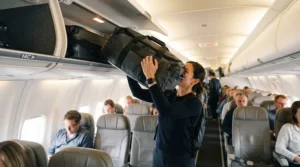
A second frequent mistake is focusing purely on the bag’s empty weight while ignoring its actual usable capacity — an ultra-light 14L bag might technically weigh less, but if you then need to pay to check a second bag because it couldn’t fit everything, you’ve lost any saving twice over. Buyers also regularly forget that “no weight limit” bags (a feature of some Ryanair-style personal items) can still be challenged if gate staff feel it looks too heavy to lift comfortably into an overhead locker, since crew safety rules generally require passengers to lift their own cabin baggage unassisted.
Lightweight Holdalls vs Traditional Wheeled Suitcases: Benefits
| Factor | Lightweight Holdall | Wheeled Cabin Case |
|---|---|---|
| Empty weight | Typically 160g-900g | Typically 2.5-3.5kg |
| Best For | Maximising packed weight allowance | Comfort on long walks through terminals |
| Storage when empty | Folds flat, minimal space | Rigid shell takes up permanent space |
| Protection for contents | Lower, soft-sided | Higher, structured shell |
The numbers make the case starkly: choosing a holdall over a wheeled case on a strict 10kg allowance can effectively hand you back 2kg or more of genuine packing weight, which in practical terms is roughly the difference between fitting in a pair of shoes or leaving them behind. Where the wheeled case claws back ground is comfort and protection, particularly on longer airport walks or for anyone carrying fragile items who values a rigid shell over raw grams saved.
💬 Just one click — help others make better buying decisions too! 😊
Practical Usage Guide: Packing and Prepping Your Holdall for Every Flight
Getting the most from a lightweight holdall for flights starts before you’ve even bought one: measure your own reference points at home first, since airport size gauges are notoriously stressful to test against for the first time. A rough tape-measure check against your intended airline’s published dimensions, done calmly at your kitchen table, avoids the gate-side scramble entirely.
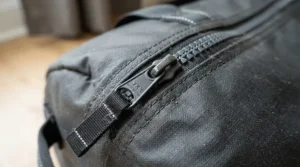
Once you’re packing, roll rather than fold clothing — it genuinely does compress better into a soft-sided holdall than the flat-fold method most people default to, and it reduces the creasing that structured holdalls with fewer internal dividers can otherwise cause. Distribute weight low and central in the bag; because holdalls lack a rigid base, an unevenly loaded bag can sag or bulge past its stated dimensions at the exact moment you’re being measured. In the first month of ownership, avoid overfilling zips to their absolute limit — most soft-sided bags develop stress points at the zip pulls first, and a little slack extends the working life of the bag considerably. Finally, keep travel documents and chargers in an external or top pocket rather than buried centrally; a holdall you have to fully unpack at security to find your passport defeats half the point of choosing one.
Real-World Scenarios: Which Holdall Suits Your Trip?
If you’re a student heading home for a weekend on a strict no-frills Ryanair fare with no checked bag, a bag like the Narwey Cabin Holdall or Aerolite Ryanair & Wizz Air Maximum Cabin Holdall makes sense — you’re prioritising cost and raw weight-saving over organisation, and you likely own a laptop bag or backpack for the actual travel days either side.
If you’re a consultant flying a different airline most weeks depending on client location, the Cabin Max Manhattan Holdall‘s compression system solves a genuine, recurring problem: rather than owning three bags for three airlines’ rules, one adjustable holdall covers most of what you’ll encounter. Pair it with the Antler Chelsea Overnight Bag for the occasions when you want something that looks appropriate walking into a client meeting straight from the airport.
If you’re a family occasionally flying together where one adult pays for priority and the kids’ tickets don’t include it, the 5 Cities Cabin Luggage and Holdall Set or a similar dual-piece option lets you flex between allowances trip to trip without buying separate bags for every possible combination of fares.
Long-Term Cost & Maintenance: Is a Cheap Holdall Actually Cheaper?
On a single trip, the maths clearly favours the cheapest bag you can find — there’s no meaningful difference in outcome between a £12 holdall and a £140 one if you’re only flying once this year. Over several years and dozens of flights, though, the picture changes. Budget soft-sided bags typically show wear at zip pullers, strap stitching, and corner seams first, and a bag replaced every year or two at £15 a time adds up to a similar total spend as one durable holdall bought once.
Reviewers consistently note that bags backed by a multi-year warranty, like the Cabin Max Metz‘s three-year cover or premium options with longer guarantees, hold up better under the specific stress of budget-airline handling — frequent underseat squashing, being sat on by other passengers’ bags, and repeated overhead-bin lifts. If you fly more than a handful of times a year, weighting your decision slightly toward build quality and warranty length, rather than the absolute lowest price, is a genuinely reasonable long-term cost calculation rather than an unnecessary upgrade. For a broader sense of how UK airlines’ size and weight rules compare with each other before you commit to a bag, this cabin bag size breakdown is a useful cross-check.
FAQ
❓ What is the lightest holdall you can take on a flight?
❓ Do all airlines allow the same size cabin holdall?
❓ Can a holdall be too light for its price?
❓ Is a foldable travel bag good enough as a main cabin bag?
❓ How strict are airlines really about cabin baggage weight?
Conclusion
Choosing the right lightweight holdall for flights really comes down to being honest about how you actually travel, rather than chasing the single “best” bag on paper. If you fly one budget airline occasionally, something like the Narwey Cabin Holdall or Cabin Max Metz will do the job without fuss. If your travel pattern is messier — different airlines, different fare types, the odd business trip mixed in with weekend breaks — a more flexible pick like the Cabin Max Manhattan Holdall or the premium, laptop-ready Antler Chelsea Overnight Bag earns its higher price through genuine day-to-day usefulness rather than marketing gloss.
Whichever you land on, the sizing and weight rules matter as much as the bag itself. Airline allowance policies shift often enough that last year’s safe bag can become this year’s oversized one, so a quick check of your specific carrier before you fly is time well spent every single trip. Pack smart, measure twice, and let the bag do the work of stretching your allowance rather than eating into it.
✨ Don’t Miss These Exclusive Deals!
🔍 Take your travel setup to the next level with these carefully selected holdalls. Click on any highlighted item to check current pricing and availability. The right bag genuinely makes packing light feel effortless rather than restrictive!
Recommended for You
- Best Lightweight Holdall UK 2026: 7 Bags That Won’t Weigh You Down
- Large Holdall Bag: 7 Brilliant Picks for 2026 (Avoid Checked Baggage)
- Best Canvas Holdall 2026: 7 Rugged, Stylish Picks
Disclaimer: This article contains affiliate links. As an Amazon Associate, I earn from qualifying purchases. If you purchase products through these links, we may earn a small commission at no additional cost to you.
✨ Found this helpful? Share it with your friends! 💬🤗
