
In This Article
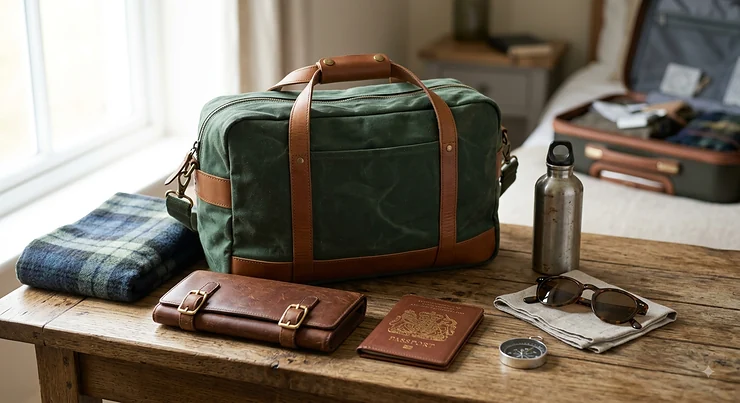
Here’s a scene most of us know too well: you’re stood at the gate with a bag that looked perfectly reasonable in your hallway, and a member of staff is eyeing it like it owes them money. Finding the right underseat bag for weekend trip travel isn’t just about avoiding that awkward moment — it’s about never checking a bag again, breezing past the carousel, and being first out the door while everyone else waits for their case to appear on the belt. For a two or three day getaway, an underseat bag genuinely can carry everything you need, provided you pick one with the right dimensions, the right internal layout, and honest packing expectations.
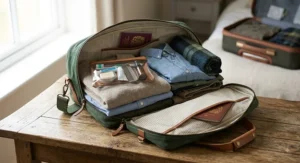
This guide is built around real products you can currently find on amazon.co.uk, not vague “best of” filler. We’ve dug into actual specifications, aggregated genuine customer review sentiment, and cross-checked every dimension against the airlines that actually enforce them. What is an underseat bag for weekend trip use, in plain terms? It’s a small piece of luggage — usually a soft-sided backpack, holdall or mini wheeled trolley — sized specifically to slide under the seat in front of you, meeting the free personal item allowance offered by budget carriers, so you travel without paying a penny in extra baggage fees.
We’ll walk through seven genuinely different bags spanning budget backpacks to a premium British heritage holdall, then get into the practical stuff: how much you can actually fit, how to build a capsule wardrobe around a 2-night travel bag, and where people most often go wrong. By the end, you’ll know exactly which style suits your travel pattern — and you won’t be the one holding up the queue at the gate.
Quick Comparison Table
| Bag | Style | Approx. Dimensions | Price Range | Best For |
|---|---|---|---|---|
| Cabin Max Metz | Soft backpack | 40 x 20 x 25 cm | Under £35 | Strict Ryanair sizer compliance |
| Kono 20L Daypack | Soft backpack | 40 x 20 x 25 cm | Under £35 | Tech-heavy packers on a budget |
| Cabin Max Equator X | Soft backpack | 40 x 30 x 20 cm | £35-£45 range | Best all-round laptop commuter/traveller |
| Cabin Max Vela | Soft holdall | 40 x 30 x 20 cm | £30-£40 range | Classic weekend-bag look, budget price |
| Samsonite Ecodiver | Wheeled duffle | 45 x 36 x 20 cm | £90-£130 range | Casual style with the option to roll it |
| Samsonite Respark | Wheeled trolley | 45 x 35/36 x 20 cm | £90-£130 range | EasyJet travellers who hate carrying weight |
| Antler Essential Overnight | Premium tote/holdall | 42 x 28 x 15 cm | £80-£125 range | Style-conscious weekend trips |
Looking at the spread above, the two Cabin Max backpacks and the Kono daypack sit at the strict end of Ryanair’s 40x20x25cm free allowance, while the Samsonite and Antler options lean into easyJet’s roomier 45x36x20cm bracket. What most buyers overlook is that “underseat bag” isn’t one single size — it’s a category that stretches from a 20-litre rucksack to a nearly 30-litre wheeled trolley, so the right pick for you depends entirely on which airline (or airlines) you actually fly.
💬 Just one click — help others make better buying decisions too!😊
Top 7 Underseat Bags for a Weekend Trip: Expert Analysis
We’ve picked genuinely different styles here rather than seven near-identical backpacks, because a weekend trip means different things to different travellers — city breaks, hen dos, work trips tacked onto a Friday, festival runs. Every product below includes real specs, honest interpretation of what those specs mean day-to-day, and aggregated review sentiment drawn from public Amazon listings, clearly flagged as such.
1. Cabin Max Metz — exact 40x20x25cm Ryanair fit
The Cabin Max Metz is built to the millimetre for Ryanair’s free personal item allowance, and that precision is really the whole pitch. At 20 litres and roughly 500g empty, it’s one of the lighter bags in this line-up, which matters more than people think — every gram of empty-bag weight eats into whatever weight limit your airline does enforce, even if the underseat allowance itself is unlimited by weight on Ryanair specifically. The suitcase-style opening lays flat for packing, side compression straps stop clothes shifting mid-flight, and the outer shell is 600D RPET polyester, so it’s made from recycled plastic rather than virgin fabric.
Based on the spec comparison with pricier rivals, what you’re sacrificing here is structure — this is a soft-sided bag, not a semi-rigid one, so it won’t hold its shape as well when half-empty. On the plus side, that softness is exactly why it squeezes into a Ryanair sizer even when slightly over-packed, something a rigid case can’t do. Reviewers consistently note the trolley strap on the back as a genuinely useful touch, letting you slot it over the handle of a bigger case rather than carrying it separately through the terminal.
Pros:
- ✅ Precisely sized to Ryanair’s exact free allowance
- ✅ Lightweight recycled RPET build under 600g
- ✅ Trolley sleeve slides over a wheeled case handle
Cons:
- ❌ Soft sides mean less structure than a hard shell
- ❌ No wheels, so all the weight is on your shoulder
At around £25-£35, the Cabin Max Metz is one of the cheaper genuinely purpose-built options here, and for a bag you’ll use maybe six or eight times a year, the value case is straightforward: one avoided Ryanair gate fee (which can run to £70) more than covers it outright.
2. Kono 20L Daypack — best USB-charging budget backpack
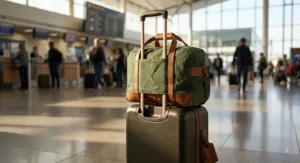
The Kono 20L Daypack matches the Cabin Max Metz almost exactly on dimensions — 40 x 20 x 25 cm — but takes a more tech-forward approach to the interior. What most buyers overlook about this model is the built-in USB charging port on the exterior, which lets you wire a power bank inside the bag to your phone without unzipping anything mid-journey. The main compartment uses a 180-degree flat-opening design, similar to a mini suitcase, which genuinely does make packing and repacking faster than a top-loading rucksack.
Here’s what the spec sheet won’t tell you outright: this is a nylon-based build rather than a heavier canvas, so it’s water-resistant rather than fully waterproof — fine for British drizzle at a bus stop, not fine for standing in a downpour. Based on the layout, it suits people who travel with a laptop and want it genuinely protected, since the padded rear sleeve sits against your back rather than the outer shell, reducing impact risk if the bag gets knocked around in an overhead locker.
Pros:
- ✅ External USB port for on-the-go charging
- ✅ 180-degree flat opening for suitcase-style packing
- ✅ Padded 15.6-inch laptop compartment against the back panel
Cons:
- ❌ Water-resistant only, not waterproof in heavy rain
- ❌ 20L capacity is snug for more than two nights
Priced in a similar £25-£35 range to the Metz, the Kono 20L Daypack earns its spot by being the more sensible pick specifically for anyone who works while travelling, given the charging port and laptop protection edge it over the competition at this price point.
3. Cabin Max Equator X — best all-rounder with laptop pocket
Stepping up in size, the Cabin Max Equator X is built to the larger 40 x 30 x 20 cm allowance that covers Ryanair, Wizz Air and most other budget carriers’ free underseat bag, and it’s currently one of Cabin Max’s better-reviewed products on Amazon, sitting around 4.5 out of 5 stars from several hundred customer reviews at the time of research. That extra 10cm of width over the Metz translates into noticeably more usable packing volume, and a dedicated padded laptop pocket separates tech from clothing, so you’re not digging past a jumper to find your charger.
Aggregated review sentiment consistently flags the detachable wheels as a stand-out feature: they clip off in seconds, instantly shrinking the bag’s profile to guarantee it clears an airline sizer, then click back on for rolling through the terminal once you’ve boarded. What the spec sheet won’t tell you is that removing the wheels does mean carrying by the top handle or shoulder strap instead, so it’s a genuine trade-off between convenience and guaranteed compliance, not a free upgrade.
Pros:
- ✅ Detachable wheels for guaranteed sizer compliance
- ✅ Dedicated padded laptop pocket separate from clothing
- ✅ Strong aggregated review rating around 4.5 stars
Cons:
- ❌ Slightly heavier than the pure-backpack options here
- ❌ Wheels add bulk when detached and stored inside
At around £35-£45, this sits just above the entry-level backpacks, and on the spec comparison alone, it’s the strongest all-rounder in the line-up if you want one bag that handles both a laptop-heavy work trip and a casual weekend away.
4. Cabin Max Vela — classic weekend holdall look, budget price
If the backpack shape isn’t your style, the Cabin Max Vela delivers the same 40 x 30 x 20 cm Ryanair-friendly footprint in a traditional holdall silhouette — the kind of shape people mean when they picture a proper “flight bag.” At roughly 24 litres, it edges out the smaller backpacks on capacity while keeping the same trolley sleeve on the back for sliding over a rolling case.
Based on the design, this is the pick for anyone who finds backpack straps impractical for a quick overnight trip — a top-carry handle and a long cross-body strap mean you can grab it and go without fiddling with adjustable straps at 6am. What most buyers overlook is that a holdall shape, while stylish, tends to pack less efficiently than a structured backpack because there’s no internal frame holding its form, so soft items like clothing will need to be rolled or compressed rather than simply placed.
Pros:
- ✅ Traditional holdall shape with cross-body strap
- ✅ Same 40x30x20cm Ryanair-friendly sizing as the Equator X
- ✅ Trolley sleeve for stacking over a wheeled suitcase
Cons:
- ❌ Less internal structure than a backpack for stacking items
- ❌ Single main compartment offers less organisation
In the £30-£40 range, the Cabin Max Vela is a genuinely good compact weekend holdall for anyone whose priority is looking put-together at arrivals rather than maximising every organisational pocket.
5. Samsonite Ecodiver Wheeled Duffle — casual style with the option to roll it
Moving into mid-range territory, the Samsonite Ecodiver Wheeled Duffle is a 45 x 36 x 20 cm bag built to easyJet’s more generous free underseat allowance, giving you noticeably more room to work with than any of the Ryanair-sized options above. It’s part of Samsonite’s Recyclex range, meaning the exterior fabric is made from post-consumer recycled PET, which is a genuine sustainability credential rather than a marketing label slapped on afterwards.
What stands out here is the hybrid design: it looks and packs like a soft duffle bag, but has integrated wheels and a pull handle for when you’d rather roll than carry. Based on the spec sheet, the trade-off for that flexibility is weight — at roughly 2kg empty, it’s noticeably heavier than the Cabin Max backpacks, which matters if your airline does weigh underseat bags (easyJet’s free allowance carries a 15kg limit, so an empty bag at 2kg already takes a meaningful bite out of that).
Pros:
- ✅ Wheels and pull handle for hands-free rolling
- ✅ Recycled PET fabric from Samsonite’s Recyclex range
- ✅ Sized to easyJet’s roomier 45x36x20cm free allowance
Cons:
- ❌ Heavier empty weight eats into weight-limited allowances
- ❌ Larger footprint won’t fit Ryanair’s tighter 40x30x20cm limit
At around £90-£130, this is a genuine step up in price from the budget backpacks, and the value case rests on how often you fly easyJet specifically — book it against a Ryanair flight and it simply won’t fit, wheels or no wheels.
6. Samsonite Respark Underseater — best wheeled trolley for easyJet
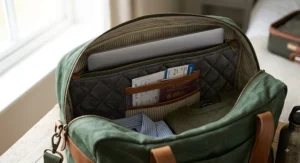
The Samsonite Respark Underseater takes a more traditional upright-trolley shape rather than a duffle, measuring roughly 45 x 35 x 20 cm with around 29 litres of packing space and two smooth-rolling wheels. Samsonite’s own product literature confirms it’s built specifically to clear easyJet’s free underseat cabin allowance, and like the Ecodiver, it’s part of the brand’s recycled-material Recyclex initiative, using post-consumer recycled PET for both the exterior fabric and the interior lining.
Here’s what the spec sheet won’t tell you, but user reports suggest: a two-wheel upright design like this glides beautifully on smooth airport flooring but is noticeably less manoeuvrable than a four-wheel spinner case on uneven or cobbled ground, so it suits airport-to-hotel-taxi trips better than a lot of walking through old-town streets. The padded 14-inch laptop compartment is a genuine convenience if you’re travelling for a short work trip rather than pure leisure.
Pros:
- ✅ Sized precisely to easyJet’s free underseat allowance
- ✅ Two-wheel upright design rolls smoothly on flat floors
- ✅ Recycled Recyclex fabric inside and out
Cons:
- ❌ Two wheels are less manoeuvrable than four-wheel spinners
- ❌ Doesn’t meet Ryanair’s smaller free allowance
Priced similarly to the Ecodiver at around £90-£130, the Samsonite Respark Underseater is the better choice specifically if you prefer the classic upright trolley shape over a duffle silhouette, with both bags otherwise sharing very similar underlying value.
7. Antler Essential Overnight Bag — premium heritage holdall for style-conscious trips
At the top end of this list sits the Antler Essential Overnight Bag, from a British luggage brand that’s been operating since 1914. Measuring 42 x 28 x 15 cm, it’s the most compact bag on paper here, but the design compensates with a genuinely thoughtful interior — a padded laptop-friendly section, multiple zip compartments, and a hidden pocket built into the back strap specifically for a passport or travel documents you want to reach without opening the main bag.
Aggregated review sentiment on Amazon for Antler’s underseat range skews strongly positive, generally sitting in the mid-to-high 4-star range, with customers repeatedly praising the fabric feel and understated design over cheaper alternatives. Based on the spec comparison, what most buyers overlook about this model is the crossbody strap length — it’s genuinely long enough to wear the bag slung across the body rather than just over one shoulder, which makes a meaningful difference on your feet for a full day of travel.
Pros:
- ✅ Heritage British brand with 110+ years in luggage
- ✅ Hidden document pocket built into the back strap
- ✅ 100% recycled polyester construction
Cons:
- ❌ Smallest packing volume of the seven bags here
- ❌ Premium price relative to budget backpack alternatives
At around £80-£125 (though we’ve seen it discounted lower at various points, so it’s worth checking current price before you buy), the Antler Essential Overnight Bag is the pick for anyone who wants their underseat bag for weekend trip travel to look as considered as the rest of their outfit, and who’s willing to trade a bit of raw capacity for it.
Weekend Getaway Essentials: A Practical Packing & Setup Guide
Buying the right bag solves half the problem; packing it properly solves the rest. Before your first trip, do a dry run at home: lay out everything on your bed, then pack it exactly as you would for the airport, including wearing your bulkiest layer rather than packing it — coats and boots worn on your body don’t count against most personal item allowances, freeing up real space inside the bag itself.
For the first 30 days of ownership, the most common mistake is over-tightening compression straps before you’ve actually used the bag once, which can strain stitching on soft-sided models before it’s had a chance to settle. Instead, pack loosely for your first trip and note where things naturally sit — heavier items like shoes and toiletry bags belong at the base near the trolley-strap side, since that’s usually the sturdiest panel, while anything you’ll need at security (laptop, liquids bag, passport) should go in the most accessible outer pocket.
Maintenance-wise, soft-sided bags benefit from an occasional spot-clean with a damp cloth rather than a full wash, and it’s worth airing the bag out fully between trips rather than storing it packed — trapped moisture from a rainy commute is the single biggest cause of musty-smelling bags reported in reviews across this category. If your bag has detachable wheels, like the Cabin Max Equator X, get into the habit of clipping them off before you reach the gate rather than waiting to be asked; it avoids any argument with staff entirely.
Real-World Scenarios: Who Should Buy Which Bag
The Friday-after-work city breaker: you’re leaving straight from the office, flying easyJet, and need one bag that works for both. A wheeled option like the Samsonite Respark Underseater or Samsonite Ecodiver Wheeled Duffle makes sense here — you won’t be lugging a laptop bag on your back through the airport after a full day, and the roomier 45x36x20cm sizing comfortably covers a genuine 2-night travel bag’s worth of clothes plus a change of work shoes.
The strict-budget Ryanair flyer: frequency matters more than luxury for this profile — someone flying two or three short European weekends a year on the cheapest fares available. The Cabin Max Metz or Kono 20L Daypack, both built to the exact 40x20x25cm allowance, remove any risk of a gate-fee surprise, and at under £35 each, the cost barely registers against the flight itself.
The style-conscious couple’s getaway: for a weekend built around nice dinners rather than budget-airline logistics, the Antler Essential Overnight Bag earns its higher price simply by not looking like hand luggage. Paired with the Cabin Max Equator X for the more practically minded partner carrying the shared laptop and chargers, this combination covers both people’s actual priorities rather than forcing a single bag choice on two different travel styles.
Common Underseat-Bag Problems, Solved
Problem: the bag looks fine at home but gets flagged at the gate. This almost always comes down to over-packing rather than the bag’s stated dimensions being wrong — a bulging bag reads as oversized even if its empty measurements are technically compliant. Solution: use the detachable-wheel feature on bags like the Cabin Max Equator X to instantly shave centimetres off, or simply compress harder before boarding.
Problem: essentials get buried under clothes mid-journey. Solution: dedicate one exterior pocket exclusively to items you’ll need before landing — phone charger, passport, any medication — and treat the main compartment as sealed once you’ve boarded.
Problem: the bag feels heavier than expected once packed. Solution: weigh your empty bag before you buy if weight-limited allowances apply to your airline (easyJet’s free underseat bag carries a 15kg cap); a 2kg empty bag like the Samsonite Ecodiver Wheeled Duffle leaves noticeably less headroom than a 500g bag like the Cabin Max Metz.
Problem: shoulder strain from a single-strap holdall. Solution: pick a backpack-style option such as the Kono 20L Daypack if you’ll be walking any real distance between transport connections, since weight distributed across two shoulders is measurably more comfortable over an airport-sized walk than one strap.
Problem: laptop protection is an afterthought in cheaper bags. Solution: check for a dedicated padded sleeve rather than assuming “fits a laptop” means “protects a laptop” — both the Kono 20L Daypack and Cabin Max Equator X include genuinely separated padded compartments rather than just extra room in the main pocket.
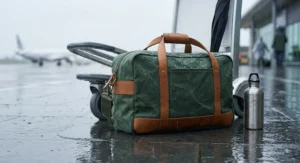
How to Choose an Underseat Bag for a Weekend Trip
Picking the right underseat bag for weekend trip use comes down to seven practical checks, worked through roughly in this order:
- Confirm your airline’s exact free allowance first. Ryanair’s free personal item tops out at 40 x 30 x 20 cm; easyJet’s is a noticeably larger 45 x 36 x 20 cm. Buying to the wrong number is the single most expensive mistake on this list.
- Decide backpack, holdall, or wheeled. Backpacks distribute weight best for walking; holdalls look smarter for city breaks; wheeled options save your shoulders but weigh more empty.
- Check for a genuine laptop compartment if you’re travelling with tech, not just “will fit a laptop” language.
- Look at empty weight, especially if your airline enforces a weight cap on personal items alongside the size limit.
- Consider material and weather resistance — a water-resistant nylon shell handles a rainy taxi rank far better than an untreated cotton canvas.
- Check aggregated review sentiment for durability complaints specifically around zips and strap stitching, since these are the components that fail first on budget bags.
- Match the price to how often you’ll actually use it — a £30 bag used eight times a year and a £120 bag used twice a year can both be perfectly good value, depending on your travel pattern.
Always double-check the current rules directly with your airline before you travel, since hand luggage restrictions at UK airports and personal item allowances are reviewed and updated periodically.
Compact Weekend Holdall vs Backpack vs Wheeled Trolley: Which Underseat Style Wins?
| Factor | Compact Holdall | Backpack | Wheeled Trolley |
|---|---|---|---|
| Comfort over distance | Moderate (one strap) | Best (two shoulders) | Best (no lifting) |
| Packing structure | Weaker, no frame | Strongest, suitcase-style | Strong, semi-rigid |
| Style at arrivals | Best | Casual | Practical, less stylish |
| Manoeuvrability on rough ground | Good | Best | Weaker (wheels catch) |
| Typical empty weight | Light-moderate | Light | Heaviest |
| Best For | Antler Essential Overnight, style-focused trips | Kono 20L Daypack, Cabin Max Metz, long walks | Samsonite Respark, Samsonite Ecodiver, easyJet flyers |
Reading across the table, there isn’t a single winning style — there’s a winning style for your specific trip. A backpack like the Kono 20L Daypack wins decisively if you’re walking from a city-centre station to a budget hotel with no taxi involved, since nothing beats two-shoulder weight distribution over distance. A wheeled trolley like the Samsonite Respark Underseater wins just as clearly if your route is airport-to-taxi-to-hotel-door, where you’ll barely carry it at all. The compact holdall sits in between, prioritising how the bag looks over how it performs across kilometres.
✨ Don’t Miss These Exclusive Deals!
🔍 Take your travel packing to the next level with these carefully selected products. Click on any highlighted item to check current pricing and availability. These bags will help you create genuinely stress-free weekend getaways your future self will thank you for!
Weekend Bag Capacity: How Much Can You Really Fit?
Weekend bag capacity is where most people either badly underestimate or badly overestimate what they’re working with, and it genuinely depends on the litre count more than the physical footprint. A 20-litre bag like the Cabin Max Metz comfortably fits two to three days of rolled clothing, a slim washbag, and a phone charger, but will feel tight the moment you add a second pair of shoes. Step up to the 24-29 litre range covered by the Cabin Max Equator X, Cabin Max Vela, or Samsonite Respark Underseater, and you gain enough headroom for a proper toiletry bag, a spare pair of shoes, and a light jacket without needing to sit on the zip.
Based on the spec comparison, litres aren’t the whole story either — a bag’s internal shape matters just as much. A structured backpack with a flat-opening main compartment, like the Cabin Max Equator X, tends to use its stated litres more efficiently than a soft duffle of the same volume, because there’s no wasted space around an irregular shape. What most buyers overlook is that manufacturer litre figures are usually measured to the bag’s absolute maximum capacity, fully expanded and slightly over-stuffed — for realistic weekend bag capacity planning, knock 10-15% off the stated figure and pack to that number instead.
Capsule Packing for Your 2-Night Travel Bag
Capsule packing is the single most effective way to make a genuinely small 2-night travel bag work for a full weekend, and it starts before you touch the zip. Pick one colour palette — two neutrals plus one accent colour — so every top pairs with every bottom, which typically halves the number of garments you need compared with packing complete pre-planned outfits.
For a standard two-night trip, a realistic capsule looks like this: one pair of trousers or jeans worn on the plane, one spare bottom, three tops, one light layer, sleepwear, and underwear for each day plus a spare. Roll rather than fold — it genuinely does save meaningful space in a soft-sided bag and reduces creasing — and pack shoes at the base with socks stuffed inside them to use otherwise-wasted space. Toiletries should sit in a single clear pouch positioned near the top of the bag, both for airport security speed and so you’re not unpacking the whole bag to find your toothbrush at 11pm in a hotel room.
If you’re travelling with a laptop as well as clothes, the maths gets tighter fast, which is exactly where a slightly larger bag like the Cabin Max Equator X earns its keep over the more minimal Cabin Max Metz — the extra 10cm of width buys just enough room for a laptop sleeve without cannibalising your clothing capacity.
Carry-On Packing Tips & Airport Security Rules
A handful of carry-on packing tips consistently make the difference between a smooth security queue and a delayed one. Pack liquids in a single clear, resealable bag positioned in an easily reachable outer pocket, since most UK airports still apply the standard 100ml-per-container liquid limit, though a small number of larger airports have relaxed this using newer scanning technology — check the UK Civil Aviation Authority’s guidance on what you can pack before you travel, since rules can vary by departure airport.
Keep electronics — laptop, tablet, any device larger than a phone — in an easily accessible compartment, since security staff commonly ask for these to be removed and scanned separately. Wearing rather than packing your bulkiest item (typically a coat) is one of the more underused carry-on packing tips, since worn clothing generally doesn’t count towards your personal item’s size or weight. Finally, double-check your specific airline and fare type before you fly; Which?’s independent airline cabin bag allowance guide is a genuinely useful reference for comparing Ryanair, easyJet, British Airways and Wizz Air side by side, since allowances differ meaningfully even between budget carriers.
Common Mistakes When Buying an Underseat Bag
The most common and costly mistake is buying a bag sized to one airline’s allowance while regularly flying a different one — an easyJet-sized 45x36x20cm bag like the Samsonite Respark Underseater will not reliably pass Ryanair’s tighter 40x30x20cm sizer, and staff do measure. A close second is ignoring weight entirely and focusing only on the printed dimensions; a beautifully sized bag that weighs 2kg empty leaves far less real packing weight than a 500g bag on airlines that do enforce a personal item weight cap.
Another frequent misstep is buying based on looks alone without checking for a laptop compartment, only to discover mid-trip that a device is rattling around loose against zips and buckles. Equally common is assuming “water-resistant” means “waterproof” — most budget nylon and RPET bags in this category, including several featured here, will handle drizzle but not sustained rain, and packing anything genuinely precious near the outer shell in wet climates is worth avoiding. Finally, plenty of buyers skip checking aggregated review sentiment around zip and strap durability specifically, which tends to be the first failure point on cheaper bags well before the main fabric wears out.
Long-Term Cost & Value: Cost Per Trip vs Gate Fees
Run the numbers honestly and the value case for owning a dedicated underseat bag for weekend trip use is stark. A single Ryanair gate fee for an oversized bag can run up to roughly £70 depending on route and how last-minute the charge is applied — more than the full retail price of the Cabin Max Metz, Kono 20L Daypack, or Cabin Max Vela combined with room to spare. Even the premium end of this list, the Antler Essential Overnight Bag at around £80-£125, pays for itself against a single avoided fee on most short-haul routes.
Total cost of ownership matters more over multiple years than the upfront price tag suggests. A £30 backpack that needs replacing after a single season of heavy use because a zip fails isn’t cheaper in the long run than a £45 bag from a brand with consistently stronger review sentiment on durability, like the Cabin Max Equator X. For anyone flying more than three or four times a year, the wheeled options from Samsonite carry a higher upfront cost but distribute that cost across far more trips before any meaningful wear appears, particularly given their use of more durable recycled-fabric construction rather than the thinner materials found in some entry-level backpacks.
Frequently Asked Questions
❓ What's the biggest underseat bag for weekend trip that airlines allow for free?
❓ Can an underseat bag really fit everything for a 2-night trip?
❓ Are backpacks or wheeled bags better for a weekend getaway?
❓ Do underseat bags need to be waterproof?
❓ How strict are airlines about underseat bag sizes at the gate?
Conclusion
Choosing the right underseat bag for weekend trip travel really comes down to being honest about how you actually move through an airport and a city, not which bag looks best in a photo. If you’re chasing the tightest possible budget and fly Ryanair regularly, the Cabin Max Metz or Kono 20L Daypack remove all sizing risk for well under £35. If you want one genuinely capable all-rounder, the Cabin Max Equator X earns its slightly higher price with a laptop pocket and detachable wheels. Frequent easyJet flyers who’d rather roll than carry should look at the Samsonite Respark Underseater or Samsonite Ecodiver Wheeled Duffle, while anyone prioritising how their bag looks at arrivals will get the most satisfaction from the Antler Essential Overnight Bag.
None of these seven are wrong choices — they’re built for genuinely different travel patterns, and the “best” one is simply whichever matches your airline, your walking distance, and your packing style most closely. Whichever you land on, the underlying advice stays the same: check your airline’s exact current allowance before you buy, pack to the capsule method rather than instinct, and you’ll never queue at a bag-drop desk again.
✨ Ready to Travel Lighter This Weekend?
🧳 Compare the full line-up above, click through to check current pricing on amazon.co.uk, and pick the bag that actually matches how you travel — not just how you pack at home.
Recommended for You
- Small Underseat Bag for easyJet: 7 Best Picks for 2026
- Underseat Backpack for Flights: 7 Brilliant Picks for 2026
- 7 Best Underseat Holdalls for Ryanair in 2026 (Fully Compliant)
Disclaimer: This article contains affiliate links. As an Amazon Associate, I earn from qualifying purchases. If you purchase products through these links, we may earn a small commission at no additional cost to you.
✨ Found this helpful? Share it with your friends! 💬🤗
