
In This Article
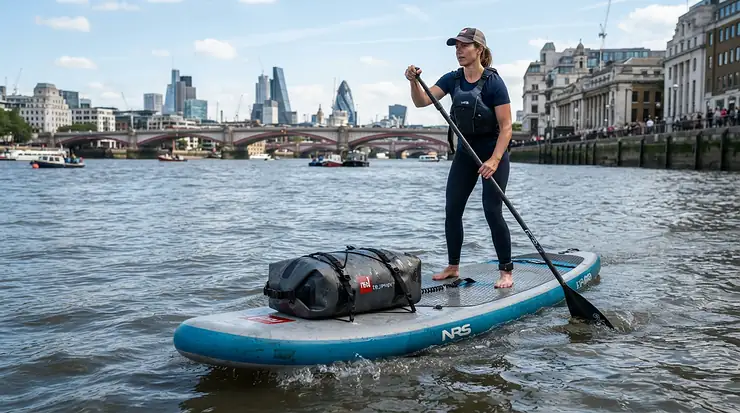
Rain in Britain isn’t weather so much as a personality trait. So when you’re heaving gear across a festival field, lashing a bag to a kayak, or just dragging a weekend’s worth of clothes through a drizzly station car park, the bag you choose matters more than most people ever stop to consider. Finding the best waterproof holdall isn’t as simple as grabbing whichever duffel has the word “waterproof” printed biggest on the label, either — an awful lot of what gets marketed that way is really only water-resistant, treated with a coating that gives up the moment it meets a proper downpour or an accidental dunk in a puddle.
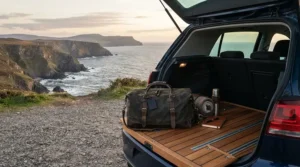
Genuine waterproofing is usually verified against an international IP rating standard, which is a far more honest yardstick than marketing copy. A bag rated IP67, for instance, can survive being dropped in a metre of water for half an hour and keep its contents bone dry — a bag that’s merely “shower resistant” cannot make that claim, no matter how confident the packaging sounds.
This guide walks through seven genuinely tested, currently available options — from expedition-grade dry bags with welded seams and tarpaulin fabric to more affordable PVC kit bags that punch well above their price. We’ll break down what the specs actually mean in daily use, compare them honestly against each other, and help you work out which type of waterproof travel bag actually suits your life, rather than just your wish list. Whether you’re after full submersible protection for watersports or a tougher, weatherproof holdall for the daily commute, there’s a sensible pick below — and a clear explanation of why it made the cut.
Quick Comparison Table
Before the deep dive, here’s the short version for anyone in a hurry.
| Product | Best For | Waterproof Rating | Approx. Price |
|---|---|---|---|
| Ortlieb Duffle 60L | Full submersion protection | IP67 (welded seams, TIZIP zip) | £150-£220 range |
| Sea to Summit Hydraulic Pro Dry Pack 90L | Expedition dry bag technology | Fully submersible, taped/welded | £150-£210 range |
| Rab Kitbag 80 | Huge capacity, tough base | Highly water-resistant | £90-£130 range |
| Highlander Storm Kit Bag 65L | Budget waterproof holdall | Waterproof PVC, welded seams | £45-£65 range |
| MoverX Waterproof 60L Rucksack | Budget 3-way carry | Waterproof PVC-coated, welded seams | £40-£60 range |
| Osprey Transporter 40 | Everyday weatherproof holdall | Water-resistant, DWR coating | £90-£120 range |
| The North Face Base Camp Duffel M | Durability over decades | Water-resistant, coated base | £95-£135 range |
Look closely and a pattern jumps out immediately: only two of these seven are properly submersible, and the rest sit somewhere on a sliding scale of “keeps rain out” to “shrugs off a soaking.” That’s not a flaw in our shortlist — it’s the honest state of the market. Buyers chasing genuine dry bag technology should gravitate toward Ortlieb Duffle 60L or the Sea to Summit Hydraulic Pro Dry Pack 90L, while everyone else will likely find a PVC-based or DWR-coated option does the job for a fraction of the outlay.
💬 Just one click — help others make better buying decisions too!😊
Top 7 Waterproof Holdalls: Expert Analysis
The seven bags below were chosen to cover every realistic buyer: the sea kayaker who needs total submersion protection, the festival-goer who just needs to survive a wet campsite, and the commuter who wants something rugged for daily abuse. Prices are given as ranges rather than fixed figures, since Amazon pricing shifts constantly — always check current pricing before buying.
1. Ortlieb Duffle 60L — genuinely submersible expedition bag
The Ortlieb Duffle 60L is the bag to reach for if “waterproof” needs to mean something absolute, not just marketing shorthand. That standout claim isn’t hollow either — this is one of the few holdalls on this list rated for full submersion, not just splash resistance.
Built from PS620C tarpaulin fabric with every seam welded rather than stitched, the bag sidesteps the classic weak point of most luggage: needle holes. A long TIZIP Masterseal zip, the same waterproof zip technology used on drysuits, runs the length of the opening and carries an IP67 rating, meaning it’s dust-tight and can survive being dropped in a metre of water for half an hour without the contents getting so much as damp.
Based on the spec comparison with the rest of this list, this is squarely aimed at people who actually need that level of protection — canoeists, motorcycle tourers, sailors, and anyone hauling camera gear through genuinely filthy conditions — rather than someone who just wants to look prepared for a commute. Reviewers consistently report that the padded handles convert convincingly into backpack straps, and that the five-year manufacturer warranty reflects genuine confidence in the build rather than marketing bravado.
Pros:
- ✅ IP67-rated, fully submersible waterproof protection
- ✅ Welded seams eliminate stitching as a leak point
- ✅ Converts easily from duffel to backpack carry
Cons:
- ❌ Among the priciest holdalls in this roundup
- ❌ Heavier than non-waterproof duffels of similar size
At the time of research this sits in the £150-£220 range depending on size and retailer — steep for a bag, but arguably cheap insurance if you’re protecting a camera body or a laptop from a genuine dunking.

2. Sea to Summit Hydraulic Pro Dry Pack 90L — best dry bag technology on test
Where the Ortlieb leans on tarpaulin fabric and a sealed zip, the Sea to Summit Hydraulic Pro Dry Pack 90L takes the classic roll-top dry bag approach and scales it up into genuine holdall territory, which is exactly what earns it a spot here.
The shell uses a high-denier, TPU-laminated fabric with fully taped and welded seams — the same construction logic used in dedicated whitewater dry bags, just built into a shape with grab handles and stowable backpack straps rather than a simple sack. What most buyers overlook about roll-top closures is that the waterproofing is genuinely foolproof provided you roll correctly; unlike a zip, there’s no mechanical seal that can eventually wear out or jam with grit.
This is a bag for people whose trip genuinely involves water — sea kayaking, packrafting, coastal expeditions — rather than just occasional British drizzle. Reviewers on outdoor gear sites consistently highlight how well it compresses when not full, and how the wide roll-top opening makes packing far less fiddly than a narrow zip.
Pros:
- ✅ Fully submersible dry bag construction, not just showerproof
- ✅ Roll-top seal has no mechanical parts to wear out
- ✅ Compresses well for a 90-litre capacity bag
Cons:
- ❌ Roll-top access is slower than a full-length zip
- ❌ Premium pricing similar to the Ortlieb Duffle
Expect this one to sit in the £150-£210 range at the time of research, putting it in direct competition with the Ortlieb — the choice between them really comes down to whether you prefer a zip or a roll-top seal.
3. Rab Kitbag 80 — best high-capacity expedition holdall
The Rab Kitbag 80 doesn’t chase a full waterproof rating, and it’s more honest for it. What it delivers instead is enormous capacity and a genuinely tough, water-resistant duffel bag build that’s been a fixture on mountaineering trips for years.
Constructed from a robust ripstop base fabric with a reinforced, abrasion-resistant underside, this bag is designed to be dragged across baggage handling belts, thrown onto minibus roofs, and generally treated with the kind of disregard that would finish off a cheaper holdall in a single trip. Here’s what to weigh: the Rab isn’t submersible like the Ortlieb or Sea to Summit, but for 90% of UK trips — where the threat is heavy rain and rough handling rather than full immersion — that trade-off makes sense, especially given the extra capacity per pound spent.
Aggregated review sentiment for the Kitbag range consistently praises the sheer volume of gear it swallows for expedition-length trips, with common feedback noting it holds up well over multiple seasons of hard use even if the DWR coating needs periodic reproofing.
Pros:
- ✅ Huge 80-litre capacity for genuinely long trips
- ✅ Reinforced base shrugs off rough baggage handling
- ✅ Strong reputation for multi-season durability
Cons:
- ❌ Not submersible — a heavy downpour is its real limit
- ❌ Bulky and awkward to store when not travelling
Priced around £90-£130 depending on the retailer, it represents strong value for buyers who prioritise space and toughness over guaranteed full immersion protection.
4. Highlander Storm Kit Bag 65L — best budget waterproof holdall
Don’t let the price fool you — the Highlander Storm Kit Bag 65L is a proper waterproof PVC holdall, not a water-resistant imitation dressed up in confident marketing language. This is the pick for anyone who wants dry-bag principles without the dry-bag price tag.
The shell is made from heavy-duty waterproof PVC with welded seams, the same fundamental construction approach used in far pricier bags, just without the premium fabric technology or brand cachet. Four reinforced grab handles and stowable padded rucksack straps mean it genuinely works as either a duffel or a backpack, and lockable zips on the main compartment add a layer of security that budget bags often skip entirely.
What the spec sheet won’t tell you, but aggregated buyer feedback suggests, is that this bag is popular precisely because it doesn’t try to be clever — it’s a straightforward, weatherproof holdall built for people who need reliable waterproofing on a modest budget, whether that’s for a Duke of Edinburgh expedition, a festival, or general outdoor kit storage. Reviewers commonly mention robustness relative to price as the standout quality.
Pros:
- ✅ Genuinely waterproof PVC construction with welded seams
- ✅ Converts between holdall and backpack carry
- ✅ Lockable zips add real security for the price
Cons:
- ❌ PVC shell is heavier than technical fabric alternatives
- ❌ Less refined finish than premium outdoor brands
At the time of research this sits around £45-£65 depending on size, making it comfortably the most accessible genuinely waterproof holdall on this list.
5. MoverX Waterproof 60L Rucksack — best 3-way carry on a budget
The MoverX Waterproof 60L Rucksack takes a similar budget-PVC approach to the Highlander but leans harder into flexibility, offering backpack straps, a side grab handle, and a cross-body strap so it adapts to however you’re actually moving that day.
Built from a fabric blend that’s roughly 90% PVC to 10% polyester, with fully sealed and welded seams throughout, this is another example of solid, unglamorous engineering doing exactly what it promises. An air-release vent near the top is a small but genuinely useful touch — pushing out trapped air lets a part-loaded 60-litre bag compress down rather than flopping around half-empty, something cheaper competitors rarely bother to include.
Based on the spec comparison with the Highlander, the MoverX is functionally very similar, and the deciding factor for most buyers will come down to preferred carry style and current pricing rather than any dramatic difference in waterproofing quality. Both use the same fundamental welded-PVC approach that keeps costs down without cutting corners on the seams, which is where most cheap bags actually fail.
Pros:
- ✅ Three genuinely useful carry options in one bag
- ✅ Air-release vent compresses part-loaded bags neatly
- ✅ Fully welded seams at a genuinely low price point
Cons:
- ❌ PVC shell shows scuffs more visibly than fabric options
- ❌ No dedicated wet/dry separation compartment
Expect a price around £40-£60 at the time of research, making it one of the cheapest genuinely waterproof travel bag options covered here.

6. Osprey Transporter 40 — best everyday water-resistant duffel
The Osprey Transporter 40 is honest about what it is: a superbly built, tough weatherproof holdall rather than a fully submersible one. That distinction matters, and it’s worth being upfront about it rather than letting the word “waterproof” do more work than it should.
The 2025-onward Transporter range moved entirely to recycled, PFAS-free fabrics that are bluesign-approved, meaning the water-repellent coating no longer relies on the “forever chemicals” that traditionally gave DWR treatments their staying power. Reviewers consistently note the trade-off runs both ways: cleaner chemistry, but a coating that will eventually need reproofing sooner than older-generation treatments did. For UK weather — persistent drizzle rather than full immersion — that’s a sensible compromise most buyers won’t notice day to day.
Here’s what to weigh: if your trips involve genuine water exposure, step up to the Ortlieb or Sea to Summit above. But for gym kit, weekend bags, and general commuting abuse, the Transporter’s tarpaulin-style base panel and burly zips make it one of the most bomb-proof water-resistant duffel bag options on the market, and its recycled-material credentials are a genuine, verifiable improvement rather than greenwashing.
Pros:
- ✅ Genuinely rugged build for everyday heavy use
- ✅ Fully recycled, PFAS-free, bluesign-approved fabrics
- ✅ Compact when empty — folds into its own pocket
Cons:
- ❌ Not rated for submersion despite tough exterior
- ❌ DWR coating needs periodic reproofing over time
At the time of research it sits around £90-£120, positioning it as a strong mid-range pick for buyers who value sustainability credentials alongside durability.
7. The North Face Base Camp Duffel M — best long-term durability
The The North Face Base Camp Duffel M has been around, in one form or another, since the 1970s — and that longevity says something about how the design has held up against decades of abuse from climbers, skiers, and travellers who don’t treat luggage gently.
The base panel uses a TPE-coated recycled polyester designed to resist abrasion from being dragged across tarmac, boat decks, and baggage carousels, while the main body offers solid water resistance rather than a full waterproof rating. A common complaint in aggregated user reviews is that the bag’s boxy shape, while brilliant for packing efficiently, isn’t the most comfortable to carry over long distances by the haul handles alone — the backpack straps largely solve this, but they’re worth budgeting into your buying decision if you’ll be walking any distance with it loaded.
What most buyers overlook about this model is that its reputation isn’t really about waterproofing at all — it’s about surviving years of genuinely careless handling without the seams or fabric giving out. If your priority is longevity over guaranteed dryness in a downpour, this remains one of the most trusted names in the category.
Pros:
- ✅ Exceptional long-term durability across decades of use
- ✅ Multiple carry lash points and reinforced haul handles
- ✅ Iconic design with genuinely proven fabric technology
Cons:
- ❌ Water-resistant only — not rated for submersion
- ❌ Boxy shape less comfortable for long carries unloaded
Pricing typically falls in the £95-£135 range at the time of research, reflecting the brand premium as much as the materials.
Practical Usage Guide: Setting Up and Caring for Your Waterproof Holdall
Getting a genuinely waterproof holdall isn’t the end of the story — how you use it in the first thirty days determines whether it stays that way for years. Start by testing the seal before you actually need it: fill the bag, close it properly, and leave it out in real rain (or dunk a roll-top model briefly) before you trust it with electronics or a sleeping bag on a real trip.
For zip-based bags like the Ortlieb Duffle 60L, a common mistake is forcing the TIZIP zip when it’s gritty or sandy — grit is the single biggest cause of premature zip failure, so a quick rinse and dry before zipping fully closed will add years to its life. Roll-top bags need at least three full rolls before clipping the buckles; two rolls looks secure but rarely holds under real pressure.
PVC-shelled budget bags such as the Highlander Storm Kit Bag or MoverX 60L benefit from occasional flexing and airing to stop the material creasing permanently at fold points, which is where PVC eventually cracks. For DWR-coated bags like the Osprey Transporter or North Face Base Camp Duffel, a reproofing spray every six to twelve months of regular use maintains the water-repellent finish long after the factory coating starts to wear thin — a five-minute job that meaningfully extends a bag’s useful waterproof life.
Real-World Scenarios: Who Actually Needs a Waterproof Holdall
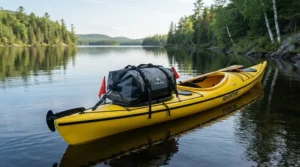
Picture three very different buyers, because the “best” bag genuinely depends on who’s asking. First, the sea kayaker heading out for a week along the Pembrokeshire coast, packing a bag that might realistically end up submerged if a hatch leaks or a wave breaks over the deck. For that trip, only genuine dry bag technology will do — the Ortlieb Duffle 60L or Sea to Summit Hydraulic Pro Dry Pack 90L are the only sensible choices here, since anything less than a true IP-rated seal risks ruined electronics or soaked sleeping kit hundreds of miles from a dry change of clothes.
Second, the university student heading to a muddy summer festival on a tight budget, who needs their bag to survive a weekend of rain, mud, and general chaos without costing more than the festival ticket itself. Here the Highlander Storm Kit Bag 65L or MoverX Waterproof 60L Rucksack make far more sense — genuinely waterproof PVC construction at a fraction of the expedition-grade price, with the flexibility to carry as a backpack when trudging between stages.
Third, the regular commuter and occasional weekend traveller who mostly needs a tough bag that shrugs off British drizzle and airport baggage handlers without demanding a fully submersible rating they’ll never actually test. For that buyer, the Osprey Transporter 40 or The North Face Base Camp Duffel M deliver durability and decent weather resistance without paying a premium for submersion protection that would go entirely unused.
Problem → Solution: Fixing the Most Common Waterproof Holdall Headaches
Even a genuinely good holdall runs into predictable snags, so here’s how to solve the five most common ones. First, a zip that’s stiffening up: this is almost always grit rather than a fault, so rinse the zip track with fresh water, let it dry fully, and rub a small amount of zip wax or beeswax along the teeth before use.
Second, a PVC-shelled bag that’s started to smell musty: this happens when damp items are packed away without airing the bag first, so turn it inside out after any wet trip and let it dry fully before storage, ideally somewhere ventilated rather than a sealed cupboard.
Third, a DWR coating that no longer beads water: this is entirely normal wear rather than a manufacturing fault, and a reproofing spray designed for technical fabrics restores the effect in minutes rather than requiring a full bag replacement. Fourth, straps that dig in under a heavy load: redistribute weight so heavier items sit closer to your back when worn as a rucksack, since most holdall-to-backpack conversions weren’t originally engineered around load distribution the way a dedicated hiking pack is.
Fifth, a roll-top bag that’s letting in water despite rolling correctly: check the buckle alignment first, since a twisted strap is the single most common cause, and make sure the rolled section sits flat rather than bunched before clipping shut.
What Is a Waterproof Holdall?
A waterproof holdall is a soft-sided travel bag built from sealed, water-impermeable material — typically PVC, coated tarpaulin fabric, or TPU-laminated nylon — with welded or taped seams designed to stop water reaching the contents, even during heavy rain or, in the best cases, brief full submersion. Genuine models carry a verifiable IP rating rather than relying on marketing language alone.
The key distinction buyers often miss is between “waterproof” and “water-resistant.” A properly waterproof holdall, like the Ortlieb Duffle 60L, uses welded seams and a sealed zip or roll-top closure engineered to keep water out entirely, even underwater. A water-resistant duffel bag, like the Osprey Transporter 40, uses a treated fabric that repels light rain and splashes but isn’t designed or rated to survive submersion. Neither is objectively “better” — they’re built for different levels of exposure, and matching the rating to your actual use case is the whole game.
How to Choose the Best Waterproof Holdall
Working through these seven criteria in order will get most buyers to the right bag faster than scrolling endless listings.
- Define your actual exposure level first. Watersports and expeditions genuinely need submersible protection; daily commuting and weekend trips usually don’t, so don’t overpay for a rating you’ll never test.
- Check for a real IP rating, not just the word “waterproof.” An IP67 rating on the product page is verifiable; the word “waterproof” alone in a listing title is not.
- Look specifically for welded or taped seams. Stitched seams, even with a waterproof outer fabric, create thousands of tiny needle holes that eventually let water through.
- Match the closure type to your patience level. Roll-tops are more reliably sealed but slower to access; zips are faster but rely on a mechanical seal that can eventually fail.
- Size for your longest realistic trip, not your average one. A too-small holdall gets replaced within a year; slightly oversized is a far cheaper mistake than slightly undersized.
- Factor in carry comfort, not just capacity. A 60-litre bag with poor strap padding becomes genuinely painful on anything beyond a short walk, so check for adjustable, padded straps if you’ll be carrying it loaded any distance.
- Weigh long-term cost against your usage frequency. A premium submersible bag used twice a year rarely justifies its price over a well-built budget PVC option, while frequent expedition use flips that calculation entirely.
Waterproof Holdall vs Water-Resistant Duffel Bag: What’s the Real Difference
This is the single most misunderstood distinction in the category, and it’s worth spelling out properly rather than glossing over it. A waterproof holdall, in the strict sense, has been tested and rated to keep water out under specific, verifiable conditions — usually expressed as an IP rating like IP66 or IP67. The Ortlieb Duffle 60L and Sea to Summit Hydraulic Pro Dry Pack 90L both fall into this category, using welded seams and sealed closures specifically engineered to pass that kind of test.
A water-resistant duffel bag, by contrast, uses a treated or coated fabric — typically a DWR (durable water repellent) finish — that causes water to bead and roll off rather than soak in immediately. The Osprey Transporter 40 and The North Face Base Camp Duffel M both sit here. Crucially, that coating degrades over time with wear and washing, and it was never designed to survive prolonged rain or any submersion at all, however confident the marketing sounds.
In practice, the difference plays out clearly in a downpour: a waterproof holdall left out in heavy rain for an hour keeps its contents dry throughout; a water-resistant duffel bag will eventually let moisture through the seams and fabric, particularly at stress points like the base and zip. For UK conditions specifically, most buyers genuinely overestimate how much submersion protection they need — but anyone regularly near open water should not settle for water-resistance alone.
Tarpaulin Fabric, Welded Seams and Dry Bag Technology Explained
Three terms come up constantly in this category, and understanding what they actually mean cuts through most of the marketing noise. Tarpaulin fabric, sometimes labelled by a manufacturer code like Ortlieb’s PS620C, is a heavy-duty coated textile originally developed for truck covers and industrial use — tough, abrasion-resistant, and inherently waterproof at the material level rather than relying purely on a surface coating that can wear away.
Welded seams solve the problem that stitching creates: every needle pass through waterproof fabric leaves a tiny hole, and however tightly sewn, those holes eventually let water in under pressure. Welding fuses the fabric layers together using heat or high-frequency energy instead, creating a join that’s often as strong as the surrounding material with no needle holes at all — which is exactly why premium waterproof holdalls almost universally use this construction method rather than traditional stitching.
Dry bag technology, meanwhile, refers to the broader design philosophy borrowed from whitewater and sea kayaking equipment — roll-top closures, taped or welded seams, and fabrics like TPU-laminated nylon that were originally built to survive genuine immersion. The Sea to Summit Hydraulic Pro Dry Pack 90L applies this philosophy directly to a holdall shape, and it’s worth noting during your research that independent outdoor gear reviewers have tested comparable dry-bag-style packs against submersion conditions rather than simply trusting manufacturer claims — a useful habit to adopt yourself before any big purchase.
Common Mistakes When Buying a Waterproof Holdall
The most frequent mistake is trusting the word “waterproof” in a product title without checking for an actual IP rating or seam construction detail — plenty of listings use the term loosely, and only the specification sheet tells the real story. A close second is buying based on litre capacity alone without considering carry comfort; a 90-litre bag sounds impressively spacious until it’s fully loaded and there’s a two-mile walk between the car park and the campsite.
Buyers also commonly underestimate how much a fully waterproof zip closure costs to manufacture properly, then feel misled when a genuinely sealed bag costs noticeably more than a “water-resistant” equivalent — that price difference usually reflects real engineering, not just branding. Another recurring error is ignoring seam construction entirely and focusing only on the outer fabric; a bag with a technically waterproof shell but stitched, unsealed seams will still leak under sustained rain or pressure.
Finally, many buyers skip checking their statutory rights before purchase, which matters more than people expect with online luggage orders — UK shoppers buying online are protected by distance-selling rules that go beyond a retailer’s own returns policy, as Which? explains in its consumer rights guidance, so it’s worth knowing those rights exist before you need them.
Long-Term Cost & Maintenance: Is a Premium Waterproof Holdall Worth It
Run the numbers over five years and the picture shifts considerably from a simple sticker-price comparison. A budget PVC holdall like the Highlander Storm Kit Bag or MoverX 60L, priced around £45-£65, may need replacing every two to three years under regular hard use as PVC eventually cracks at fold points — meaning a realistic five-year cost of roughly £90-£195 including one or two replacements.
A premium welded-seam bag like the Ortlieb Duffle 60L, by contrast, carries a five-year manufacturer warranty and is built from tarpaulin fabric specifically engineered to resist the fold-cracking that eventually kills PVC. At £150-£220 upfront, the five-year cost is essentially the purchase price plus occasional zip maintenance — often cheaper in the long run than replacing a budget bag twice, provided you actually use it heavily enough to justify the initial outlay.
Maintenance costs matter too: reproofing spray for DWR-coated bags like the Osprey Transporter runs a few pounds every six to twelve months, a trivial ongoing cost against the bag’s overall lifespan. The honest conclusion is that premium waterproof holdalls make the strongest financial sense for frequent, heavy users, while occasional travellers are rarely better off paying the expedition-grade premium.
Benefits vs Traditional Luggage
| Factor | Waterproof Holdall | Traditional Hard-Shell Suitcase | Standard (Non-Waterproof) Holdall |
|---|---|---|---|
| Water protection | Excellent to full submersion (rated models) | Poor at seams and zips | Minimal to none |
| Weight when empty | Light to moderate | Moderate to heavy | Light |
| Flexibility for odd-shaped items | High — compresses and moulds | Low — rigid shell | High |
| Best for | Watersports, wet-climate travel, expeditions | Air travel, structured packing | Dry-climate short trips |
The table makes the trade-off obvious: a hard-shell suitcase protects fragile items with structure a soft holdall can’t match, but its seams and zips are rarely built to resist real water ingress, leaving contents vulnerable in genuinely wet conditions. A standard non-waterproof holdall wins on weight and flexibility but offers essentially no protection once rain gets serious, making it the weakest option for anyone travelling somewhere genuinely wet. For UK conditions specifically, where drizzle and downpours are a near-certainty rather than a risk, a waterproof holdall consistently offers the best balance of protection, packability, and practical carrying options.

Frequently Asked Questions
❓ Is a waterproof holdall the same as a dry bag?
❓ Can I take a waterproof holdall as airline hand luggage?
❓ How do I know if a holdall is genuinely waterproof or just water-resistant?
❓ Do waterproof holdalls need special washing or care?
❓ Are waterproof holdalls worth it for everyday commuting?
Conclusion
Choosing the best waterproof holdall really comes down to matching the rating to the risk. If your trips involve genuine exposure to open water — kayaking, sailing, coastal expeditions — the Ortlieb Duffle 60L and Sea to Summit Hydraulic Pro Dry Pack 90L are the only two bags on this list built and rated to handle that reliably, thanks to welded seams and proper dry bag technology rather than a coating that merely delays the inevitable soaking.
For everyone else, the calculation shifts. The Highlander Storm Kit Bag 65L and MoverX Waterproof 60L Rucksack deliver genuine, welded-seam waterproofing at a fraction of the expedition-grade price, making them the sensible pick for festivals, camping, and general outdoor storage on a budget. Meanwhile, the Osprey Transporter 40 and The North Face Base Camp Duffel M trade full submersion protection for exceptional durability and everyday practicality — ideal if your real enemy is British drizzle and rough baggage handling rather than an actual dunk underwater. The Rab Kitbag 80 sits between these camps, offering huge capacity for expedition-length trips where volume matters more than a guaranteed IP rating.
Whichever you choose, the seven pillars worth remembering are simple: check for an actual IP rating rather than marketing language, favour welded or taped seams over stitching, size generously but sensibly, and be honest with yourself about how much water exposure you’ll genuinely face. Get that right, and any of these seven bags will earn its keep for years.
Recommended for You
- Wheeled Holdall for Cabin Baggage: 7 Best UK Picks (2026)
- Large Wheeled Holdall: 7 Best UK Picks for Easier Trips (2026)
- Wheeled Holdall for Sports Kit: 7 Best Picks for 2026
Disclaimer: This article contains affiliate links. As an Amazon Associate, I earn from qualifying purchases. If you purchase products through these links, we may earn a small commission at no additional cost to you.
✨ Found this helpful? Share it with your friends! 💬🤗
