

In This Article
Somewhere between mile six and mile ten, most runners have the same thought: “I really should have brought more water.” It’s the moment a best hydration pack stops being a nice-to-have and starts being the difference between a decent long run and a miserable slog home. Britain’s trails, towpaths and hill paths have never been busier — running participation has climbed steadily over the past few years, according to Sport England data compiled by Statista, and a fair chunk of that growth has spilled off the road and onto muddy, exposed, water-source-free trails where a bottle in your hand simply won’t cut it.
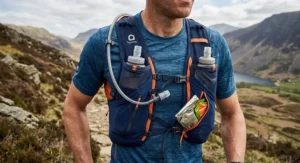
So, what is a hydration pack? In short, it’s a lightweight backpack or vest, usually holding between 1 and 3 litres of water in a soft reservoir or flasks, designed to sit close to the body so it doesn’t bounce, swing or chafe while you move.
That’s the theory, anyway. In practice, the difference between a genuinely good pack and an overpriced bit of nylon comes down to fit, ventilation, pocket design and how the thing behaves once it’s three-quarters empty and sloshing about like a half-drunk hot water bottle. This guide digs into seven real, currently available packs from CamelBak, Osprey, Salomon, Nathan and Decathlon, weighing up the specs that actually matter and the ones that are mostly marketing. We’ll cover full running hydration vest options for racing, a proper water bladder backpack for long hiking days, and a genuinely excellent budget pick that won’t leave you wincing at the checkout. Expect honest analysis, not recycled spec sheets — because if you wanted a copy-paste of an Amazon listing, you wouldn’t need us.
Quick Comparison Table
| Pack | Capacity | Reservoir/Flasks | Best For | Price Range |
|---|---|---|---|---|
| CamelBak Octane 10 | 8–10L cargo | 2L Crux reservoir | All-round multi-sport use | £70–£95 |
| Osprey Duro 6 / Dyna 6 | 5–6L | 1.5L Hydraulics reservoir | Race-day running | £105–£125 |
| Salomon ADV Skin 5 Set | 5L | 2 x 500ml soft flasks | Ultra-distance and marathon trail races | £110–£135 |
| Nathan VaporAiress 3.0 | 7L | 2L bladder | Women-specific fit | £135–£160 |
| Decathlon Kiprun 10L | 10L | 1L bladder included | Budget-conscious beginners | £45–£65 |
| CamelBak Classic | Minimal cargo | 2.5L reservoir | Simple hiking/commuting hydration | £40–£60 |
| Salomon Active Skin 8 | 8L | 1.5L reservoir | Long hiking days, higher capacity | £90–£115 |
Looking at the spread above, there’s a clear split between race-focused vests that prioritise a snug, bounce-free fit over sheer capacity, and hiking-oriented packs like the CamelBak Classic and Salomon Active Skin 8 that trade a little agility for more room to carry snacks, a spare layer or a first-aid kit. If your main goal is racing a half marathon on trails, the lighter vests from Osprey and Salomon will serve you better than anything with more than 8 litres of storage; if you’re planning long, slow hikes across the Peak District, that extra capacity in the CamelBak Classic or Salomon Active Skin 8 earns its keep.
💬 Found a pack that looks right for you? Tap through to check today’s price before it changes!
Top 7 Hydration Packs: Expert Analysis
1. CamelBak Octane 10 — best all-rounder for multi-sport use
The standout here is versatility: this is the pack that shows up on trail runs on Saturday and bike commutes on Monday without missing a beat. Built from 75D ripstop Cordura with a 3D Vent Mesh back panel, the CamelBak Octane 10 pairs 8 to 10 litres of compressible cargo space with a 2-litre Crux reservoir that flows noticeably faster than older bladder designs — useful when you’re gasping mid-hill and don’t want to be sucking air through a straw. Based on the spec comparison with rival multi-sport packs, the ridged EVA foam back channels do a genuinely good job of keeping airflow moving even when the main compartment is stuffed with a rain shell and snacks.
Reviewers consistently note that the pack feels comfortable “empty or full” and that the Command Center Harness pockets make phone and gel access easy without breaking stride, though a handful mention the reservoir’s water sloshing is noticeable on faster efforts — a common quirk of any bladder-based system, not just this one.
Pros:
- ✅ Genuinely versatile across running, hiking and cycling
- ✅ Fast-flow 2L Crux reservoir beats older bladder designs
- ✅ Stretch overflow pocket swallows a packed-away jacket
Cons:
- ❌ Bladder sloshing noticeable during faster running
- ❌ Sits slightly large for smaller frames despite adjustment
At around £70–£95, the CamelBak Octane 10 lands as one of the smarter mid-range buys in this guide — you’re not paying a race-vest premium, but you’re also not compromising on build quality.

2. Osprey Duro 6 / Dyna 6 — best for race-day comfort
Osprey’s headline trick with the Osprey Duro 6 (men’s fit) and Dyna 6 (women’s fit) is the 360-degree stretch structured mesh back panel, which genuinely does eliminate the bounce that plagues cheaper vests during faster efforts. The pack includes two 500ml Hydraulics soft flasks with removable WingStay stabilisers, plus six stretch fuel pockets and a front zip pocket, which in practice means gels, a phone and a light buff all sit exactly where you left them rather than migrating to your lower back by mile five.
What most buyers overlook about this model is that Osprey builds it in six sizes based on chest circumference rather than one-size-fits-all, so the fit is closer to buying a running vest than a rucksack — this matters enormously for anyone who’s been chafed by an ill-fitting pack before. Reviewers on outdoor gear sites consistently rate the Osprey Dyna/Duro line among the most comfortable options they’ve tested over hundreds of miles, particularly praising how it conforms around the ribs during long training blocks.
Pros:
- ✅ Sized like apparel for a genuinely tailored, bounce-free fit
- ✅ Included soft flasks with anti-bounce pocket patterning
- ✅ Reflective detailing useful for early morning or dusk runs
Cons:
- ❌ 1.5L maximum hydration limits it for very long days
- ❌ Small hardware pieces reported as fragile by some owners
Priced in the £105–£125 range, this is the pack to choose if race-day comfort matters more to you than maximum carrying capacity.
3. Salomon ADV Skin 5 Set — best for ultra-distance and marathon trail racing
Salomon’s SensiFit construction and Y-shaped back panel are the standout features here, and they explain why this remains one of the best-selling vests in the ultra-running world. The Salomon ADV Skin 5 Set ships with two 500ml Ultra soft flasks that slot into front pockets designed specifically to stop the classic “flask bounce” you get on cheaper vests, while the 5-litre capacity is pitched squarely at marathon trail races and adventures up to roughly 60km.
Here’s what to weigh: the stretch fabrics that make this vest so comfortable also mean it moulds itself around your torso rather than sitting rigid, so buyers with a broader or less typical running-athlete build sometimes need to size up from the chart’s suggestion. Reviewers who’ve logged well over a hundred miles in this pack describe the fit as snug without feeling restrictive, and specifically call out that it doesn’t bounce even when fully loaded with gear for a long day out — a common area where budget alternatives fall down.
Pros:
- ✅ Y-shaped back panel distributes weight exceptionally evenly
- ✅ Bounce-free flask pockets, even at race pace
- ✅ Large tunnel pocket adds useful extra storage versatility
Cons:
- ❌ Runs snug — sizing up is often necessary
- ❌ Reservoir sold separately on some pack variants
Expect to pay somewhere in the £110–£135 range, which is fair value given how heavily this specific model dominates ultra-running start lines across the UK.
4. Nathan VaporAiress 3.0 7L — best women’s-specific fit
The big draw with the Nathan VaporAiress 3.0 is its Adaptive-Fit sizing system, which lets you tighten the waist and bust independently rather than relying on a single strap to do both jobs — a detail that sounds minor until you’ve spent a long run adjusting a vest that clearly wasn’t built with a female torso in mind. It carries 7 litres of storage (5 litres once the included 2-litre bladder is fitted), with an expanded rear kangaroo pocket sized for a light jacket or extra nutrition.
Based on the spec comparison with unisex alternatives, the two-layer moisture-wicking air mesh on the shoulder straps and back interior genuinely reduces chafing on longer efforts, and the sizing runs from XXS through to 3XL, covering a wider range of body types than most competitors bother with. One tester who wore the pack through a bitterly cold winter training block did note the bladder froze solid in near-freezing temperatures — a fair warning for anyone doing dawn runs through a British winter, though hardly a design flaw unique to this vest.
Pros:
- ✅ Two-point Adaptive-Fit sizing genuinely improves comfort
- ✅ Wide size range from XXS to 3XL
- ✅ Rear kangaroo pocket easily fits a packed-away layer
Cons:
- ❌ Reservoir can freeze in sub-zero conditions
- ❌ Sizing runs slightly small — check the chart carefully
Sitting at roughly £135–£160, it’s the priciest vest in this line-up, but the fit quality justifies it for runners who’ve struggled with unisex designs.
5. Decathlon Kiprun 10L Trail Running Vest — best budget hydration pack
Decathlon’s Kiprun range exists to prove that a genuinely usable hydration vest doesn’t need to cost three figures, and the standout here is straightforward value: a 10-litre trail running bag with a 1-litre bladder included, at a price that undercuts nearly every rival in this guide. What most buyers overlook is that “budget” doesn’t have to mean “flimsy” — UK trail runners on forums like UKClimbing have reported getting three to four years of regular use out of Decathlon’s cheaper hydration vests before needing a replacement, which is a respectable lifespan for a pack costing a fraction of a premium alternative.
On paper this means you’re sacrificing some of the bounce-control engineering of the Salomon and Osprey vests, and the fabric isn’t quite as premium to the touch, but for anyone starting out in trail running or simply wanting a reliable pack for weekend hikes, it’s hard to argue with the value. Reviewers frequently mention that the storage genuinely does expand as advertised, going from a slim daypack to something that can swallow a packed lunch and spare layers.
Pros:
- ✅ Exceptional value for a genuinely usable 10L capacity
- ✅ Expandable storage for longer, self-supported days out
- ✅ Widely available and easy to replace or size-exchange
Cons:
- ❌ Less refined bounce control than premium race vests
- ❌ Included bladder capacity is modest at 1L
At around £45–£65, this is the pack we’d point a first-time trail runner or Duke of Edinburgh participant towards without hesitation.
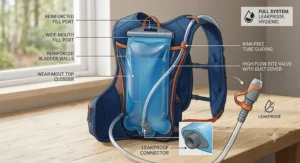
6. CamelBak Classic — best simple water bladder backpack
Sometimes you don’t need a race vest — you need a straightforward water bladder backpack that does one job well, and that’s exactly the pitch behind the CamelBak Classic. Its standout feature is simplicity: an 85oz (roughly 2.5-litre) Crux reservoir with an ergonomic fill handle and an on/off bite valve lever that stops the classic hydration-pack problem of a leaking valve soaking your lower back on the drive home.
The breathable air mesh back panel and ventilated harness aren’t going to win comfort awards against the Osprey or Salomon vests here, but that’s not really the point — this is the pack for commuting by bike, casual hiking, or as a straightforward backup reservoir setup for anyone who already owns running kit but wants something simpler for lower-intensity days. Reviewers consistently describe it as comfortable enough that they “forget they’re wearing it,” and several specifically praise how easy the wide-opening reservoir is to fill and clean compared with narrow-necked alternatives.
Pros:
- ✅ Simple, no-fuss design that’s easy to clean and refill
- ✅ Leak-preventing on/off lever on the bite valve
- ✅ Genuinely affordable entry point into hands-free hydration
Cons:
- ❌ Minimal storage compared with running-specific vests
- ❌ Less structured fit for genuinely fast-paced running
Typically priced around £40–£60, it’s the pack to buy if “hydration vest” sounds like overkill for what you actually need.
7. Salomon Active Skin 8 — best for long hiking days and higher capacity
Rounding out the list is the Salomon Active Skin 8, which takes the SensiFit stretch-mesh construction that made the ADV Skin range famous and stretches it — literally — to an 8-litre capacity built for longer days rather than fast race efforts. The standout feature is how the mesh conforms around the ribcage, where oddly shaped gear like headlamps, spare layers and food tends to dig in on lesser packs.
Based on the spec comparison with smaller-capacity vests in this guide, the extra room here genuinely changes what kind of days you can tackle — think an all-day hike across the South Downs Way rather than a quick 10K loop. Reservoir compatibility (fitted separately, typically a 1.5-litre bladder) and included soft flasks give flexibility depending on whether you’re sipping constantly or refilling at checkpoints. Testers who’ve covered thousands of miles across multiple pack reviews rate it among the most consistently comfortable options tried, specifically citing how well it performs whether loaded light or genuinely full.
Pros:
- ✅ Best-in-class comfort even fully loaded with gear
- ✅ 8L capacity suits genuinely long days out
- ✅ Flexible flask-or-bladder hydration setup
Cons:
- ❌ Reservoir typically sold separately, adding to total cost
- ❌ Overkill for short, fast training runs
Priced around £90–£115, it’s the pick for anyone whose “long run” is really a hike with a runner’s fitness.
Practical Usage Guide: Setting Up Your Hydration Pack Properly
Getting a new hydration pack home is the easy part — setting it up so it doesn’t ruin your first long outing takes a little more care. Start by fitting the reservoir before you fill it: thread the drinking tube through its designated port first, then fill the bladder roughly 80% full to leave room for it to compress as it empties, which stops that slapping sensation against your back. Bite valves benefit from a quick suck-and-blow test before you leave the house — a valve that’s stiff from the factory can genuinely put people off using a bladder system altogether, when the fix is just breaking it in.
In the first 30 days, the most common mistake is over-tightening the sternum strap in an attempt to stop bounce, which usually just restricts breathing instead. Loosen everything, put the pack on, then tighten from the bottom up — hip or waist strap first, then sternum, adjusting each only slightly. For maintenance, rinse the reservoir with warm water and a splash of white vinegar every few weeks to stop mould building up in the tube, and store it somewhere it can dry fully rather than zipped back into the pack while damp — a genuinely common cause of that musty “old bladder” taste. Reservoirs from CamelBak and Osprey are largely dishwasher-safe on a top rack, which saves considerable faff if you’re using the pack regularly.
Real-World Scenarios: Matching the Pack to the Person
Picture three different runners heading out this weekend. First, there’s Priya, training for her first trail marathon on a modest budget, doing 90-minute long runs through Epping Forest twice a week. For her, the Decathlon Kiprun 10L makes total sense — she doesn’t need race-day bounce engineering yet, and the money saved can go towards decent trail shoes instead.
Then there’s Marcus, a sub-3:30 marathoner shifting onto technical Lake District trails and racing several ultra-distance events a year. He needs a genuinely bounce-free running hydration vest that won’t shift when he’s scrambling over rocky sections, which points squarely at the Salomon ADV Skin 5 Set or Osprey Duro 6, depending on preferred fit.
Finally, there’s Aisha, who hikes the South Downs most weekends with her dog and occasionally jogs the flatter sections, carrying snacks, a first-aid kit and a spare layer regardless of the weather forecast. Her needs are about capacity and all-day comfort rather than speed, making the Salomon Active Skin 8 or CamelBak Classic the more sensible choices. The lesson across all three: match the pack to how you actually spend your time outdoors, not to what looks fastest on a shelf.
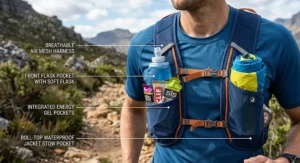
How to Choose the Best Hydration Pack
Picking the right pack comes down to working through a handful of decisions in order, rather than getting distracted by capacity numbers alone.
- Decide bladder or flasks first. Bladders carry more water for long, unsupported days; soft flasks are faster to refill at checkpoints and easier to monitor how much you’ve actually drunk.
- Match capacity to activity duration. Under 90 minutes rarely needs more than 1–1.5 litres; anything past three hours or without reliable water sources justifies 2 litres or more.
- Try the fit loaded, not empty. An empty vest always feels comfortable — the real test is how it sits with a full reservoir and a stuffed pocket or two.
- Check pocket placement for your gear. If you run with a phone, make sure there’s a pocket sized and positioned so it won’t bounce against your ribs.
- Consider fabric and ventilation for UK weather. Breathable mesh matters even here — humid summer days and steep hill climbs generate plenty of sweat regardless of the forecast.
- Factor in washing and maintenance. A reservoir you can’t easily clean becomes a reservoir you stop using; check whether replacement parts are readily available.
- Buy based on your longest realistic use case, not your average one. It’s better to have slightly more capacity than you need most weeks than to be caught short on the one big day that matters.
CamelBak vs Osprey Hydration Pack: Which Wins?
This comparison comes up constantly among UK trail runners, and honestly, the answer depends heavily on what you’re optimising for. CamelBak, as represented here by the Octane 10 and Classic, tends to build slightly more generalist packs — genuinely excellent multi-sport crossover, solid reservoirs, and pricing that sits a notch below premium race vests. Osprey, through the Duro 6/Dyna 6, leans harder into apparel-style sizing and race-specific bounce control, at a modest premium.
What most buyers overlook is that this isn’t really a “better brand” argument — it’s a fit and use-case argument. Reviewers who’ve tested both brands extensively note that Osprey’s sized-like-clothing approach tends to edge out CamelBak on pure race-day stability, while CamelBak’s Crux reservoir technology is frequently praised for faster flow rates during hard efforts. If you’re buying one pack to do everything from commuting to racing, CamelBak’s broader range and typically lower price point make more sense. If you’re specifically chasing PBs on technical trail races and comfort under load is non-negotiable, Osprey’s tailored fit tends to win out in head-to-head testing.
Water Bladder Backpack vs Soft-Flask Vest: What’s the Real Difference?
A water bladder backpack and a soft-flask running vest solve the same basic problem — carrying water hands-free — in genuinely different ways, and the choice matters more than most buying guides admit. A bladder system, like the reservoirs in the CamelBak Octane 10 or CamelBak Classic, holds water in one large pouch with a tube running to a bite valve near your shoulder. It’s efficient for carrying larger volumes and doesn’t require stopping to drink, but it makes tracking exactly how much you’ve consumed harder, and cleaning a full-length tube is more fiddly than rinsing a flask.
Soft flasks, as used in the Salomon ADV Skin 5 Set and Osprey Duro 6, sit in front chest pockets and squeeze to drink, similar to a soft water bottle. What the spec sheet won’t tell you, but reviewers note repeatedly, is that flasks make it far easier to mix electrolyte powders on the go or swap in a fresh, cold flask at a race checkpoint — something a sealed bladder makes considerably more awkward. For long, unsupported hikes where refilling opportunities are rare, the bladder’s larger single-fill capacity usually wins; for races and shorter efforts with aid stations, flasks tend to be the more practical, lower-maintenance choice.
Running Hydration Vest for Trail Running: What to Expect on Technical Ground
A running hydration vest built for trail running earns its keep the moment the terrain stops being flat. On rooty, rocky or steep ground, a poorly fitted pack telegraphs every footfall as a bounce against your spine — genuinely tiring over a few hours, and a common reason people give up on hydration vests altogether after a bad first experience. The packs in this guide built specifically for trail use, namely the Osprey Duro 6/Dyna 6 and Salomon ADV Skin 5 Set, use stretch-mesh panelling precisely to counter this, moulding to your torso rather than sitting rigid against it.
What most buyers overlook is how much pole compatibility matters once trails get properly hilly. Both the CamelBak Octane 10 and Salomon vests here include dedicated attachment points, letting you stow trekking poles hands-free on the flatter or downhill sections rather than awkwardly carrying them. Reviewers consistently highlight that a genuinely good trail vest disappears from your attention entirely once you’re a few kilometres in — the highest compliment any piece of running kit can receive.
Features That Actually Matter (And Those That Don’t)
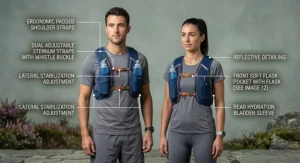
It’s easy to get seduced by a long spec list, so here’s an honest filter. Fabric stretch and back-panel ventilation genuinely matter — they’re the difference between a pack you forget you’re wearing and one you’re fighting against by hour two. Adjustable, apparel-style sizing (as seen on the Osprey Duro 6/Dyna 6) matters enormously if you’ve struggled with fit before; it’s not a gimmick.
What matters considerably less: exact litre capacity beyond what your longest realistic outing requires, and flashy colourways that add nothing to performance. Reflective detailing is a genuinely useful safety feature for dawn or dusk runs on British roads and trails but shouldn’t be a deciding factor over fit. Bounce-reduction engineering — the SensiFit and stretch-mesh systems in the Salomon range, or the Command Center Harness on the CamelBak Octane 10 — earns its premium; a pack that bounces at pace will get abandoned in a drawer within a month, however impressive its spec sheet reads.
Common Mistakes When Buying a Hydration Pack
Even careful shoppers trip over a handful of predictable errors. First, buying based on capacity alone, without considering fit — a 12-litre pack that bounces is worse than a well-fitted 5-litre one for most runs. Second, ignoring reservoir maintenance requirements before purchase; if you can’t face cleaning a bladder regularly, a soft-flask vest like the Salomon ADV Skin 5 Set solves that problem entirely.
Third, sizing by chest measurement alone without checking torso length, which matters especially for shorter or taller runners fitting vests like the Nathan VaporAiress 3.0. Fourth, assuming a pack that fits well empty will fit the same loaded — always test with genuine weight inside before committing to a size. Finally, overlooking pocket placement relative to your specific gear; a phone pocket that’s perfect for one person’s device can bounce annoyingly for another’s larger handset.
Long-Term Cost & Maintenance
Thinking beyond the initial price tag changes the value equation considerably. A premium vest like the Salomon ADV Skin 5 Set, at roughly £120, works out cheaper per year of use than replacing a £50 budget vest every 18 months once seams start failing under regular load — assuming you’re running several times weekly. Replacement reservoirs typically cost £15–£25, and replacement soft flasks around £10–£15 each, so factor these consumables into your real cost of ownership rather than treating the initial purchase as the final spend.
Cheaper packs like the Decathlon Kiprun 10L and CamelBak Classic remain excellent value precisely because they’re honest about their limitations — you’re not paying for race-specific engineering you don’t need, which genuinely lowers total cost of ownership for casual users. For anyone racing regularly, however, the durability and bounce-control engineering in premium vests tends to justify itself within a year or two of consistent use.
Safety and Hydration: What Every Runner Should Know
Carrying water is only half the safety picture — knowing why it matters helps you use a hydration pack properly rather than just owning one. Dehydration during exercise can affect concentration, coordination and judgement well before you feel obviously thirsty, and the NHS’s guidance on dehydration is worth a genuine read if you’ve never checked the early warning signs, particularly on hot days or longer efforts.
UK-based sports medicine research also cautions against overcomplicating things: for most sessions under an hour or two, plain water is entirely sufficient, and thirst itself is a reasonably reliable guide rather than something to override with rigid drinking schedules, as outlined by sports medicine researchers at the Institute of Sport, Exercise & Health. For longer, more remote routes, proper route planning matters just as much as the pack itself — the Ordnance Survey’s hiking safety guidance is a genuinely useful resource for anyone heading onto UK trails without guaranteed water sources along the way.
✨ Ready to gear up properly? Check today’s price on the pack that fits your next big route!
Frequently Asked Questions
❓ What is the best hydration pack for beginners?
❓ How much water should a hydration pack hold for running?
❓ Is a bladder or soft flask better for a hydration vest?
❓ Can you put electrolyte drinks in a hydration pack reservoir?
❓ How do you stop a hydration pack from bouncing?
Conclusion
There’s no single best hydration pack for everyone, and honestly, anyone who tells you otherwise is trying to sell you something without asking what you actually do at the weekend. If you’re chasing a trail marathon PB, the bounce-free engineering in the Salomon ADV Skin 5 Set or Osprey Duro 6/Dyna 6 genuinely earns its price tag. If you’re easing into trail running or supporting a Duke of Edinburgh expedition on a tighter budget, the Decathlon Kiprun 10L does the job without fuss. And if you just want reliable, hands-free hydration for hikes or the daily commute, the CamelBak Classic remains a sensible, affordable choice.
Whichever direction you lean, the real test happens on the trail rather than in the spec sheet — fit, ventilation and how the pack behaves once it’s genuinely loaded matter more than any single headline number. Take the time to try one loaded before committing, check current pricing before you buy, and let your actual running or hiking habits — not the marketing copy — make the final call.
✨ Don’t Miss These Exclusive Deals!
🔍 Take your hydration setup to the next level with the packs covered above. Click through to check current pricing and availability on the option that matches your next big route!
Recommended for You
- Best Waterproof Daypack UK 2026: 7 Rain-Proof Rucksacks Tested
- 7 Best Foldable Backpack for Travel Picks in 2026
- Day Pack for Hiking: 7 Brilliant Picks for UK Trails (2026)
Disclaimer: This article contains affiliate links. As an Amazon Associate, I earn from qualifying purchases. If you purchase products through these links, we may earn a small commission at no additional cost to you.
✨ Found this helpful? Share it with your friends! 💬🤗
