
In This Article
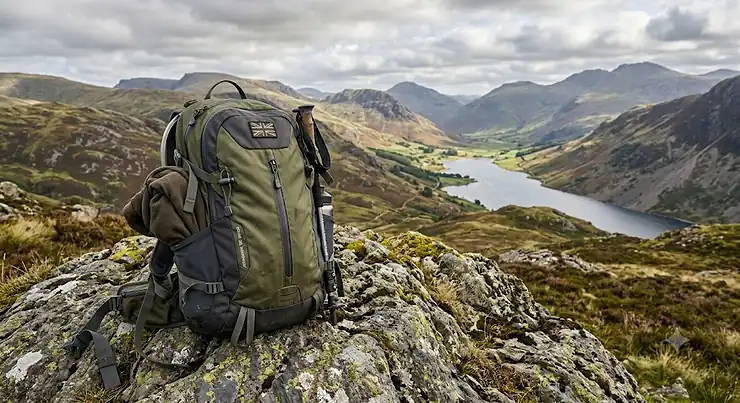
Somewhere in a cupboard in most British homes there’s a backpack that seemed like a good idea at the time — too small for a full day out, no hip belt, and a back panel that turns your shirt into a sweat map by the second mile. A proper day pack for hiking fixes all of that, and it doesn’t need to cost a fortune or weigh you down to do it. This guide walks through seven real, currently available packs, from a genuinely excellent budget option to a technical pack built for scrambling and steep ground, so you can match the bag to the walk rather than the other way round.
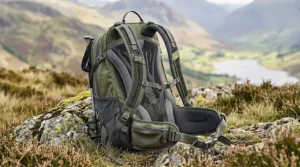
What is a day pack for hiking? It’s a rucksack, typically 18 to 30 litres, built to carry the essentials for a single day on the trail — waterproofs, food, water, a first aid kit — with a ventilated back panel and often a light hip belt, striking a balance that a school bag or a 65-litre expedition rucksack simply can’t manage.
We’ll also cover where a lightweight daypack for travel earns its keep on a flight, why a city daypack and a hiking bag aren’t always interchangeable, when an everyday backpack can double up for weekend walks, and why a compact hiking bag sometimes beats a bigger one. British trails throw in mud, sudden downpours and steep, short climbs that Alpine or Rocky Mountain routes rarely match, so fit and ventilation matter here more than almost anywhere else. Every product below is analysed on real specifications and aggregated review sentiment — not fabricated testing — so you’re getting an honest steer, not a rewritten product page.
Quick Comparison Table: 7 Day Packs for Hiking at a Glance
| Pack | Capacity | Weight | Price Range | Best For |
|---|---|---|---|---|
| Osprey Talon 22 | 22L | ~900g | £90-110 | All-round trail comfort |
| Decathlon Quechua NH100 | 20L | ~600g | £20-30 | Budget-conscious beginners |
| Osprey Daylite Plus | 20L | ~590g | £60-70 | Lightweight travel & commuting |
| Fjällräven Kanken Classic | 16L | 300g | £75-95 | City and campus daily carry |
| Berghaus 24/7+ 30 | 30L | ~1,000g | £45-55 | Everyday backpack, full days out |
| Salomon Trailblazer 20 | 20L | 414g | £50-60 | Compact, fast and minimalist |
| Deuter Speed Lite 23 | 23L | ~700g | £95-115 | Technical, steep terrain |
Looking at the spread here, the gap between the Decathlon Quechua NH100 and the Deuter Speed Lite 23 is roughly £70-90, yet both are genuinely competent day packs for hiking — the difference is in fabric grade, ventilation engineering and long-term durability, not whether the bag “works.” If you’re walking twice a year on gentle lowland paths, the extra spend on a technical back system is largely wasted; if you’re covering hilly ground weekly, that investment pays for itself in comfort within a handful of outings.
💬 Just one click — help others make better buying decisions too!😊
Top 7 Day Packs for Hiking: Expert Analysis
1. Osprey Talon 22 — best all-round ventilated hiking daypack
The standout here is the AirScape back panel, a honeycomb of foam ridges under stretch mesh that keeps a genuine air gap between the pack and your spine, and it shows the moment you hit an incline. The 22-litre main compartment swallows waterproofs, a packed lunch and a 3-litre hydration bladder without feeling cavernous, while dual mesh side pockets hold a bottle securely even at a jog, and a stretchy wraparound hip belt transfers load off the shoulders on longer days. Based on the spec comparison with lighter frameless packs in this guide, the Talon 22’s internal frame is doing real work — it’s built to carry more weight for longer without sagging, which matters if you’re the one hauling snacks and a first aid kit for the group.
Reviewers consistently note that this is one of the least sweaty packs in its class, with UK-based hillwalking reviewers specifically praising the ventilation and load stability on steep ground, though several also flag that the frame and hip belt add noticeable weight compared with minimalist alternatives — a trade-off, not a flaw, depending on what you’re using it for.
Pros:
- ✅ AirScape ventilated back keeps sweat genuinely manageable
- ✅ Stable, well-organised main compartment for full-day kit
- ✅ Backed by Osprey’s lifetime warranty
Cons:
- ❌ Heavier than frameless daypacks in the same volume
- ❌ No rain cover included as standard
Prices generally sit around £90-110 depending on colourway and retailer, and given the warranty and build quality, it represents strong long-term value for anyone hiking regularly rather than occasionally.
2. Decathlon Quechua NH100 — best budget hiking daypack
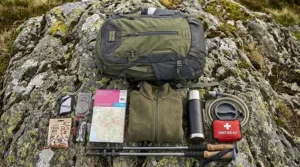
What most buyers overlook about this model is that “budget” here doesn’t mean “basic” in the way it might with other cheap packs — the 20-litre body includes a padded, ventilated back and a proper hip belt, features that are often missing entirely at this price point. The wide U-shaped zip opening means you can throw items in and see everything at once, rather than digging blind to the bottom of a top-loader, and the hydration bladder compatibility means it’s not purely a fair-weather-only design.
Aggregated review sentiment across Decathlon’s own site and third-party retailers is strikingly positive for the price bracket, with a large volume of reviews clustering around comfort and value for casual hiking. Reviewers do note the padding feels a little bulky on more vigorous, sweaty days, and the fleece-lined hip pocket is too small for a phone in a case — small compromises that make sense once you know exactly where the cost savings came from.
Pros:
- ✅ Genuinely padded hip belt at a budget price point
- ✅ Wide U-shaped opening for fast, easy packing
- ✅ Hydration bladder compatible out of the box
Cons:
- ❌ Padding runs bulky and warm on strenuous days
- ❌ Hip belt pocket too small for a phone in a case
At around £20-30, this is an easy first pack recommendation, and honestly a smart backup even for hikers who own something pricier.
3. Osprey Daylite Plus — best lightweight daypack for travel
Here’s what the spec sheet won’t tell you outright: at roughly 590g, this pack manages to feel structured rather than floppy, thanks to a semi-rigid foam back panel, which is precisely the balance that makes it so popular as an airport and city-break companion. The internal sleeve fits a laptop or tablet up to 15 inches, side mesh pockets hold water bottles, and a large external “shove-it” pocket on the front is ideal for a jacket you’ve just peeled off on a train platform.
On paper this means it’s really a hybrid — Osprey markets it as an everyday and light-hiking pack rather than a dedicated trail tool, and reviewers back that framing up: testers repeatedly describe it as comfortable for short-to-moderate hikes, city use and travel, while flagging that it lacks a supportive hip belt for anything heavier. The 300-denier body and 600-denier base are noticeably tougher than the ultralight, frameless competition in this price range, according to comparative reviews.
Pros:
- ✅ Impressively light while still holding its shape
- ✅ Durable 300D/600D fabric for the weight class
- ✅ Doubles neatly as a carry-on and commuter bag
Cons:
- ❌ No supportive hip belt for heavier loads
- ❌ Side bottle pockets are shallow and can feel loose
Typically priced around £60-70, it’s a smart single-bag solution for anyone who hikes occasionally but travels often.
4. Fjällräven Kanken Classic — best city daypack for daily carry
The standout feature here isn’t performance, it’s presence — the boxy silhouette and water-resistant Vinylon F fabric have barely changed since 1978, and that’s precisely the point for buyers choosing this as a city daypack rather than a trail tool. At just 300g and 16 litres, it’s light enough to forget you’re wearing it around town, and the flat base means it stands upright on a café floor or train seat instead of toppling over.
What most buyers overlook about the Kanken is that its appeal is genuinely practical, not just aesthetic: the fabric swells slightly when wet, tightening the weave and adding water resistance without a chemical coating, and the two-way zip lets it lie fully flat for packing. Reviewers are consistent on one point, though — the thin, unpadded straps are simply not built for heavy or technical loads, and this is a “town bag that looks good,” not a genuine hiking daypack, according to comparative outdoor-gear testing.
Pros:
- ✅ Iconic, genuinely durable water-resistant fabric
- ✅ Sits upright unaided — handy on transit and in cafés
- ✅ Huge range of colourways and long product lifespan
Cons:
- ❌ Unpadded straps get uncomfortable under real weight
- ❌ 16L capacity is tight for a full day’s hiking kit
Expect to pay around £75-95, which is a premium for a fairly simple bag — but the resale value and longevity of a Kanken are well documented, softening that outlay over years of use.
5. Berghaus 24/7+ 30 — best everyday backpack for commuting and countryside
The standout advantage is versatility: at 30 litres, this pack has genuinely enough room for a laptop, gym kit and a packed lunch on a Tuesday, then waterproofs, a flask and an OS map on a weekend walk, without ever feeling like the wrong tool for either job. Berghaus’s Flow back system uses vented foam panels that perform respectably for a pack in this price bracket, and the height-adjustable chest strap is a genuinely useful touch that many similarly priced everyday backpacks skip entirely.
Based on the spec comparison with dedicated hiking daypacks, the 24/7+ 30 trades a little ventilation refinement for significantly more everyday practicality — walking pole attachments and hydration compatibility sit alongside a laptop sleeve and internal organiser, which reviewers repeatedly highlight as the pack’s real selling point: one bag that doesn’t force a choice between “work bag” and “hiking bag.” Aggregated feedback from UK retailers skews strongly positive on capacity and value, with recurring praise for how much it holds relative to its price.
Pros:
- ✅ 30L capacity comfortably covers full days out
- ✅ Laptop sleeve and organiser suit commuting too
- ✅ Walking pole loops and hydration compatibility included
Cons:
- ❌ Bulkier and heavier than a dedicated 20-22L daypack
- ❌ Ventilation is decent rather than class-leading
At around £45-55, it’s one of the strongest value propositions in this entire list for anyone who wants a genuine dual-purpose everyday backpack.
6. Salomon Trailblazer 20 — best compact hiking bag for fast, light days
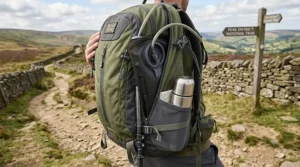
The standout feature is the weight: at 414g, this is one of the lightest packs here that still includes a hip belt and sternum strap, a combination that’s surprisingly hard to find below 500g. The mesh-covered foam back panel and curved, ergonomic shoulder straps distribute a light-to-moderate load efficiently, and the tapered, squared-off shape keeps it close to the body rather than swinging as you move over uneven ground.
What most buyers overlook about the Trailblazer is that it isn’t purely a hiking pack — reviewers repeatedly reach for it for fastpacking, travel and daily errands as much as trail days, praising its balance of support and simplicity for a compact hiking bag. It’s worth flagging honestly: it’s water-resistant rather than waterproof, so on a genuinely wet British day it needs a dry bag inside for anything electronic, and its tapered profile isn’t designed for bulky loads.
Pros:
- ✅ Genuinely ultralight while including a hip belt
- ✅ Breathable, well-ventilated back panel
- ✅ Compact profile suits fast, minimalist days
Cons:
- ❌ Water-resistant only, not fully waterproof
- ❌ Tapered shape limits capacity for bulkier loads
Priced around £50-60, this is a strong pick for anyone prioritising low weight without sacrificing a hip belt entirely.
7. Deuter Speed Lite 23 — best technical daypack for steep, sweaty terrain
The standout here is the vest-style harness — closer in feel to a running vest than a traditional rucksack — which hugs the body and barely moves as you scramble, climb stiles or pick a line across a rocky descent. A honeycombed foam and mesh back panel, a flexible Delrin perimeter frame and load-adjuster straps are aimed squarely at hikers who move fast over demanding, technical ground rather than a gentle towpath stroll.
Here’s what the spec sheet won’t fully convey: reviewers who’ve tested this pack on peak-bagging routes and multi-pitch scrambles describe genuinely excellent load management for a sub-800g pack, crediting the honeycomb foam and flexible frame for making it feel far lighter than its capacity suggests. The trade-off, flagged consistently across independent reviews, is that the thin straps and small buckles feel less robust for long-term hard use than heavier, more traditional designs — a sensible compromise for weight-focused hikers, less so for anyone who’s rough on gear.
Pros:
- ✅ Vest-style fit stays stable on technical, steep ground
- ✅ Excellent ventilation via honeycomb foam back panel
- ✅ Trekking pole and hydration compatibility built in
Cons:
- ❌ Straps and buckles feel less durable long-term
- ❌ Premium pricing for a relatively modest 23L capacity
Typically £95-115, this is the pick for hikers who value technical performance over raw carrying capacity.
Practical Usage Guide: Setting Up Your Day Pack for Hiking
Getting a new pack right on day one saves weeks of niggling discomfort later. Start by loosening every strap fully before you put the pack on, then tighten in order: hip belt first (it should sit on your hip bones, not your waist), shoulder straps second, and load lifters last, pulling them to roughly a 45-degree angle rather than yanking them flat. Pack heavier items — water, food — close to your back and centred vertically, with lighter layers and waterproofs towards the outside, so the load doesn’t pull you backwards on climbs.
In the first 30 days, the most common mistake is treating the sternum strap as decorative; clipped at roughly armpit height, it stops the shoulder straps splaying outward and noticeably improves stability on descents. Give the zips a light coating of a wax-based lubricant if they start to stiffen after muddy walks, and rinse the back panel mesh with fresh water after coastal or sweaty use to stop salt and grime clogging the ventilation channels. Set a simple maintenance rhythm: a quick check of stitching and buckles every few months, and a proper hand wash — never a washing machine — once a season, using lukewarm water and a soft brush rather than harsh detergent, which can strip water-repellent coatings prematurely.
Real-World Scenarios: Matching the Pack to the Walker
Consider three fairly typical UK day-pack buyers. First, a university student in Manchester who wants one bag for lectures, weekend trips to the Peak District and the odd flight home — for that profile, the Osprey Daylite Plus or a well-loved Fjällräven Kanken covers lectures and light trails equally well, though the Kanken’s small capacity means the Daylite Plus edges it for genuine hill days. Second, a couple in their 40s doing monthly 6-8 hour Lake District walks with a shared flask and packed lunches — here the extra room and stability of the Osprey Talon 22 or Berghaus 24/7+ 30 earns its keep, since both comfortably carry two people’s kit without straining a single hip belt.
Third, a fell runner-turned-hiker in the Brecon Beacons who wants something that won’t bounce on fast, technical descents and barely notices it’s there — the Deuter Speed Lite 23 or the featherweight Salomon Trailblazer 20 suit that brief far better than a heavier framed pack ever could. None of these profiles is “wrong” to choose differently; the point of matching scenario to spec is that the ideal pack changes with how often you walk, how far, and how technical the ground underfoot actually gets — a distinction independent testers at Which? make repeatedly when comparing hiking backpacks across brands and budgets.
How to Choose a Day Pack for Hiking
- Match capacity to trip length. For UK conditions, 20-25 litres suits half-day summer walks, while 28-35 litres gives room for full changeable-weather days with waterproofs and extra layers.
- Prioritise back ventilation. A suspended mesh panel with a genuine air gap, like the Osprey Talon 22‘s AirScape system, matters more on British hills than it might seem, since ascent and humidity combine to create sweat even in cooler months.
- Check the hip belt properly. Even a light, unstructured belt like the one on the Salomon Trailblazer 20 shifts meaningful weight off your shoulders — packs without one, such as the Fjällräven Kanken, are best kept to lighter loads.
- Consider fabric denier versus weight. Higher-denier fabrics like the 600D base on the Osprey Daylite Plus resist abrasion better but add grams; decide which trade-off suits your terrain.
- Think about weather realism, not aspiration. Few day packs are fully waterproof — plan on a rain cover or dry bags for electronics regardless of which pack you choose.
- Test organisation against your actual kit. Hydration sleeves, dedicated phone pockets and walking pole loops only add value if you’ll genuinely use them.
- Weigh cost against frequency of use. A weekly hiker gets far more return from a premium technical pack like the Deuter Speed Lite 23 than someone walking twice a year, for whom the Decathlon Quechua NH100 likely makes more financial sense.
✨ Don’t Miss These Exclusive Deals!
🔍 Take your hiking kit to the next level with these carefully selected day packs. Click on any highlighted item to check current pricing and availability. The right pack will help you build genuinely comfortable, well-organised days out on the trail!
Lightweight Daypack for Travel: What Changes When You Fly
A lightweight daypack for travel needs to solve a slightly different problem than a hiking daypack: it has to survive being crushed under an aeroplane seat, slide easily through crowded transit, and still look presentable walking into a hotel lobby, all while staying light enough not to eat into a carry-on weight allowance. That’s precisely why packs like the Osprey Daylite Plus and Salomon Trailblazer 20 turn up repeatedly on travel-specific recommendation lists — both compress relatively flat, weigh under 600g, and skip the bulky internal frame that a full trekking pack relies on.
The trade-off is capacity for structure discipline: neither pack manages heavy technical loads gracefully, but that’s rarely the job in an airport or a city break. If your travel plans include the odd genuine day hike once you land — a coastal path in Pembrokeshire, a Munro near a Highland cottage — pick the option with a hip belt and hydration compatibility over one chosen purely on looks, since it’ll flex into “actual hiking pack” duty far more convincingly.
City Daypack vs Trail Daypack: Same Shape, Different Job
| Feature | City Daypack (e.g. Fjällräven Kanken) | Trail Daypack (e.g. Osprey Talon 22) |
|---|---|---|
| Back ventilation | Minimal foam panel | Suspended mesh, active airflow |
| Hip belt | Usually absent | Padded, load-bearing |
| Weather resistance | Water-resistant coating | Often similar, sometimes with rain cover |
| Typical capacity | 15-18L | 20-30L |
| Best for | Flat ground, short carries | Hills, multi-hour loads |
A city daypack and a genuine trail daypack look deceptively similar on a shop shelf, but the analysis above shows they’re solving different problems: the Fjällräven Kanken prioritises looking sharp on a flat commute, while the Osprey Talon 22 prioritises keeping your back dry and your shoulders unstrained three hours into a hill climb. Cross-using them works up to a point — a Kanken is perfectly fine for a gentle two-hour towpath walk — but push either one outside its comfort zone (a Talon to a formal meeting, a Kanken up Scafell Pike) and the mismatch becomes obvious fast. Buyers who genuinely split their time between city and countryside are often better served by a hybrid like the Berghaus 24/7+ 30, which sacrifices a little of each specialism in exchange for not needing two separate bags at all.
Everyday Backpack or Dedicated Hiking Pack? Making One Bag Do Both
For a lot of people, buying a second bag purely for hiking isn’t realistic, and that’s a completely reasonable constraint — an everyday backpack that flexes into weekend-walk duty is often the smarter purchase than two specialised ones sitting half-used in a cupboard. The Berghaus 24/7+ 30 is built precisely for this crossover, with a laptop sleeve and internal organiser for weekday use sitting alongside walking pole loops and hydration compatibility for weekends, and reviewers consistently frame it as a “go-to” bag precisely because it doesn’t force that choice.
The honest limitation is that a genuine hybrid rarely beats a specialist at either extreme: it won’t ventilate quite as well as the Osprey Talon 22 on a proper hill day, and it’s bulkier for a daily commute than the Osprey Daylite Plus. If your walks are occasional and moderate, that’s an easy trade. If you’re hiking weekly on steep, sweaty routes, the case for a dedicated pack — and keeping the everyday backpack for, well, every day — becomes stronger.
Compact Hiking Bag: When Smaller Is Genuinely Smarter
There’s a tendency to assume bigger capacity always means better value, but a compact hiking bag in the 18-23 litre range often suits UK day walks better than anything larger, simply because most of us pack more “just in case” items than we ever actually use. The Salomon Trailblazer 20, at 414g, and the Deuter Speed Lite 23, built around a vest-style harness, both demonstrate that a smaller pack doesn’t mean a less capable one — it means a more disciplined one, forcing genuinely necessary kit rather than padding out unused space.
Reviewers who’ve moved from larger 30L+ packs down to compact designs frequently describe rediscovering how much lighter and less fatiguing a well-loaded 20L pack feels by the final hour of a walk, particularly on ground with real elevation. The sensible middle ground, as covered in detailed UK gear guides on hillwalking backpack sizing, is 20 to 35 litres for most day hikes — go smaller confidently for short summer routes, and only step up in size when the walk or the weather genuinely demands it.
Common Mistakes When Buying a Day Pack for Hiking
The single most frequent error is buying on capacity alone, without trying the pack on loaded — a 30L bag with a poor-fitting back panel will be less comfortable than a well-fitted 22L one, regardless of what the label promises. A close second is ignoring torso length entirely; many packs, including some Osprey models, are only available in a fixed size or a narrow range, so a mismatch between your torso and the pack’s fixed length undermines even the best ventilation system on paper.
Buyers also commonly skip checking hip belt padding until they’re already on a trail with a loaded pack, by which point discomfort is hard to fix mid-walk. Finally, treating “water-resistant” as interchangeable with “waterproof” catches people out on genuinely wet British days — the Salomon Trailblazer 20 and several others in this guide are explicitly water-resistant only, and packing electronics without an additional dry bag inside is a false economy that costs more than the bag itself if it rains hard.
Features That Actually Matter (And Those That Don’t)
Ventilated back panels, a properly padded hip belt and hydration compatibility genuinely earn their place on a hiking daypack — they directly affect comfort over hours on the trail, not just on a shop-floor test carry. Load lifter straps matter more than most buyers expect too, since they fine-tune how weight sits relative to your shoulders on steep climbs, something the Osprey Talon 22‘s frame is specifically engineered around.
On the other hand, a huge external pocket count often signals marketing rather than function; most hikers settle into using two or three pockets consistently regardless of how many are on offer. Ice axe loops and helmet carry systems, as seen on the Deuter Speed Lite 23, are genuinely useful for scrambling and winter routes but entirely wasted weight for a lowland towpath walk — a clear example of matching features to your actual use case rather than buying the longest spec sheet available.
Safety, Weather and the Countryside Code for UK Day Walks
British weather can shift from bright sunshine to driving rain within an hour, particularly on higher ground, which is precisely why the Countryside Code specifically advises preparing for natural hazards and packing the right clothing and equipment for your planned route before setting off. A well-organised day pack for hiking makes that preparation practical rather than theoretical — dedicated pockets for a map, first aid kit and spare layer mean you can actually access them quickly rather than digging through a jumbled main compartment on an exposed hillside.
Hydration deserves specific mention: dehydration builds gradually and easily goes unnoticed during a strenuous climb, and the NHS guidance on dehydration recommends drinking regularly rather than waiting until you feel thirsty, since thirst is a lagging indicator. Most packs in this guide, including the budget Decathlon Quechua NH100, include hydration bladder compatibility precisely because it encourages this little-and-often drinking pattern far more effectively than stopping to unscrew a bottle every hour.
Long-Term Cost & Maintenance of a Day Pack for Hiking
A £25 budget pack replaced every two to three years works out roughly comparable in total cost to a £100 premium pack that lasts eight to ten years with basic care, so “cheaper” and “better value” aren’t automatically the same thing over a decade of hiking. Where the premium option genuinely wins is in comfort accumulated across hundreds of hours on the trail, and in warranty support — Osprey’s lifetime warranty, for instance, covers genuine manufacturing defects for as long as you own the pack, which meaningfully offsets the higher upfront price for frequent hikers.
Maintenance costs stay low across the board provided the basics are followed: occasional hand washing, zip lubrication, and storing the pack dry rather than damp to prevent mildew on the back panel foam. None of the seven packs here require specialist servicing, and the biggest long-term cost driver by far is simply how roughly the pack is used relative to how it was built — a technical, lighter-fabric pack like the Deuter Speed Lite 23 rewards gentler handling than a heavier-denier design like the Berghaus 24/7+ 30.
Frequently Asked Questions
❓ What size day pack do I need for hiking in the UK?
❓ Is a hip belt necessary on a hiking daypack?
❓ Can I use a city daypack for hiking?
❓ What's the difference between a daypack and a hiking backpack?
❓ Are cheap hiking daypacks worth buying?
Conclusion
There’s no single best day pack for hiking, only the best one for how, where and how often you actually walk. The Osprey Talon 22 remains a genuinely strong all-rounder for regular hillwalkers, the Decathlon Quechua NH100 is hard to beat if you’re starting out on a budget, and the Fjällräven Kanken or Osprey Daylite Plus make more sense if city use and travel outweigh serious trail time in your week. The Berghaus 24/7+ 30 earns its place for anyone unwilling to own two separate bags, while the Salomon Trailblazer 20 and Deuter Speed Lite 23 reward hikers chasing lower weight and technical performance over sheer capacity.
Whichever you choose, fit and ventilation matter more than any single spec on a listing page, so try a pack on loaded wherever possible before committing. British weather and terrain are genuinely demanding on gear in ways gentler climates simply aren’t, and a pack built with that in mind will still be comfortable on your fiftieth walk, not just your first.
📌 Ready to gear up properly for your next walk? Check current prices and availability on the picks above before your next trip out.
Recommended for You
- Expandable Travel Backpack: 7 Proven Picks for UK Travel in 2026
- 7 Best Anti Theft Backpack Picks for 2026: Ultimate UK Guide
- Travel Backpack With Laptop Compartment: 7 Brilliant Picks (2026)
Disclaimer: This article contains affiliate links. As an Amazon Associate, I earn from qualifying purchases. If you purchase products through these links, we may earn a small commission at no additional cost to you.
✨ Found this helpful? Share it with your friends! 💬🤗
